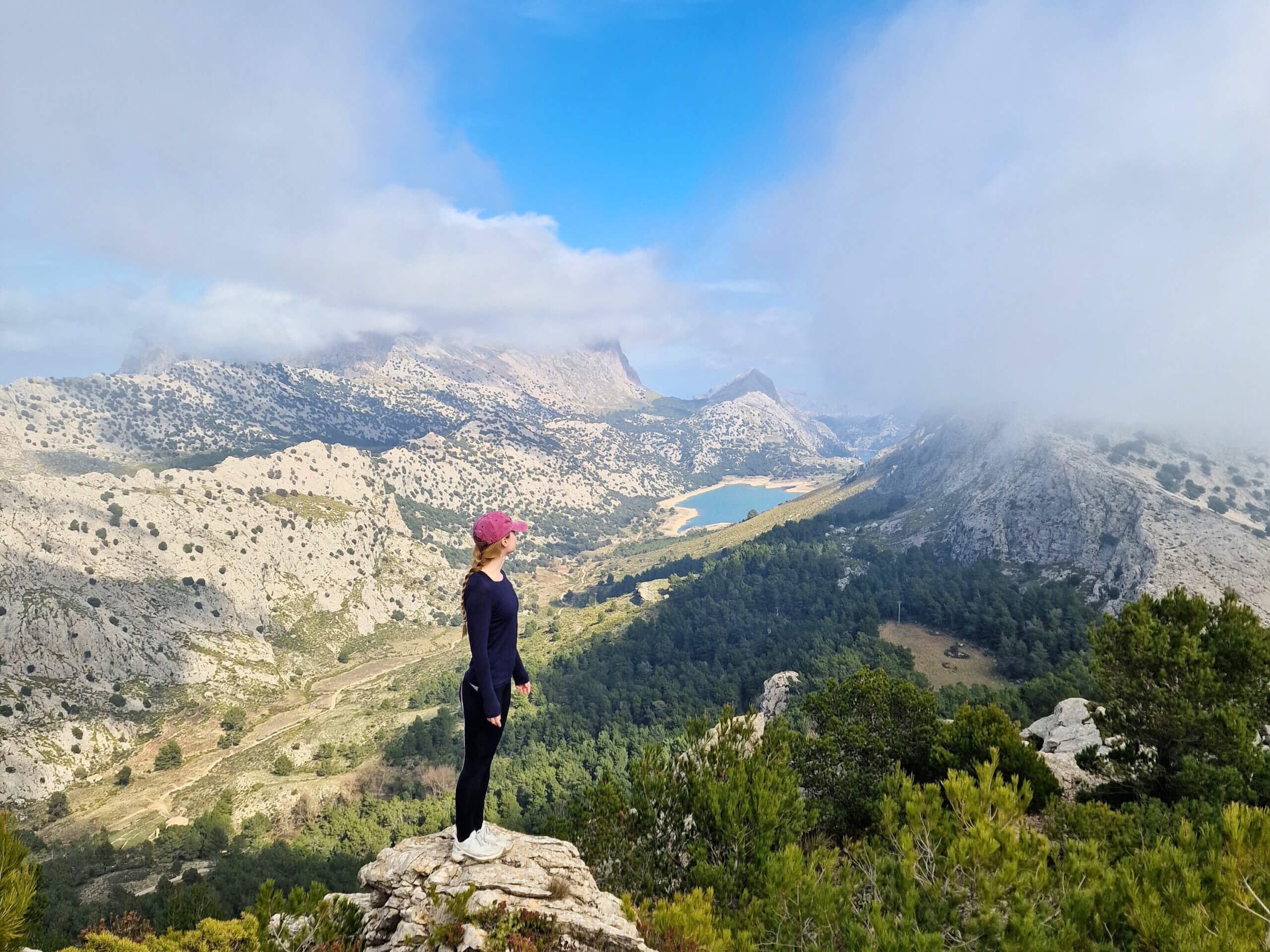
Take on Mallorca’s most epic hike. The Three Thousands Trail covers 3 peaks over 1000m in a challenging mountain loop through the Tramuntana Mountains.
Three dramatic peaks above 1000 meters. Is this Mallorca’s best hard hiking trail? I think so. Locally, it’s known as Les Tres Miles — The Three Thousands — and it’s become one of my favorite hikes on the island.
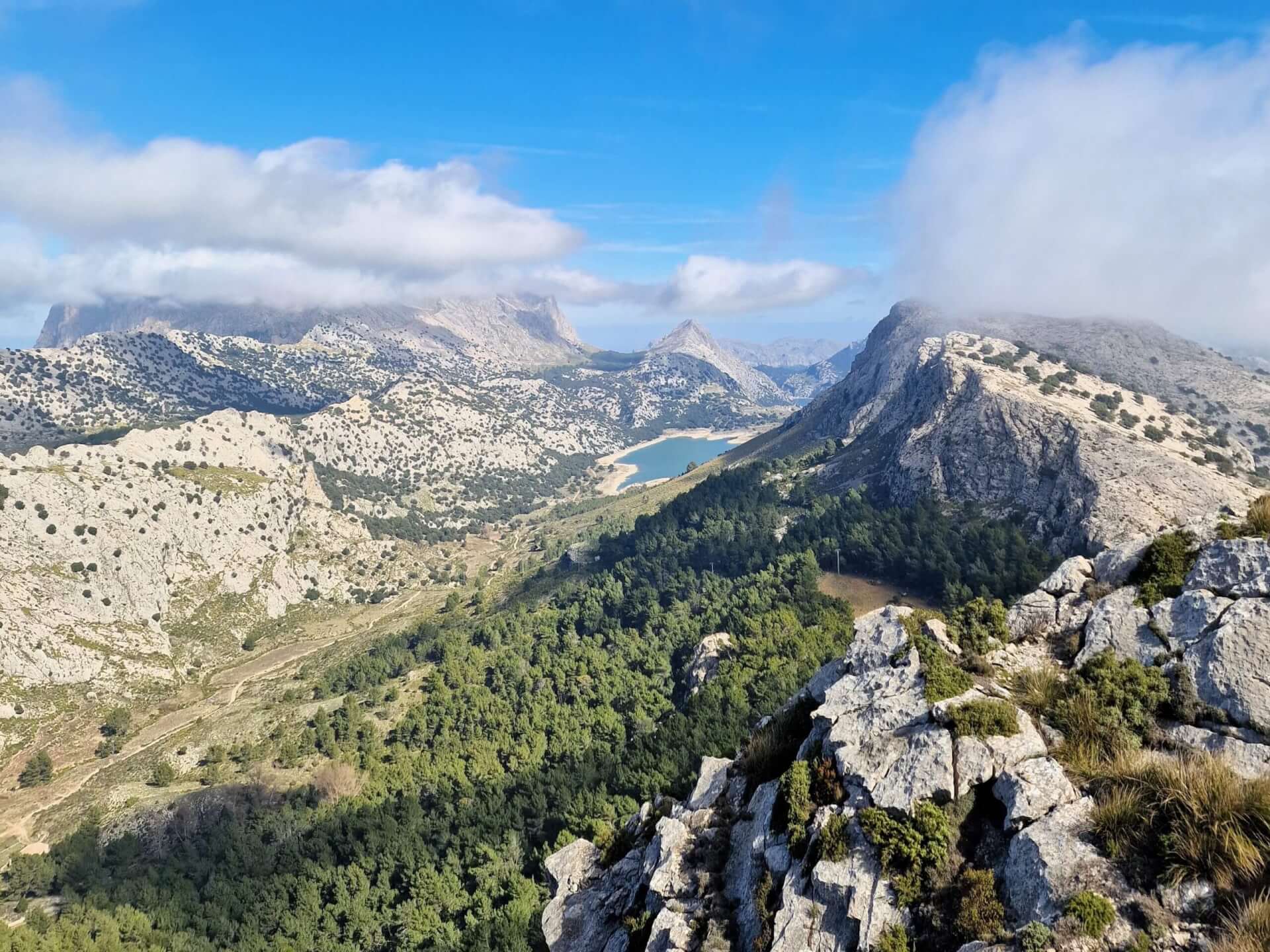
Starting at the Cúber Reservoir, the hiking trail winds through sunlit valleys, pine forests, rocky scrambles, and cloud-brushed summits, offering ever-changing views and a true sense of adventure.
Whether you’re here for the challenge, the solitude, or the beautiful views, this guide covers everything you need to know.
Welcome to your next adventure!
Table of Contents
You can use the links below to jump to a certain section of the blog post.
Three Thousands Trail Details
Trail Overview
- Type: Loop Hike
- Starting Point: Cúber Reservoir (Embassament de Cúber), accessible via Ma-10 road.
- Distance: ~12 km.
- Duration: ~5 to 6 hours, depending on pace and breaks.
- Difficulty: Hard; suitable for experienced hikers due to steep ascents and rocky terrain.
- Direction: I recommend anti-clockwise.
- Elevation Gain: Around 636 meters.
- Highest Elevation: Puig de sa Rateta at 1,113 meters.
- Best Seasons: Spring (March–May) and Autumn (September–November).
- Trail Markings: Partially marked; some sections require navigation using cairns or GPS.
- Facilities: No facilities along the trail; ensure to carry sufficient water and supplies.
- Parking: Limited parking near Cúber Reservoir; advisable to arrive early.
The Three Thousands Hiking Trail Map
Peaks on the Route
Puig de l’Ofre (1,093 m)
The first and arguably most striking climb of the loop. From the summit, you’re rewarded with sweeping views over the Cúber Reservoir, Sóller Valley, and — on a clear day — the shimmering Mediterranean far beyond.
Puig de na Franquesa (1,067 m)
The second peak rises through rocky paths and shifting weather. From here, you can look toward Mallorca’s central plains and the rolling Serra de Tramuntana.
Puig de sa Rateta (1,113 m)
The highest of the three, and the final challenge on this loop. Sa Rateta’s summit feels remote and untamed, with views stretching back to Cúber and deep into the mountain ranges to the west.
Safety Tips
Trail Conditions
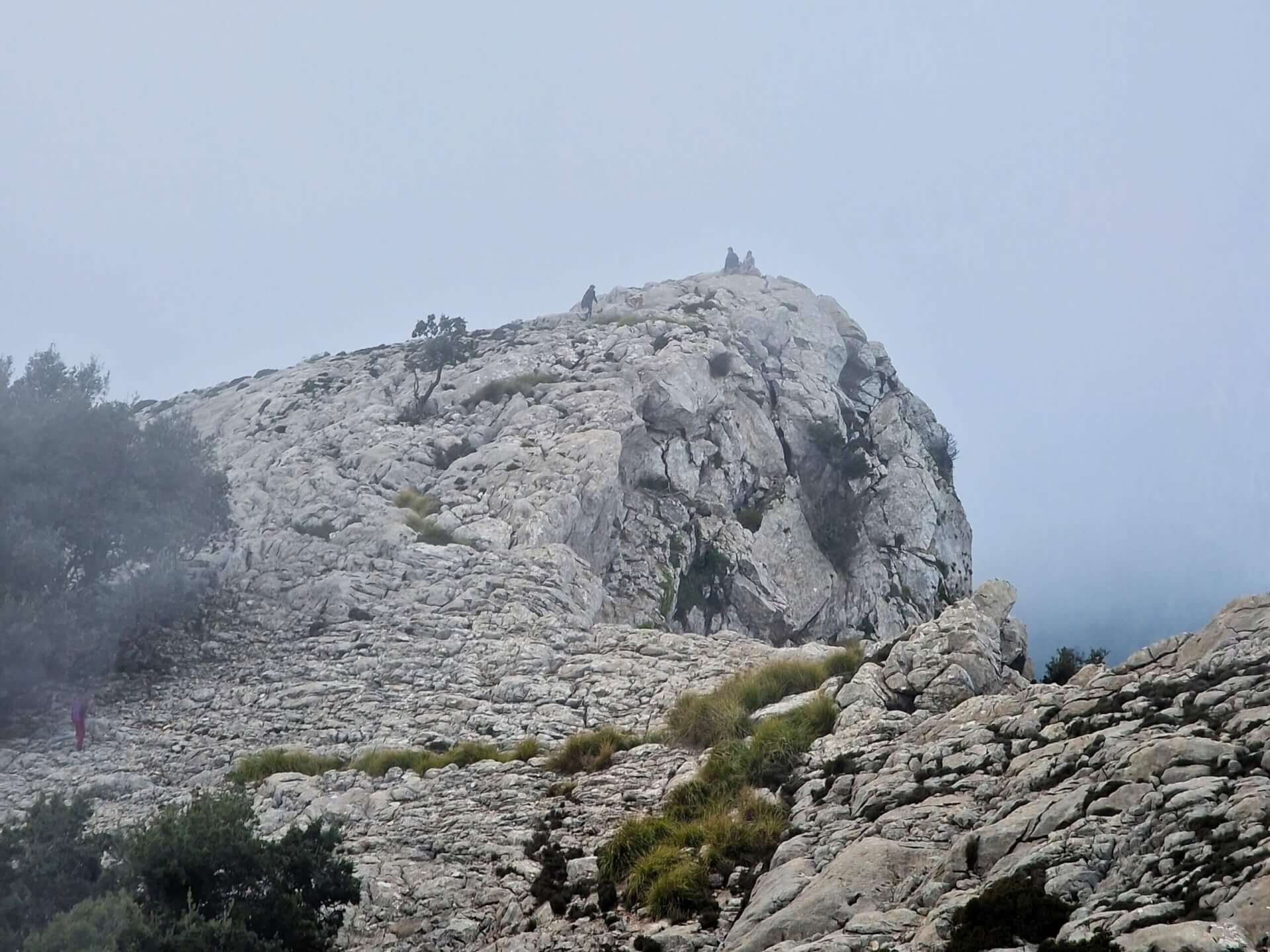
- The trail includes loose rocks, steep scrambles, and unmarked sections, especially between the peaks.
- Wear hiking boots/shoes with grippy soles.
- Trekking poles can be helpful for both ascents and descents.
Weather
- Mountain weather changes quickly. You may start in sunshine and hit fog or strong winds at higher elevations.
- Always check the forecast before you go (AEMET for local mountain conditions).
- Avoid hiking during heavy rain or thunderstorms — rocks become dangerously slippery.
Navigation
- While sections follow the GR-221 or local cairns, parts of the route are unmarked or poorly defined.
- Bring a GPS device or download an offline map (I use Maps.Me for offline navigation)
Flora & Fauna on the Trail
The Three Thousands Trail will take you through some of Mallorca’s wildest and most untouched mountain terrain. Here’s what you might encounter along the way:
Fauna
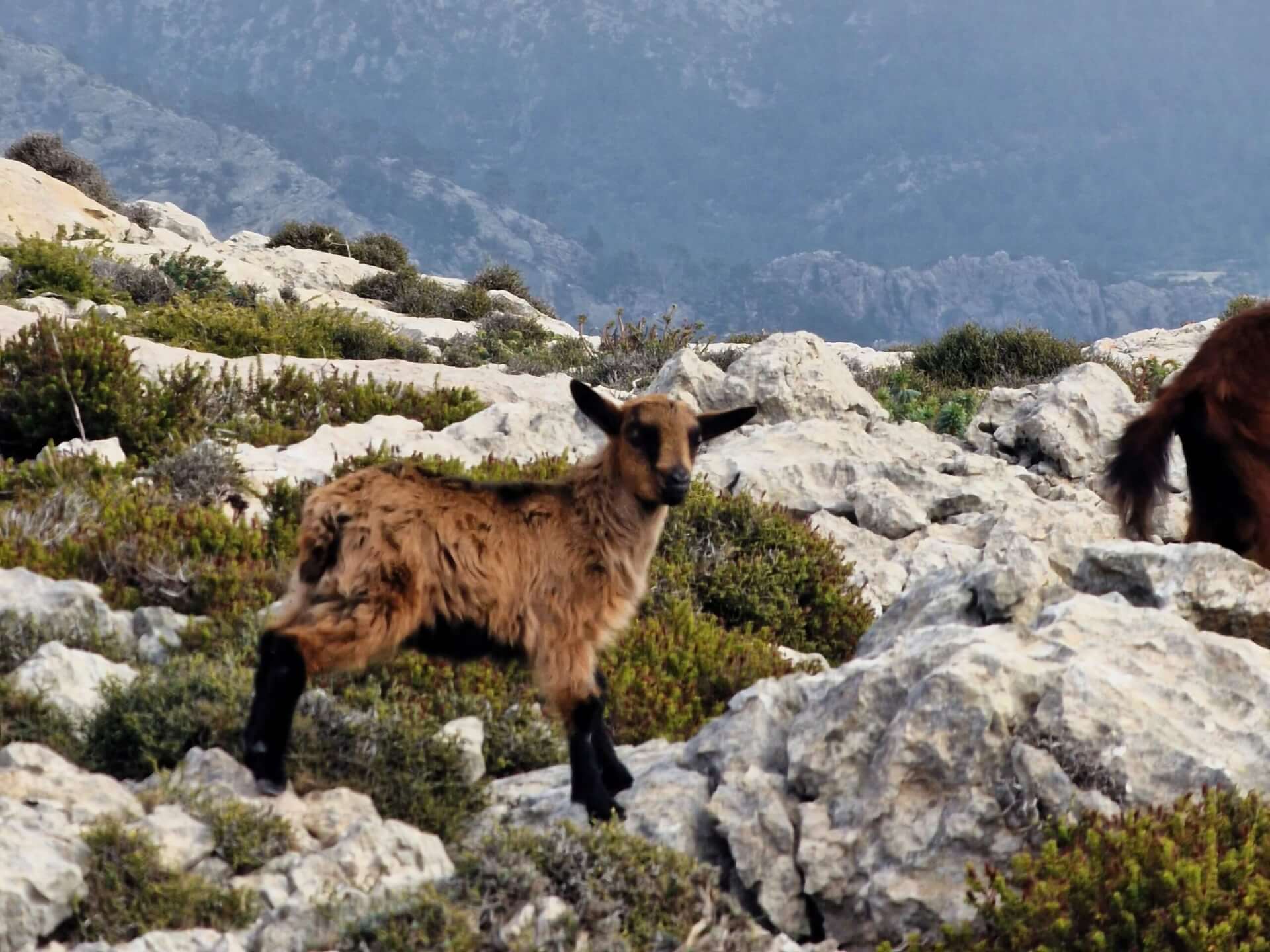
- Wild Goats (Cabres salvatges): Agile and unbothered, they’re often spotted balancing impossibly on rock faces or resting in the shade. You’ll likely see them early in the morning or near water sources.
- Booted Eagle (Àguila calçada): These large birds of prey patrol the thermals overhead. Look for them circling above Puig de l’Ofre, especially around midday.
- Black Vultures (Voltor negre): Rare but increasingly common in Tramuntana — massive wingspan and unmistakable silhouette.
- Songbirds & Reptiles: Expect the occasional darting lizard and a soundtrack of finches and warblers in spring.
Flora
- Balearic Wildflowers: In spring (March–May), the path explodes with wild thyme, rock roses, and blooming asphodels.
- Aleppo Pines & Holm Oaks: You’ll pass through sparse pine woods in lower sections, with ancient oaks tucked into hollows near water.
- Mediterranean Herbs: The scent of wild rosemary, fennel, and thyme follows you much of the way — especially as the sun warms the rocks.
Getting There
The trail starts and ends at Embassament de Cúber, a scenic reservoir nestled in the heart of the Serra de Tramuntana. Despite its remote mountain setting, it’s surprisingly accessible — even without a car.
By Car
- Route: From Palma, take the Ma-11 to Sóller, then continue on the Ma-10 scenic mountain road toward Lluc.
- The drive takes about 50–60 minutes, depending on traffic and weather.
- Parking: There’s a small free gravel parking area near the Cúber Reservoir dam (just past kilometer marker 34 on Ma-10). It fills up early on weekends — aim to arrive before 9:00 am in peak seasons.
- Tip: The drive is gorgeous but winding. If you’re prone to motion sickness, be prepared.
By Bus
- Route: Take bus 204 from Palma towards Port de Sóller and get off at the stop “Ma-11 nord 2”. From there, transfer to bus 231 heading towards Alcúdia, and hop off at “Cúber 2”. The trip takes a little under 2 hours.
- The stop is right at the trailhead — super convenient.
- Check TIB’s website for schedule, fares and route.
- Tickets: Pay on board with cash or card.
Hitchhiking
- Hitchhiking in Mallorca is relatively safe and common among hikers and backpackers, especially along Ma-10.
- There’s a natural pull-over spot near the trailhead, and friendly locals or other hikers often offer rides — especially if you’re traveling light.
- Holding a small sign with your destination (e.g., “Sóller” or “Lluc”) can help.
My Experience
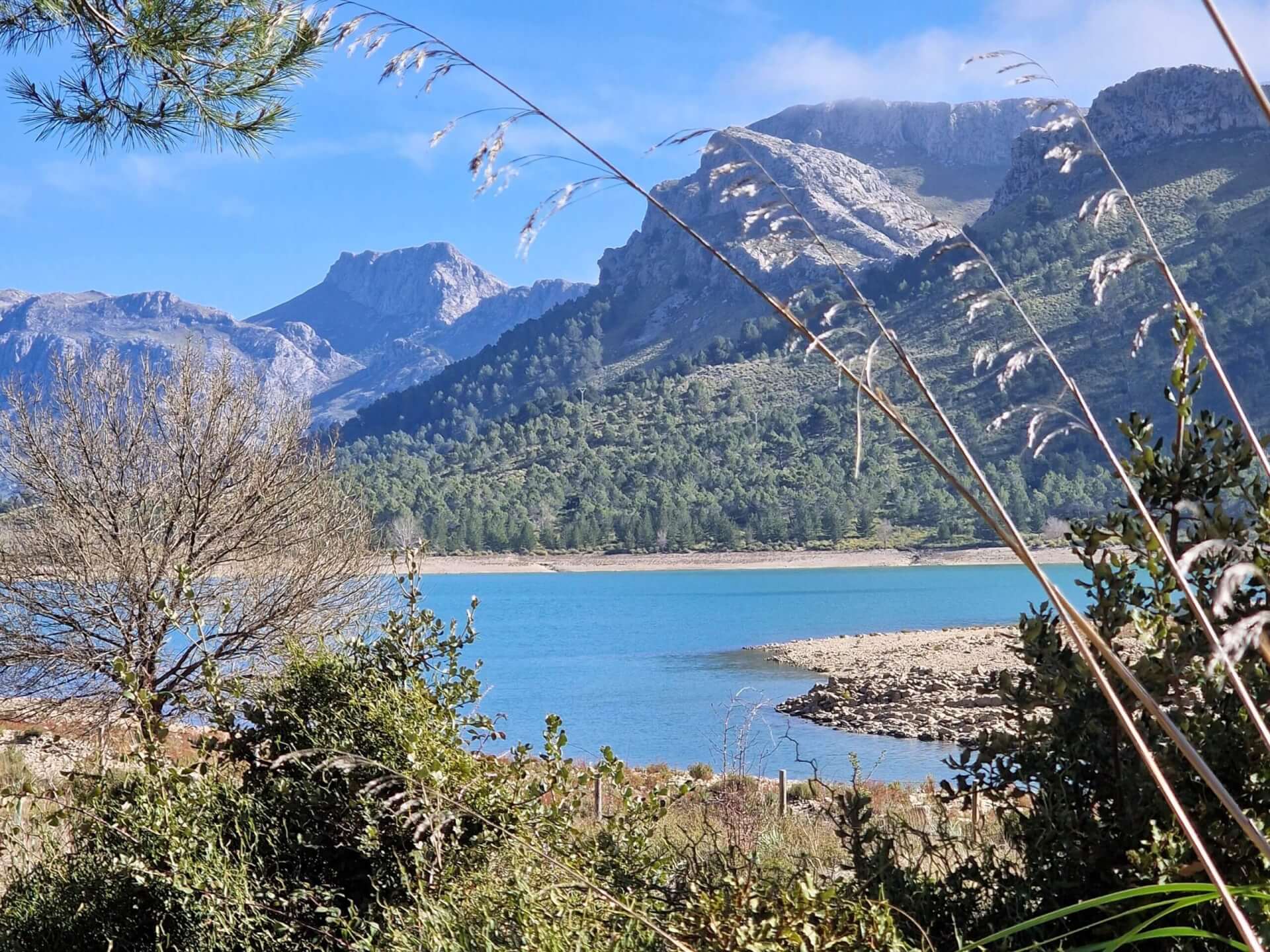
We were walking through the valley, the three peaks towering to our left like a stone skyline. I looked up and said to my boyfriend, “We can always turn around.”
They looked daunting. We weren’t exactly buzzing with energy. But let me tell you — I’m so glad we didn’t. This trail was wild. Spicy. Relentlessly beautiful. And tougher than expected.
The Start
By the time we arrived at the tiny parking lot near Cúber Reservoir, it was already full. Classic. We backtracked and found a spot along the roadside, adding a little extra distance to the day — no big deal under a flawless blue sky.
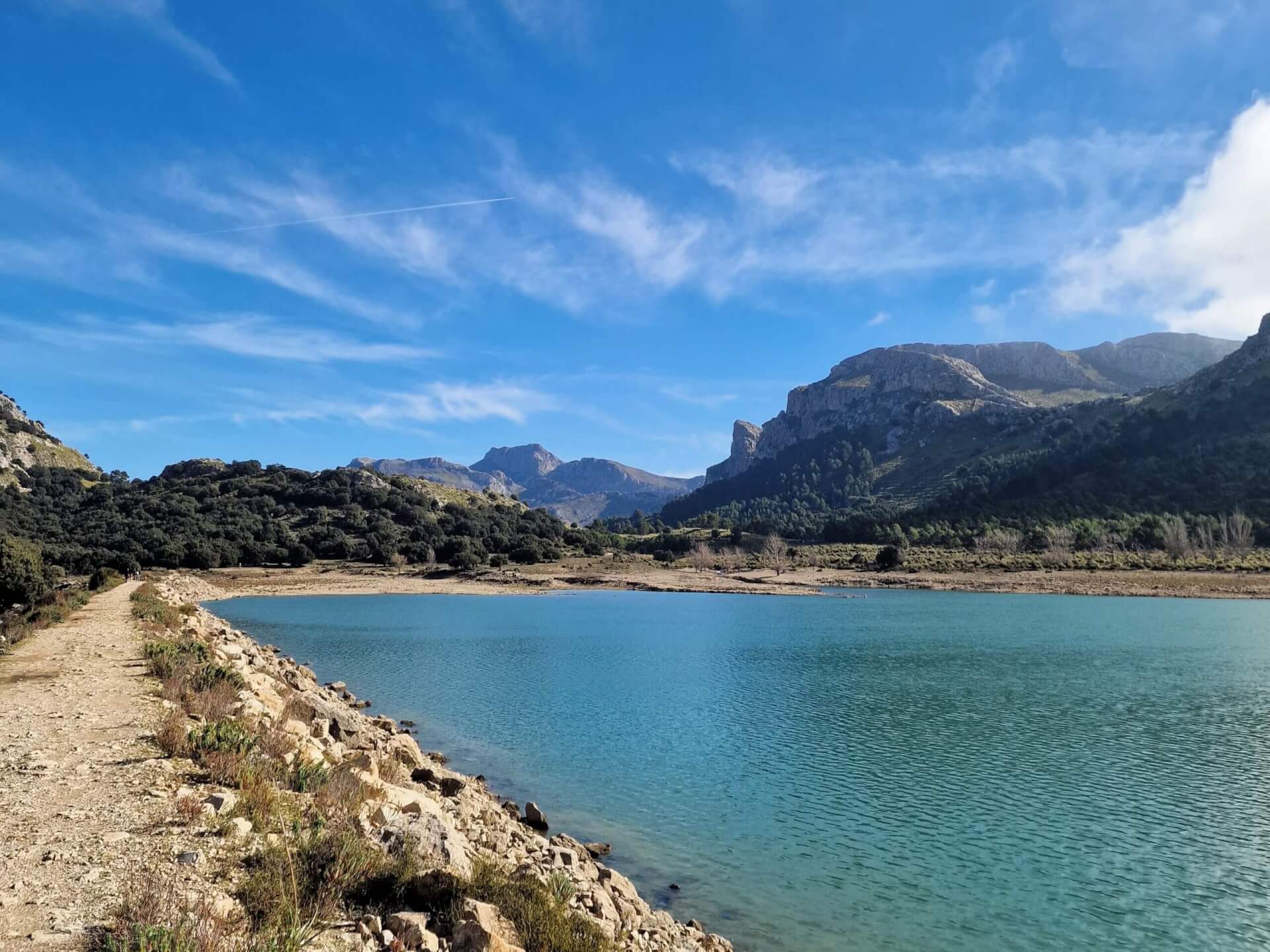
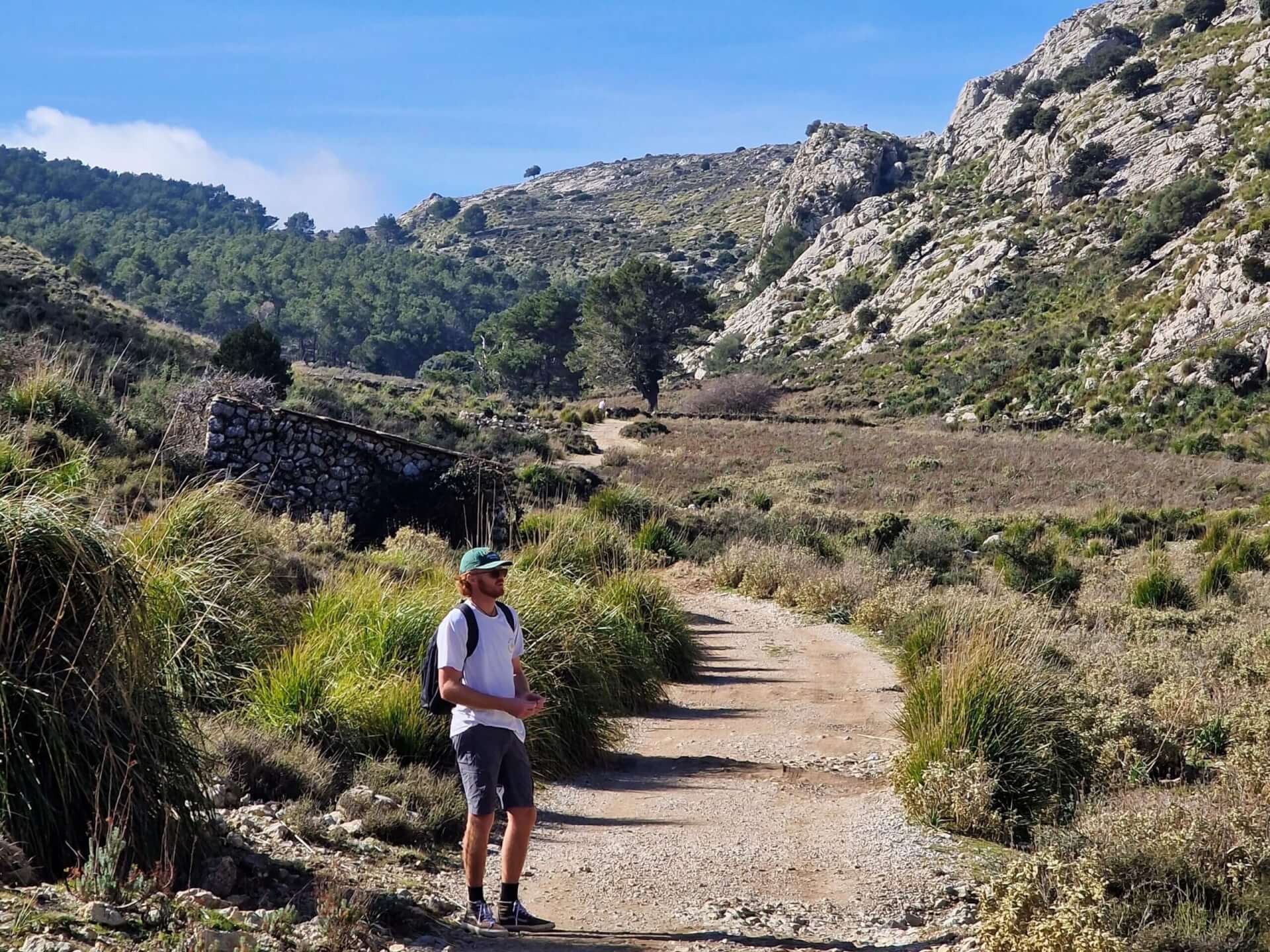
At the reservoir, we turned right, setting off anti-clockwise around the loop. The first stretch was flat and easy, skirting the lake and winding past a refugi and what looked like an old sheepfold. The air was crisp, and the sun was warm on my face — that gentle warmth that feels like encouragement. My legs slowly woke up. I had no idea what was coming.
Into the Forest
Soon, the path dipped into the woods, offering shade and the first real ascent. I was already huffing behind my boyfriend — nearly two meters tall and walking like a man on a mission. His legs are skyscrapers; mine felt like cement blocks.
As the trees opened up, we reached a grassy saddle — a junction on the GR221. We scrambled up a few rocks on the right to take in the view. The valley behind us was already far away, and ahead: the climb to Puig de l’Ofre, our first 1000-meter peak.
The Pain
That’s when my stomach started to cramp. Not the normal “ugh” kind. Period cramps.
Even though I wasn’t on my period yet, my body had other plans. Suddenly, the trail wasn’t the hard part — breathing through the cramps was. I probably sounded like I was in early labor, practicing deep breathing while trying to keep pace.
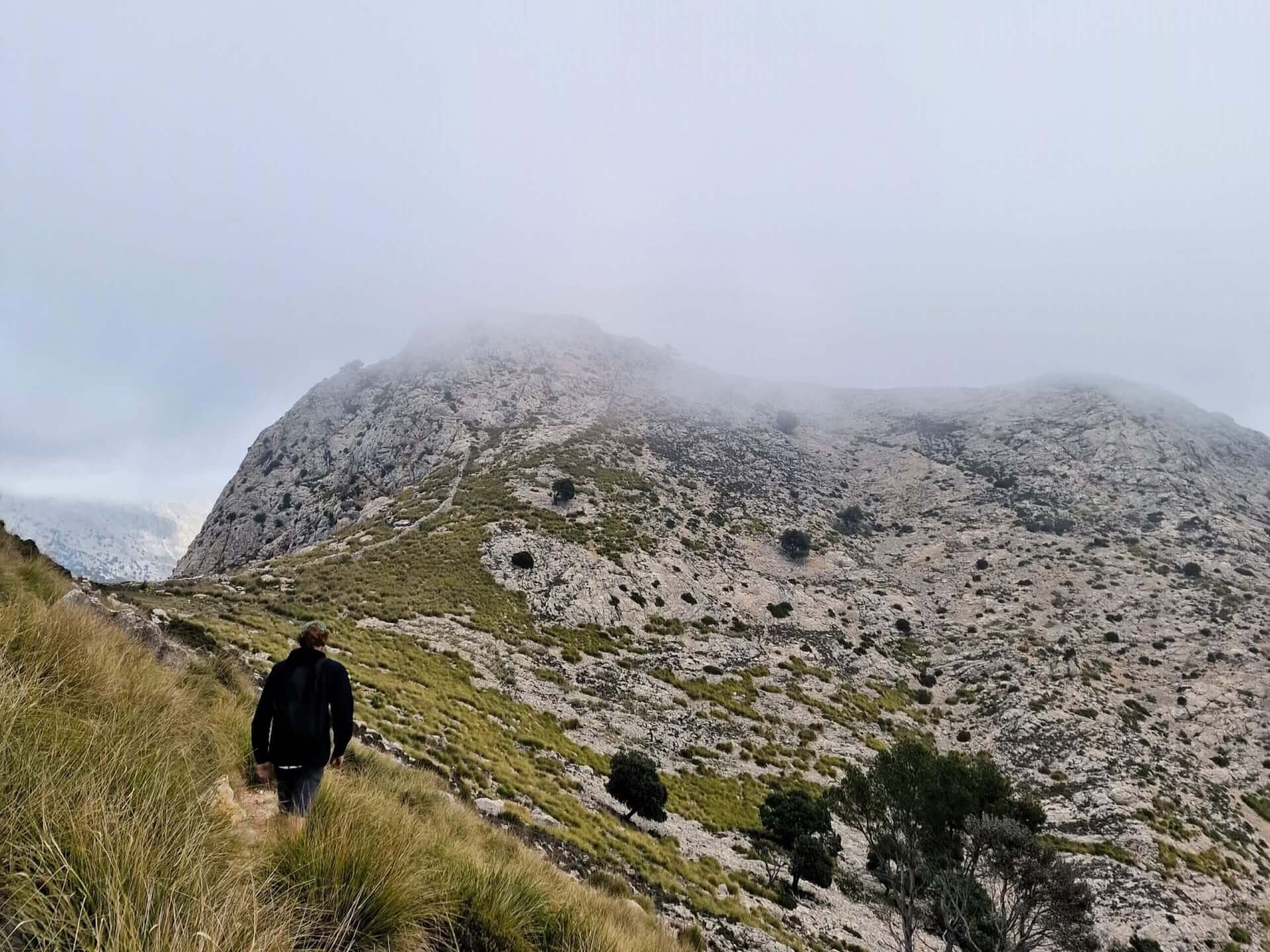
The trail rose gently at first, then not so gently. The final stretch toward the summit turned steep and scrambly — the kind where hands are just as useful as feet. The forest gave way to exposed rock, and the trail zig-zagged into the sky.
On Top of Puig de l’Ofre
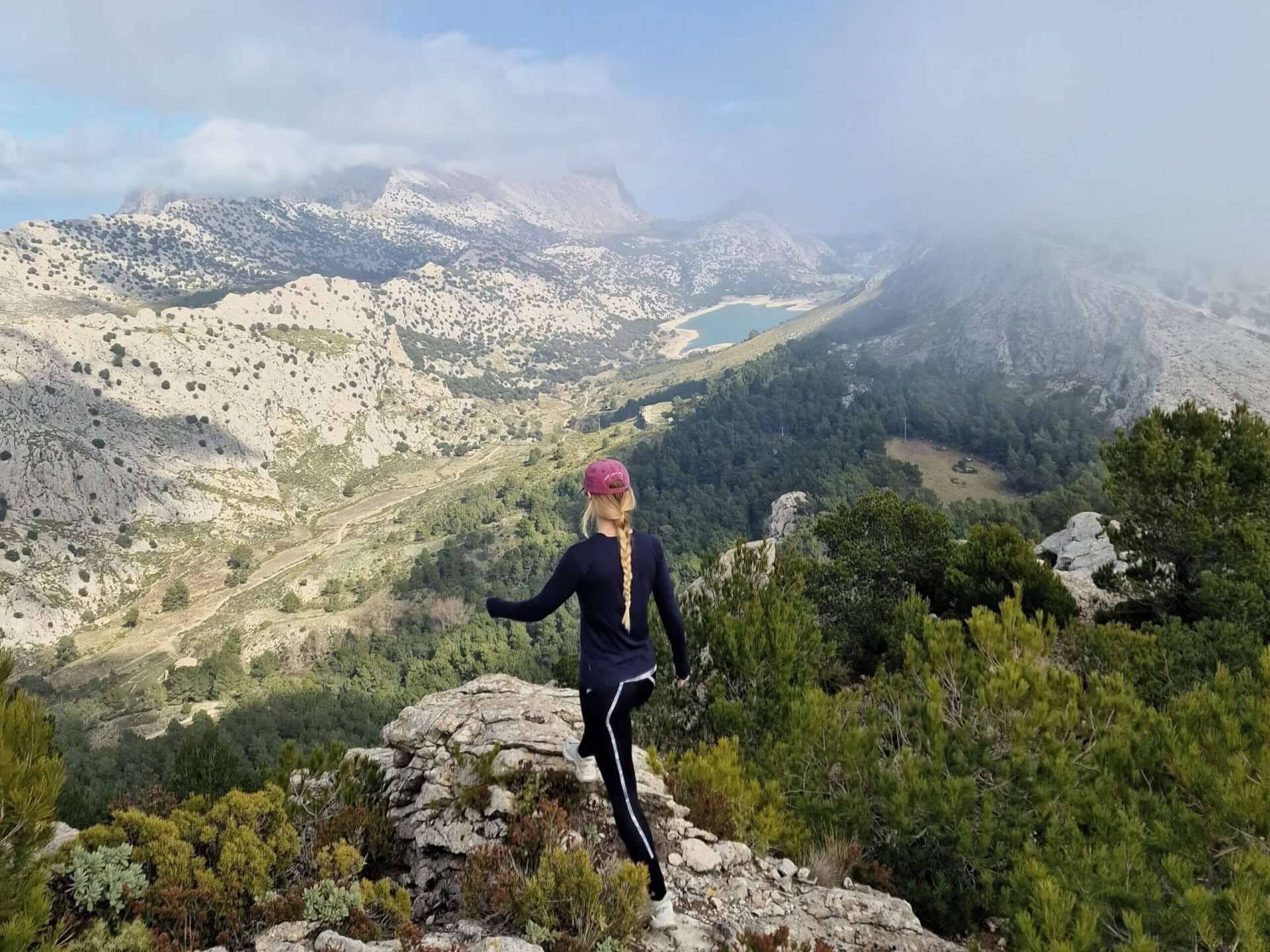
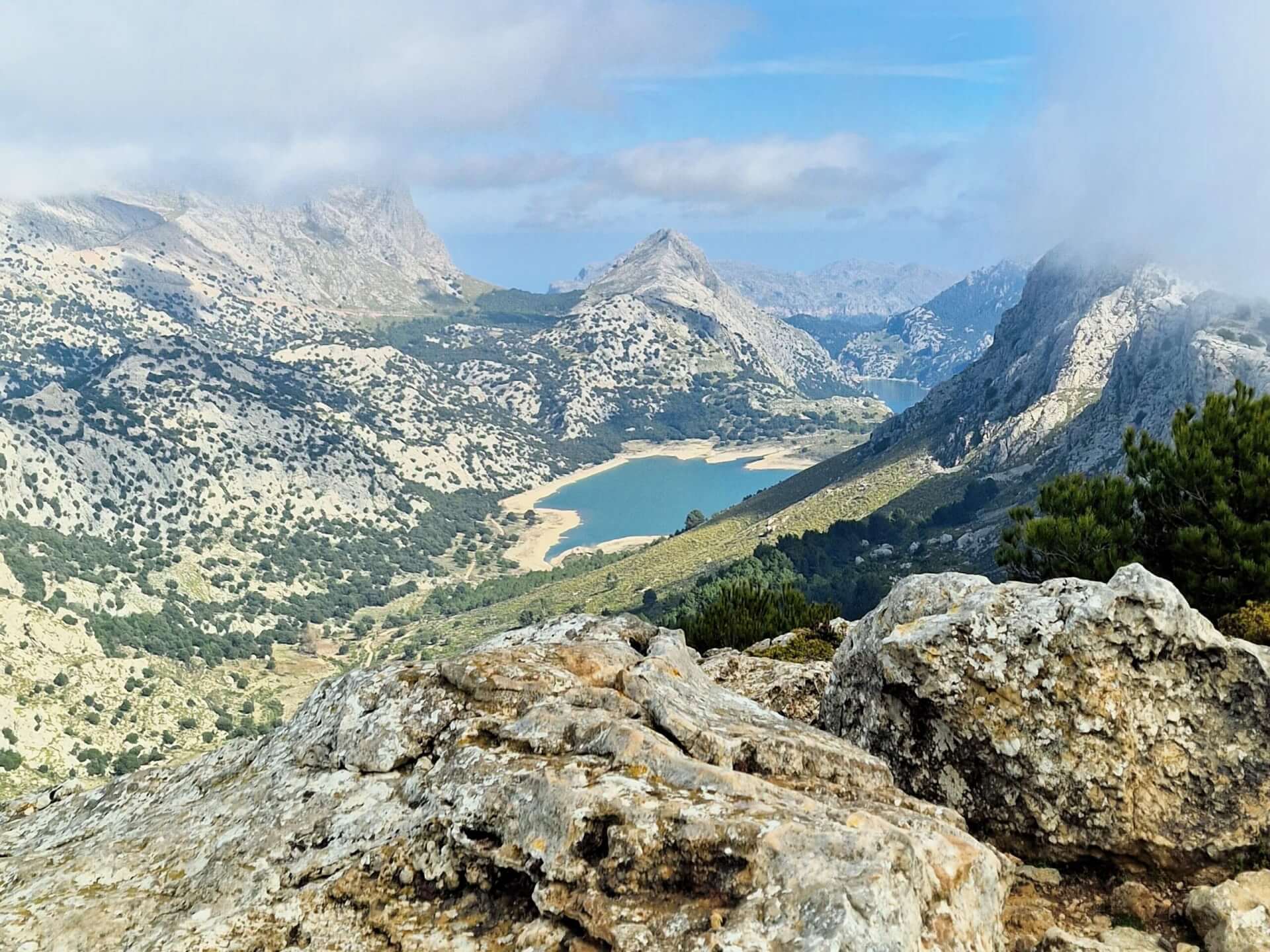
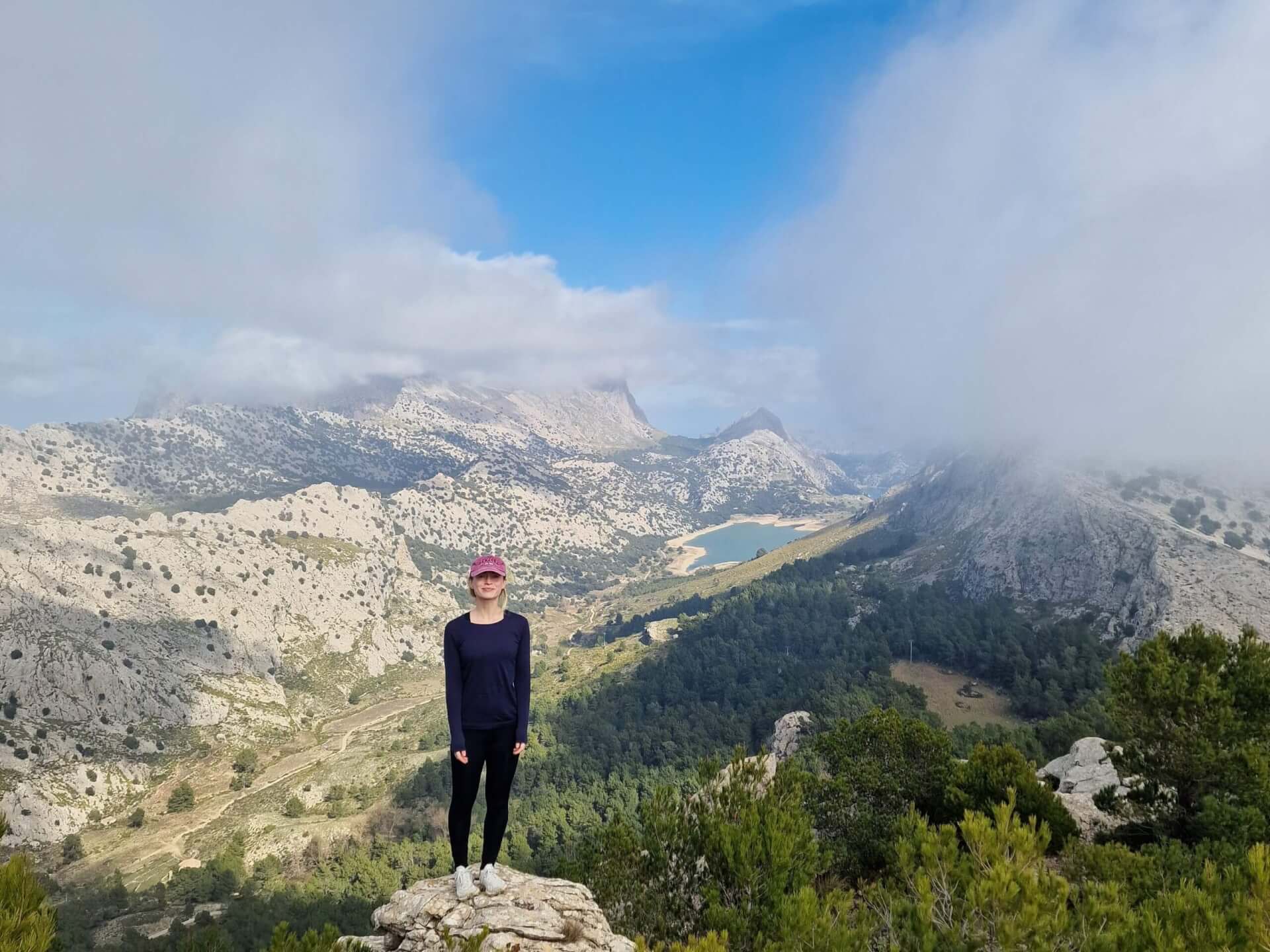
The climb was worth it. From the summit, Cúber spread out below us like liquid jade — soft, turquoise, shimmering in the light.
Clouds had begun to drift in, taking some of the earlier clarity with them, but we were lucky: breaks in the grey offered glimpses down the valley and across the ridge we still had to conquer. We sat down for snacks, soaking in the moment — and trying not to think about how many peaks were still ahead.
The Fog Rolls In
As we pressed on toward Puig de na Franquesa, the wind picked up and the clouds thickened. My cramps hadn’t relented, but we layered up and kept moving.
The trail grew trickier — harder to follow, and rockier. We checked GPS more often, just to stay sane. The path wasn’t slippery exactly, but it demanded focus. And then came another scramble. I leaned forward and powered up on all fours, Spiderman-style, hands and feet gripping the rock.
At the summit, the views were fleeting. The clouds had claimed the peak — and the scenery.
The Final Climb
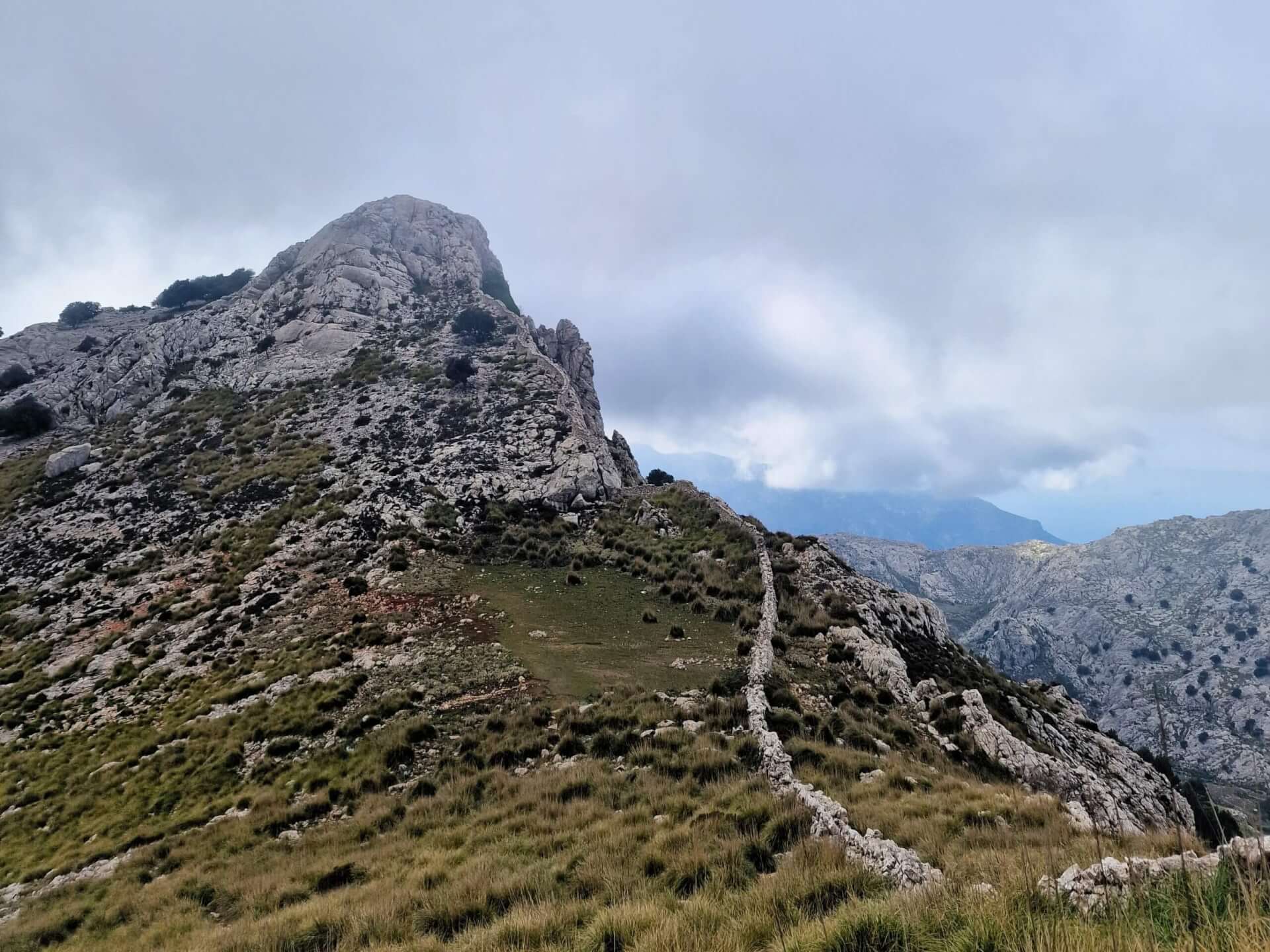
We dropped down again into a landscape that shifted once more. Suddenly we were walking through grassy fields, surrounded by ancient stone walls and silent goats who barely acknowledged us. An eagle soared above, riding the currents.
The closer we got to Puig de sa Rateta, our final peak, the more goats appeared. Some grazing, some perched like statues on the rocks. The air felt old here — like this land had been walked for centuries. There was a sense of history I couldn’t quite put into words.
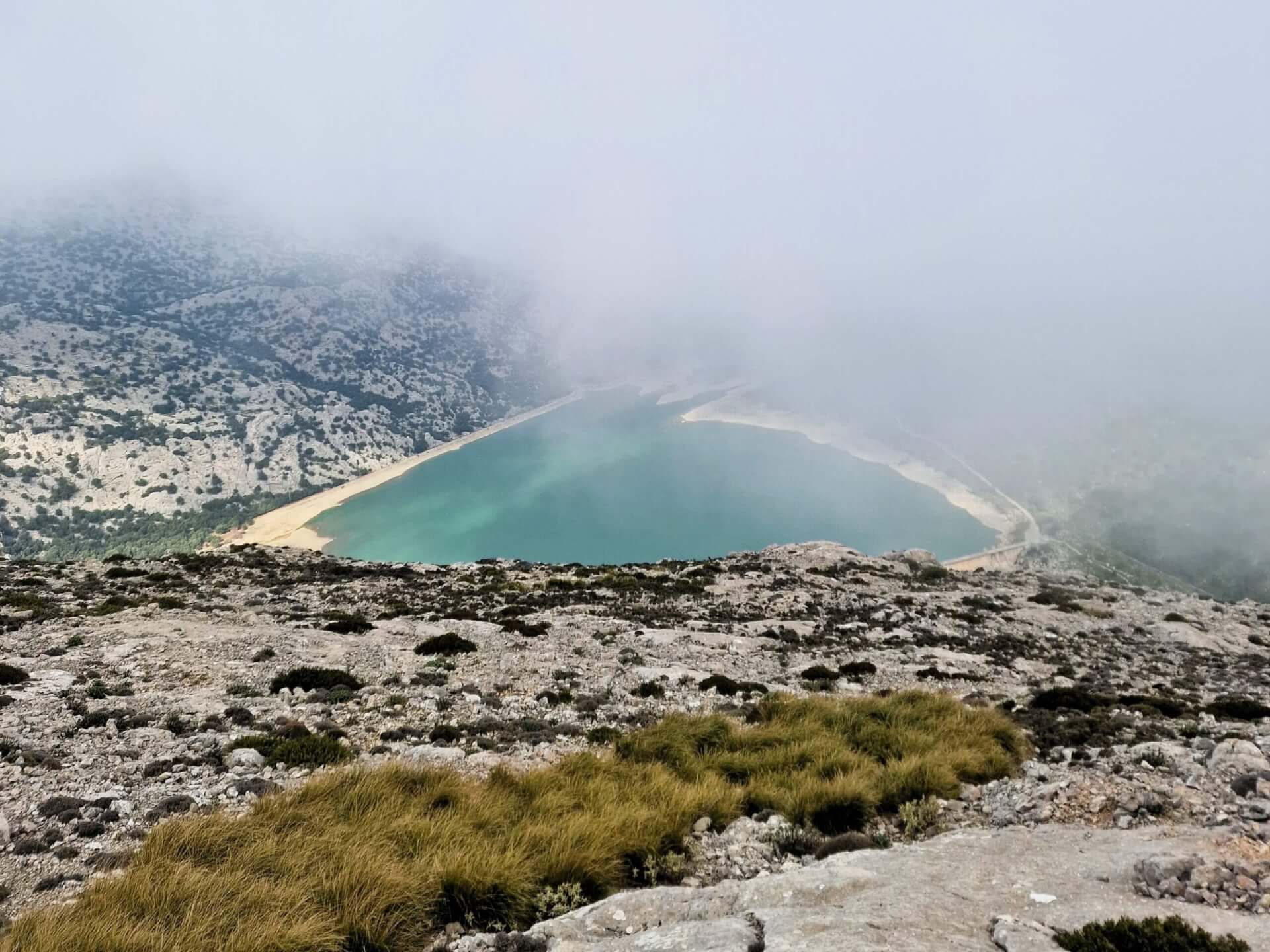
From the summit, we caught one last glimpse of the reservoir before the clouds shut the window again. But even that quick view was enough — a reward for the climb.
Heading Back Down
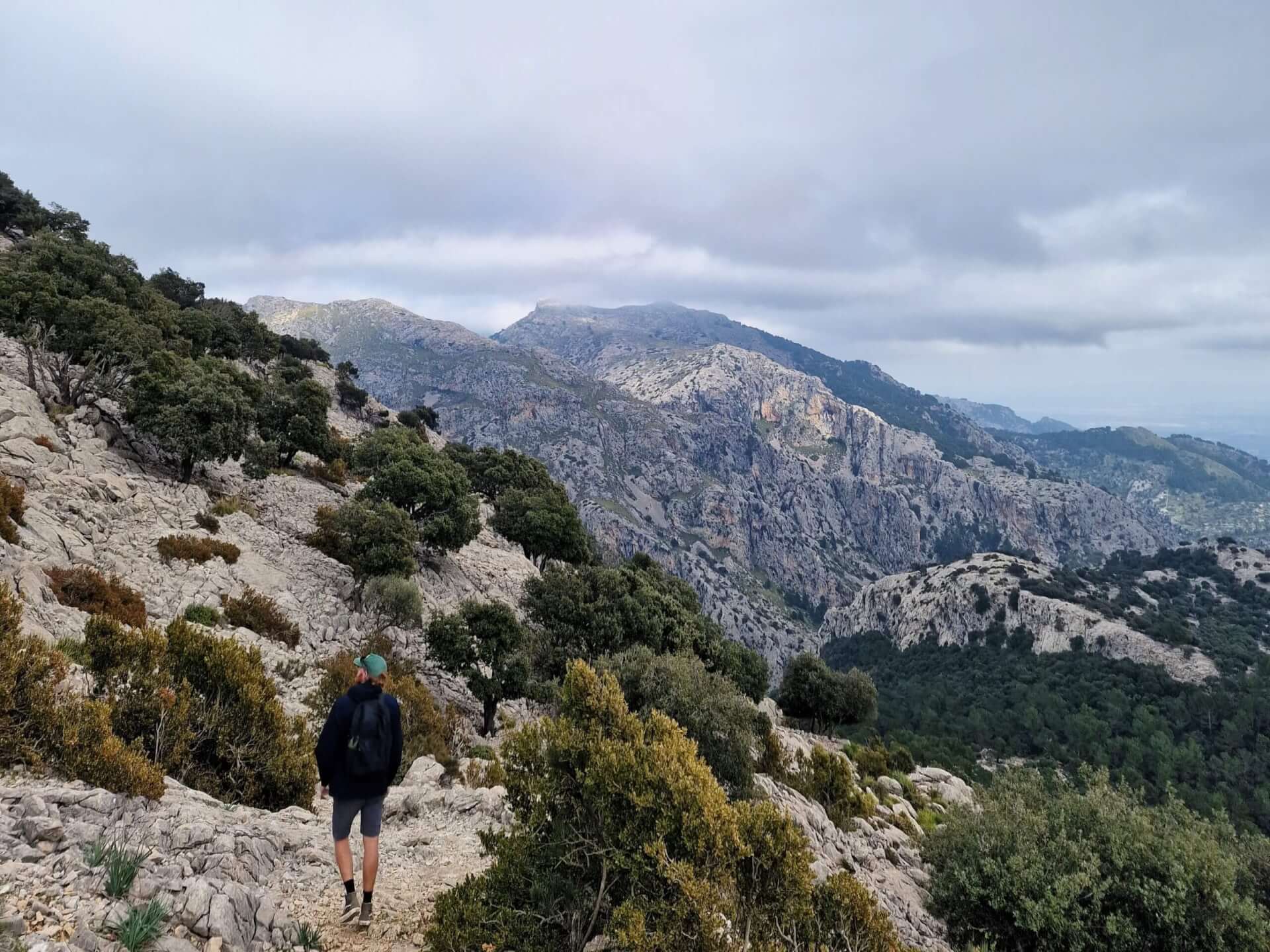
The descent started rough — a long scramble over rocks and loose gravel — until the path finally rejoined something that resembled a trail. From here, the descent was glorious.
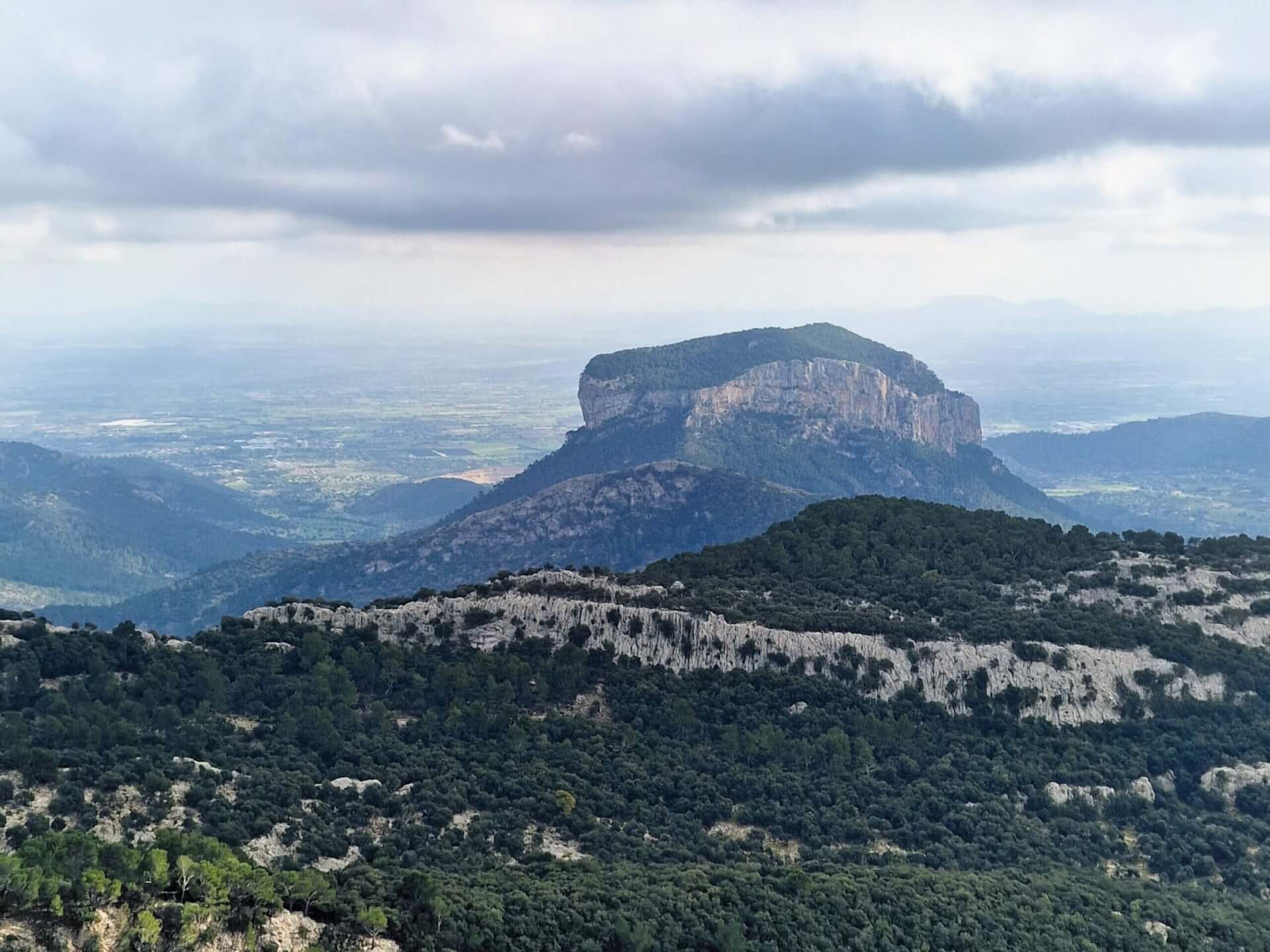
In the distance, one mountain stood out, rising dramatically through the late afternoon haze. I think it was Puig de s’Alcadena. I couldn’t stop photographing it — it looked like something pulled straight from a fantasy novel, shrouded in moody blue light.
The trail down felt like something ancient — old mule tracks or monk paths, carved long before hiking apps and GPS. You could almost imagine someone crossing these same stones centuries ago, for work or worship.
On the way down, we passed a few hikers going up. “How long to the peaks?” one asked.
“Two hours?” I replied, not entirely sure. They looked like they were questioning their life choices — and honestly, I would too going up that way. I was so glad we took the trail anti-clockwise.
The Last Push
Just when we thought it was over, the trail threw in one last uphill section — a final scramble that had us panting like pack mules. But then, finally, we crested the last rise.
Cúber was back in view. The lake shimmered once again, and all we had to do was follow the trail around its edge, one foot in front of the other.
A wild, humbling, unforgettable day on one of the most stunning islands I know.
Thank you, Mallorca.
Where to Stay Nearby
You’ve got a few great base options depending on your travel style and route plans:
Refuges (for hikers)
- Refugi de Tossals Verds (reachable via a different GR221 section): Rustic mountain hut with shared bunks, meals, and great views.
- Lluc Monastery: Historic and peaceful, with simple rooms — and right on the GR221 trail.
Charming Towns
- Sóller: The most popular base — charming architecture, mountain views, and easy bus/car access to Cúber. Great food and local vibe.
- Fornalutx: Often called “Spain’s prettiest village.” A quieter, upscale base just 15 minutes from Sóller.
- Escorca: Remote and tiny, but closest to the actual trailhead if you’re just there to hike.
FAQ: Visiting Mallorca
Is Mallorca only for beach holidays?
Not at all. While Mallorca is famous for its beaches, the island is equally renowned for its mountains, traditional villages, cycling routes, and cultural sites. The Serra de Tramuntana mountain range offers some of the best hiking in the Mediterranean.
What’s the best time to visit Mallorca?
The best months are April to June and September to early November. During these periods, the weather is warm but not overwhelming, ideal for outdoor activities. July and August can be very hot and crowded.
Do I need a car to explore the island?
It depends on your plans. If you’re staying in Palma or major resort areas, public transport can be sufficient. But if you want to explore hiking trails, remote coves, and small inland towns, renting a car is highly recommended.
Is Mallorca expensive?
Mallorca can suit a range of budgets. You’ll find both luxury resorts and affordable rural stays. Eating out varies too — local bakeries and markets are budget-friendly, while beachside restaurants can be pricier.
What language is spoken in Mallorca?
The official languages are Catalan (specifically Mallorquín dialect) and Spanish. English and German are widely understood in tourist areas, but learning a few local phrases is always appreciated.
Is it safe to travel in Mallorca?
Yes, Mallorca is generally very safe for travelers. Usual precautions apply, especially in busy tourist zones where pickpocketing can occur. Trails and nature areas are safe, though hikers should always be prepared.
What’s the public transport like?
Mallorca has a reliable bus and train network connecting Palma with major towns. For hiking access, especially in the Tramuntana, bus services are more limited but do exist. Timetables can be seasonal, so check in advance.
Can I drink tap water in Mallorca?
Yes, the tap water is technically safe to drink, but many locals and visitors prefer bottled water due to the taste and high mineral content.
Are there good options for vegetarian or vegan travelers?
Yes, especially in Palma and larger towns where you’ll find dedicated vegetarian and vegan restaurants. Traditional Mallorcan cuisine is meat- and fish-heavy, but many places offer plant-based alternatives.
Do I need hiking permits in Mallorca?
Generally, no permits are needed for hiking trails like the GR221 or most mountain routes. However, some protected areas or private estates may require prior permission — always check local signage or guides.
Can I visit without speaking Spanish?
Yes. English is widely spoken in most tourist-facing settings. However, in rural villages or local eateries, having a few Spanish or Catalan phrases will go a long way in building goodwill.
How long should I stay to explore the island?
For a relaxed but rich experience, plan for 5–7 days. This gives you time to visit the mountains, beaches, Palma, and a few villages. If you’re focused just on hiking or beaches, even a long weekend can work.

Leave a Reply