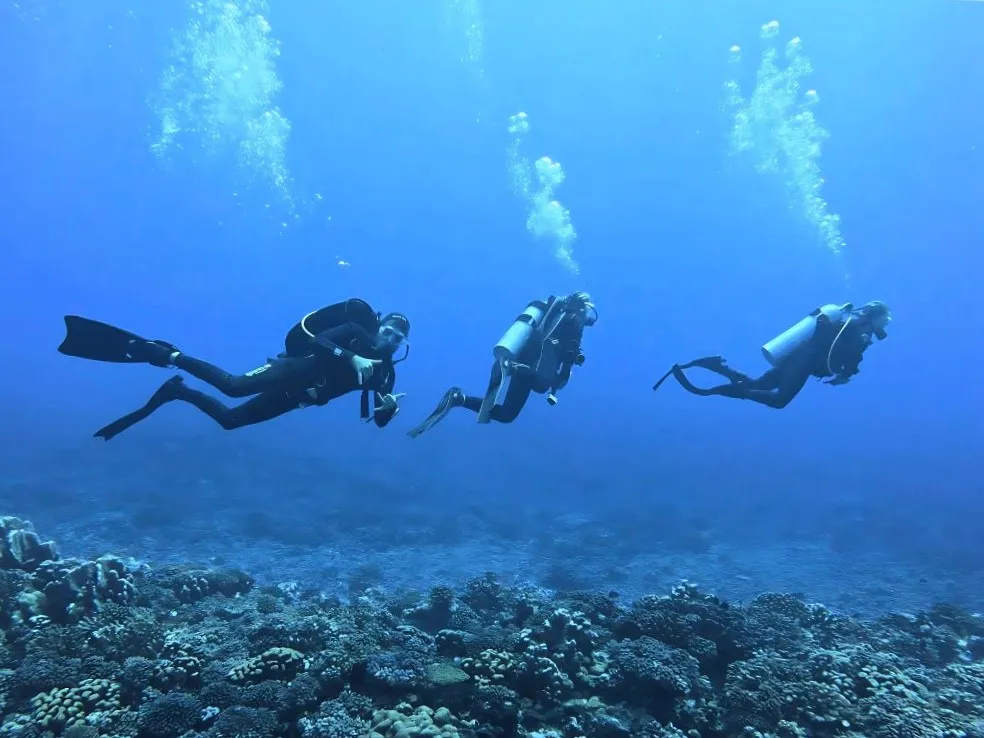
Is scuba diving in Bora Bora actually worth the $200+ price tag? Get an honest 2026 review of the best dive sites, Manta Ray encounters, and money-saving tips for your trip.
Let’s be real for a second: Bora Bora is expensive. Between the overwater bungalows and the $20 cocktails, every activity you book feels like a high-stakes gamble with your vacation budget. So, when it comes to scuba diving, the question isn’t just “is it pretty?”—it’s “is it worth the $200+ price tag?”
If you’re deciding whether to spend your vacation budget on a tank or another round of mai tais, you’re in the right place. I’m stripping away the marketing fluff to give you the unfiltered truth about the visibility, the “Manta-guarantee,” and whether you should bother gear up at all.
Let’s see if the reality lives up to the postcards.
Planning your trip? My French Polynesia Favorites:
🏨 Hotels: Find the best bungalows on Booking.com – I recommend staying on the main island for easier access to dive centers or a private motu for the ultimate luxury.
🎟️ Tours & Activities: Book your scuba diving and shark & ray excursions on Viator – It’s the best way to guarantee a spot with the top-rated dive masters.
🚗 Car Rental: Compare deals on Expedia – Renting a scooter for a day is the best way to explore the main island’s local food spots and hidden beaches.
🛡️ Insurance: Don’t dive without cover. I use Ekta Travel Insurance – It’s affordable, easy to set up, and covers the unpredictable nature of adventure travel.
📱 Connectivity: Stay connected with a Saily eSIM – Don’t rely on spotty island Wi-Fi; get instant data so you can use GPS on the trails.
✈️ Flights: Check Air Tahiti for island-hopping – If you’re heading to Bora Bora or Maupiti after Moorea this is the easiest option.
Table of Contents
A note from Sara:
There are affiliate links in this post, and I may earn a small commission if you choose to make a purchase – at no extra cost to you. It’s a great way to support my work if you found this guide helpful – thank you so much!
The Honest Verdict: Is Scuba Diving in Bora Bora worth the price?
Bora Bora is one of the most expensive places on earth to strap on a tank. Before you drop $200+ on a two-tank dive, you need to know if it’s actually going to deliver.
- For Beginners: 100% Yes. The lagoon is like a giant, warm bathtub with zero current. It is arguably the best place in the world to do an “Intro Dive” (Discovery Dive) because you see massive amounts of fish at only 5 meters deep.
- For Manta Lovers: Yes. Bora Bora is one of the few places with a reliable Manta Ray cleaning station (Anau).
- For Hardcore Adrenaline Junkies: Maybe Not. If you’re looking for high-speed drift dives and “walls of sharks,” Bora Bora might feel a bit tame compared to places like the Tuamotus. It’s beautiful and scenic, but it’s more “ballet” than “action movie.”
The “Hidden” Costs
Don’t forget that most dive shops are located on the main island or near Vaitape.
- If you’re staying on a private Motu (like the Four Seasons or St. Regis): Most dive centers will pick you up by boat, but some may charge a “resort pick-up fee.”
- Gear Rental: Most tours include it, but always double-check. I recommend bringing your own mask and snorkel at the very least to ensure a perfect fit.
Top 3 Dive Sites in Bora Bora
1. Anau (The Manta Ray Cleaning Station)
This is the crown jewel of Bora Bora diving. It’s a shallow site where giant Mantas come to have cleaner wrasse remove parasites from their wings.
- Depth: 15–25m
- The Reality: It’s a “wait and see” game. You hover near the coral and wait for the gentle giants to glide over you. When they do, it’s spiritual.
2. Toopua (The Eagle Ray Formation)
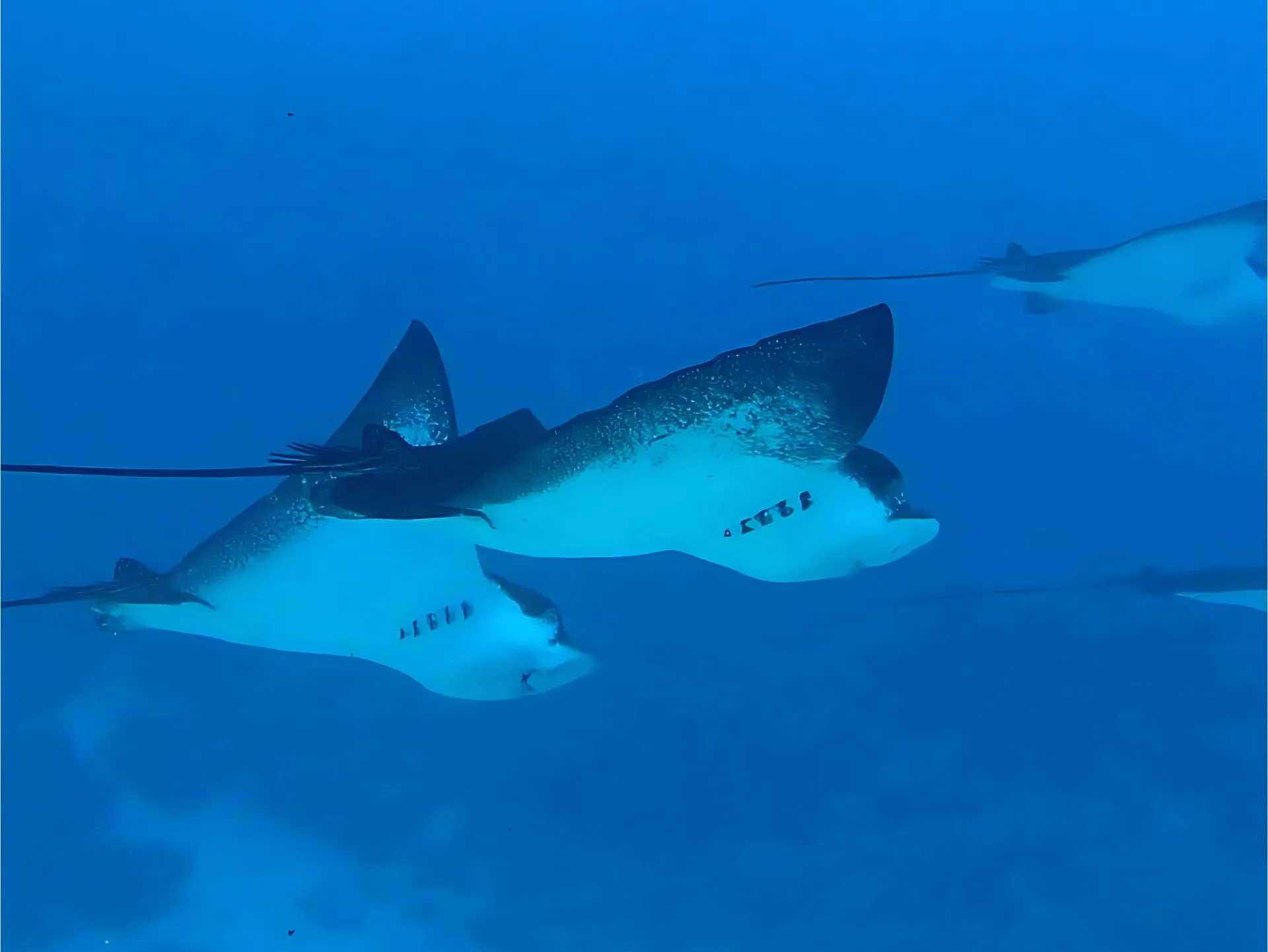
Located inside the lagoon, this site features a beautiful coral wall and a sandy bottom where Spotted Eagle Rays like to hang out in large schools.
- The Experience: It’s famous for seeing 30+ rays flying in perfect formation. It’s the most “photogenic” dive on the island.
3. Tapu (The Shark Encounter)
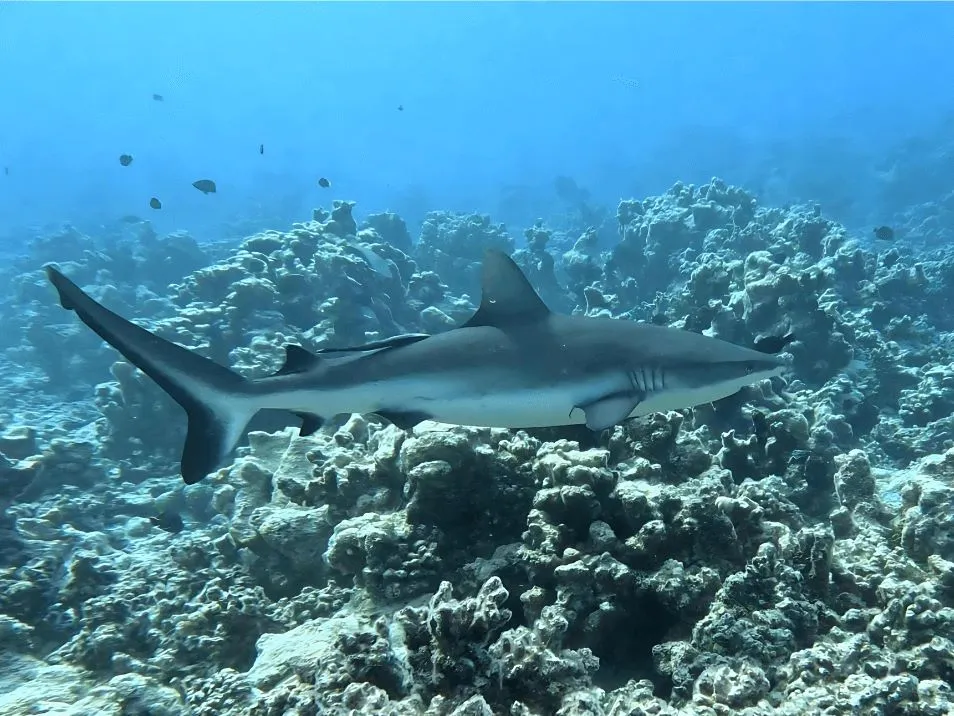
If you want to see the “landlords” of the reef, this is the spot. Located just outside the pass, this is where the big Lemon Sharks and Blacktips congregate.
- The Vibe: It’s raw, blue, and exhilarating. You’ll feel the power of the ocean out here.
Best Tours: From Discovery Dives to Advanced Reefs
Not sure which boat to hop on? I’ve handpicked the best tours on the island, whether you want to go deep with tanks or stay near the surface with a snorkel.
For Certified Divers
- 2-Tank Shared Boat Dive: This is the go-to for experienced divers. It takes you to the best spots outside the lagoon (like Tapu) for shark encounters and big wall dives. High-quality gear and expert guides included.
For Beginners (No License Required)
- Introductory “Discovery” Dive: If you’ve never breathed underwater before, this is your chance. A calm, safe, and absolutely magical first experience in the lagoon.
- Aqua Safari: Underwater Helmet Walk: Not ready for a tank? This “space helmet” walk lets you breathe normally while walking on the sandy bottom surrounded by fish. Perfect for families!
- Bora Bora Underwater Scooter: This is probably the most unique way to see the lagoon. You drive your own electric underwater scooter—it’s like something out of a James Bond movie!
For the Best of Both Worlds
- Combo Diving & Snorkeling Half-Day: If you’re traveling with someone who doesn’t dive, this is the perfect compromise. You get to dive while they snorkel, and you still enjoy the boat trip together.
- Classic Shark & Ray Snorkel Tour (4 Hours): The quintessential Bora Bora experience. If you want to see the famous stingrays and blacktip sharks in shallow water, this is the one.

Bora Bora vs. Moorea vs. Rangiroa: Where should you dive?
If you are visiting multiple islands, you shouldn’t spend your entire budget in one place. Each island offers a completely different “vibe” underwater. Here is the breakdown:
Bora Bora (The Luxury Entryway):
- The Vibe: Calm, clear, and cinematic.
- Best for: Beginners doing their first dive or photographers hunting for the famous Manta Rays.
- The Verdict: Dive here if you want easy conditions and guaranteed “postcard” visibility.
Moorea (The Adventure Hub):
- The Vibe: Rugged reefs and big animal encounters.
- Best for: Seeing Lemon Sharks and, if you’re there between July and October, the chance to swim with Humpback Whales.
- The Verdict: Dive here for a mid-range price point with a high chance of seeing “the big stuff” just a short boat ride from shore.
Rangiroa & Fakarava (The Hardcore Mecca):
- The Vibe: High-speed drift dives and “walls of sharks.”
- Best for: Experienced divers (Advanced Open Water is highly recommended). The currents in the passes are legendary.
- The Verdict: If you are a serious diver, save your biggest budget for here. It is world-class, adrenaline-pumping diving that makes Bora Bora look like a swimming pool.

The Diver’s Packing List (Don’t forget the red filter!)
Bora Bora’s dive shops have great rental gear, but there are a few essentials you should bring to make your life easier (and your photos better).
- 1. A Red Filter for your GoPro/Camera: Bora Bora’s water is intensely blue. Without a red filter, your footage at sites like Tapu (which hits 20-30 meters) will look washed out and monochrome. A red filter brings the vibrant corals and shark skin tones back to life.
- 2. Your Own Mask: Nothing ruins a $100 dive faster than a leaky rental mask. If you only pack one piece of gear, make it a high-quality, low-volume mask that fits your face perfectly.
- 3. 3mm Shorty or Rash Guard: The water is a warm 26°C–29°C, so you don’t need much. However, if you are doing a 2-tank dive, your body temperature will drop. A 3mm shorty is perfect, or at the very least, a thermal rash guard for sun and jellyfish protection.
- 4. Dive Computer: If you’re a certified diver, bring your own computer. It’s easier to track your own “No-Decompression Limits,” especially when you’re as mesmerized by the Eagle Rays as I was at Toopua and forget to check your depth!
- 5. Reef-Safe Sunscreen: Traditional sunscreens contain chemicals that bleach the coral. Since you’ll be diving in a delicate lagoon ecosystem, only use brands like Stream2Sea or Raw Elements.
Where to Stay in Bora Bora: Main Island vs. The Motus
Choosing where to stay in Bora Bora isn’t just about the budget—it’s about logistics. If you are here specifically to dive, where you sleep determines how early your “wake-up call” is for the boat pick-up.
The Main Island: Best for Serious Divers & Value
Staying on the main island (near Vaitape or Matira Beach) is the move if you want to be close to the dive centers, local snacks, and the trailhead for Mount Piri.
- Royal Bora Bora: This is my top pick for mid-range travelers. It’s located right on the water, has a great pool, and most dive operators can pick you up directly from their dock.
- Maitai Bora Bora: Located near the famous Matira Beach. It’s affordable (by Bora Bora standards) and very convenient for getting to the dive shops in the morning.
- Village Temanuata: A charming, authentic Polynesian stay right on Matira Beach. Perfect for solo travelers or those who want to spend their money on dives, not gold-plated faucets.
The Motus: Best for Luxury & Honeymoons
The motus are the private islets ringing the lagoon. This is where you’ll find the iconic overwater bungalows.
- Four Seasons Resort Bora Bora: The ultimate splurge. They have their own inner lagoon and a top-tier concierge that can arrange private dive charters to pick you up at the resort dock.
- The Westin Bora Bora Resort: Stunning views of Mount Otemanu and a great eco-focus (they even have a turtle sanctuary).
- InterContinental Bora Bora Resort & Thalasso Spa: Known for having some of the best overwater bungalows in the world.
Essential Scuba Safety: Don’t Skip This
Diving in paradise is a dream, but Bora Bora is a remote island in the middle of the Pacific. Here is how to keep your adventure from turning into a medical emergency.
1. The “No-Fly” Rule (Crucial!)
Bora Bora’s airport is a tiny strip on a motu. After your last dive, you must wait at least 18–24 hours before flying, even for the short 45-minute hop back to Tahiti. The small “puddle jumper” planes used by Air Tahiti are pressurized, but why risk DCS (Decompression Sickness)? Plan your “No-Dive” day for your last full day on the island.
2. Decompression Chambers are Far Away
There is no hyperbaric chamber on Bora Bora. The only decompression chamber in French Polynesia is in Papeete, Tahiti. If you have an accident, you’re looking at an expensive medical evacuation by boat or helicopter.
- The Lesson: Dive conservatively. Follow your computer, do your safety stops, and don’t push your limits at sites like Tapu.
3. Stay Hydrated (No, Hinano Doesn’t Count!)
The tropical sun and the salt water will dehydrate you faster than you realize. Dehydration is a major contributing factor to DCS. Drink plenty of water between dives and save the celebratory Hinano beers for after you’re done for the day.
4. Don’t Touch the Wildlife
Whether it’s a Manta Ray at Anau or a Lemon Shark at the reef, do not touch. Aside from being disrespectful to the ecosystem, many species have protective mucus layers that are damaged by human touch. Plus, fire coral and stonefish are “hidden” on the reefs—keep your hands to yourself to avoid a nasty sting.
5. Get Specific Dive Insurance
Standard travel insurance often has a “depth limit” (usually 10-15 meters) or excludes scuba diving entirely. I use Ekta Travel Insurance because it specifically offers coverage for adventure sports. For serious divers, I also recommend DAN (Divers Alert Network) insurance.
FAQ: Scuba Diving in Bora Bora
Can beginners dive in Bora Bora?
Absolutely! Many dive shops offer “Introductory Dives” (no certificate needed) in the calm lagoon. Sites like “The Aquarium” are perfect for your first time underwater.
What is the water temperature?
Expect a tropical 26°C to 29°C (79°F – 84°F) year-round. A 3mm shorty wetsuit is usually more than enough.
What are the must-see marine creatures?
Bora Bora is famous for Manta Rays, Spotted Eagle Rays, Lemon Sharks, and Blacktip Reef Sharks. You’ll also see plenty of clownfish, moray eels, and vibrant corals.
Do I need dive insurance?
Yes! Standard travel insurance often excludes scuba diving. I recommend Ekta Travel Insurance for specific adventure and dive coverage.
Bora Bora Travel Tips
How do I get to Bora Bora?
Fly from Tahiti (PPT) to Bora Bora (BOB). Budget tip: Look into the ferry that runs 3 times a week (Wednesday, Friday, Sunday)—it’s roughly half the price of a flight!
What is the best time to visit?
The dry season from May to October offers the best visibility for diving and the most predictable weather for hiking.
What should I pack? Keep it light! Swimwear, breathable clothes, a dry bag for boat trips, and reef-safe sunscreen to protect the lagoon.
What is the best time to visit?
The dry season from May to October offers the best visibility for diving and the most predictable weather for hiking.
What should I pack?
Keep it light! Swimwear, breathable clothes, a dry bag for boat trips, and reef-safe sunscreen to protect the lagoon.
Is Bora Bora safe for solo travelers?
It’s incredibly safe. The biggest “danger” is the sun and staying hydrated during your adventures.
Final Thoughts: Is Diving in Bora Bora Worth It?
In one word: In my opinion, yes. Whether you’re hovering over a cleaning station at Anau watching Mantas dance or feeling the adrenaline kick in as a Lemon shark glides past you at Tapu, Bora Bora’s underwater world is something you’ll never forget.
Ready for your next adventure? If you want to keep your hair dry for a day, check out my Ultimate Bora Bora Hiking Guide to see the lagoon from above, or hop on a bike with my Bora Bora Cycling Guide for a taste of the island on two wheels.
Leave a Reply