Escape the crowds of Valldemossa for the crystal-clear water of Caló de S’Estaca. This 2026 guide to the secret cove covers everything you need to know.
Valldemossa is exactly what you’re afraid of: a postcard-perfect trap teeming with day-trippers looking for a pastry and a Chopin anecdote they’ll forget in ten minutes. But if you’re up for an adventure, there’s a way out.
You start at a silent, 17th-century hermitage where the air is thick with the scent of sun-baked pine and centuries of isolation. From there, it’s down. Not a polite, paved stroll, but a dusty track toward the sea.
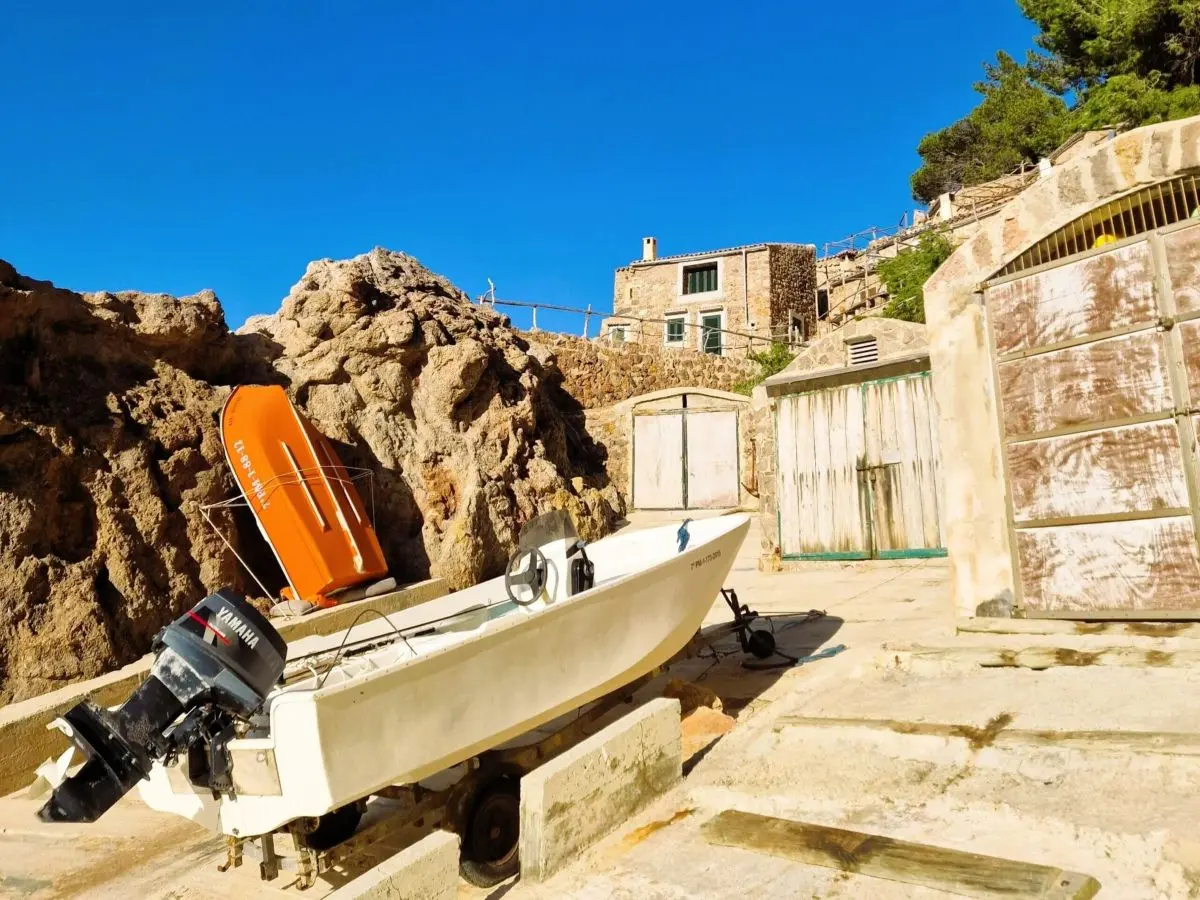
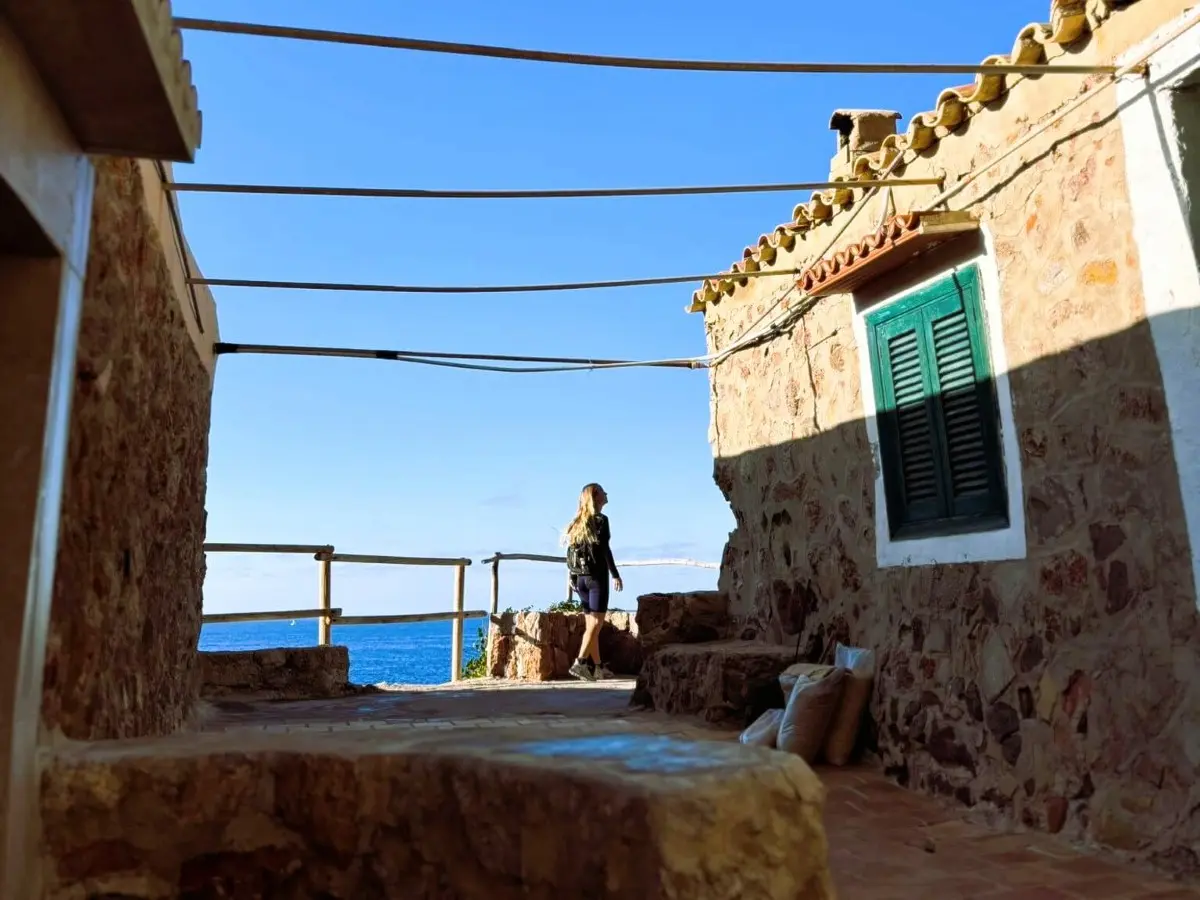
The goal is Caló de S’Estaca—a cluster of stone huts clinging to the coast. There are no lifeguards, and no sun loungers. What you will get is crystal clear water, serenity, and no crowds. It’s exactly how Mallorca is meant to be felt.
Planning your trip? My Mallorca Favorites:
🚗 Transport: Public transport is a nightmare in the mountains. Compare car and campervan deals on DiscoverCars—or check out Imoova for $1/day relocation deals in Europe.
🏨 Hotels: Find the best Mallorca hotels on Booking.com—or if you’re on a budget, check out the island’s hostels at Hostelworld.
🎟️ Tours & Activities: Book boat trips, wine tastings, and canyoning tours on GetYourGuide—It’s the easiest way to keep all your island bookings in one app.
🤿 The Must-Do’s: Don’t leave the island without doing a Sunset Cruise, Tapas Tour and Dolphin Watching! These are the things that actually justify the flight.
✈️ Flights: Check Trip.com for the best routes into Palma (PMI). If you’re flying from Europe, Vueling or Iberia are usually the most reliable.
🛡️ Insurance: Mallorca’s limestone is slippery and the sun is brutal. I use VisitorsCoverage—it’s affordable, easy to set up, and essential for mountain adventures.
📱 Connectivity: Stay connected with a Saily eSIM – It’s the easiest way to have data the minute you land, and you don’t want to rely on spotty WiFi to upload those dreamy pics.
Table of Contents
A note from Sara:
There are affiliate links in this post, and I may earn a small commission if you choose to make a purchase – at no extra cost to you. It’s a great way to support my work if you found this guide helpful – thank you so much!
Caló de S’Estaca Trail Details
Here is the breakdown of what you’re signing up for:
- Type: Loop Hike (Clockwise is the only way that makes sense).
- Distance: Approximately 10 km.
- Duration: 3.5 to 4.5 hours. This depends entirely on how long you spend staring at the horizon or nursing a cold dip in the cove.
- Difficulty: Moderate. It’s not technical, just sweaty. You go down to the water, which feels like a gift, until you realize you have to pay it all back with a 500m climb.
- Elevation: ~500 m.
- The Payoff: Ancient stone miradors, jagged coastal cliffs, and a swim in a cove that feels like a private secret.
For more info check the trail out on AllTrails.
Getting to the Caló de S’Estaca Trailhead
You have two choices: brave the narrow mountain roads or pay someone else to do it.
The Starting Point: Ermita de la Trinitat. The hike begins at this small, 17th-century monastery perched above Valldemossa. There is free parking here, but be warned: the road leading up is a narrow, winding ribbon of asphalt.
The “Safe” Alternative: If you don’t trust your rental car’s clutch (or your own nerves), park at Can Costa Valldemossa along the MA-10. It’s a paid lot, or free if you’re eating there. From there, you just walk a bit further to join the trail.
The Easy Way: Grab a taxi from Valldemossa. It’s a short ride, saves you the parking headache, and lets you focus on the scenery instead of the terrifying drop-offs on the side of the road.
What You Need to Know
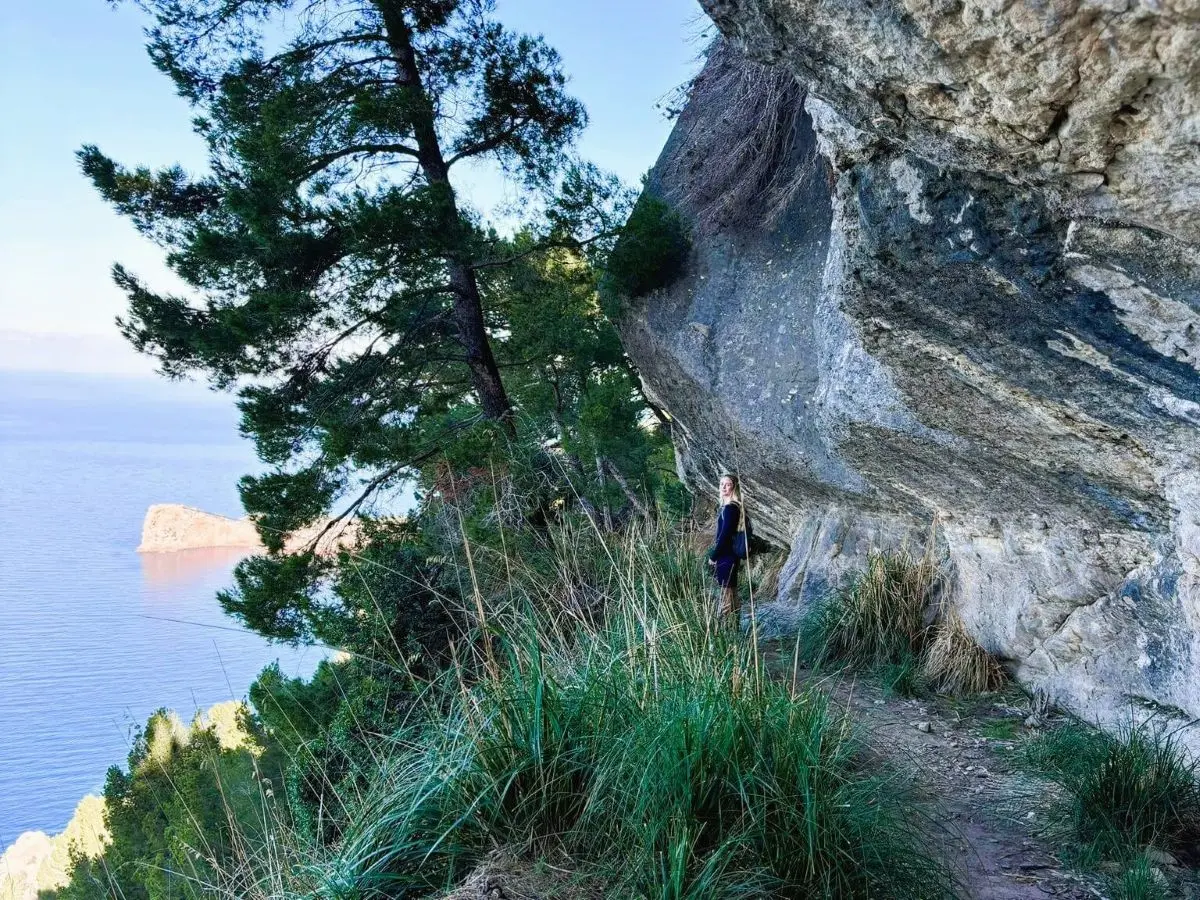
- The Ground Beneath You: The trail is a treacherous cocktail of loose scree, pine needles, and limestone that gets slick the second it sees a cloud. There are no safety barriers. If you lose your footing near the cliffs at the start, gravity is not going to be your friend. Wear shoes with actual grip, or don’t go.
- Hydration is Non-Negotiable: There are zero water points. None. Once you leave Valldemossa, you are on your own. Bring at least 1.5 liters of water per person. You’ll feel fine on the way down, but the climb back up in the Mallorcan heat will turn your mouth into a desert.
- Navigating the Silence: Don’t expect signposts. This isn’t a theme park. Use Maps.me or AllTrails and download the maps offline. The Tramuntana mountains are notorious for “dead zones” where your signal goes to die. If the path looks like it’s disappearing into a goat track, check your GPS.
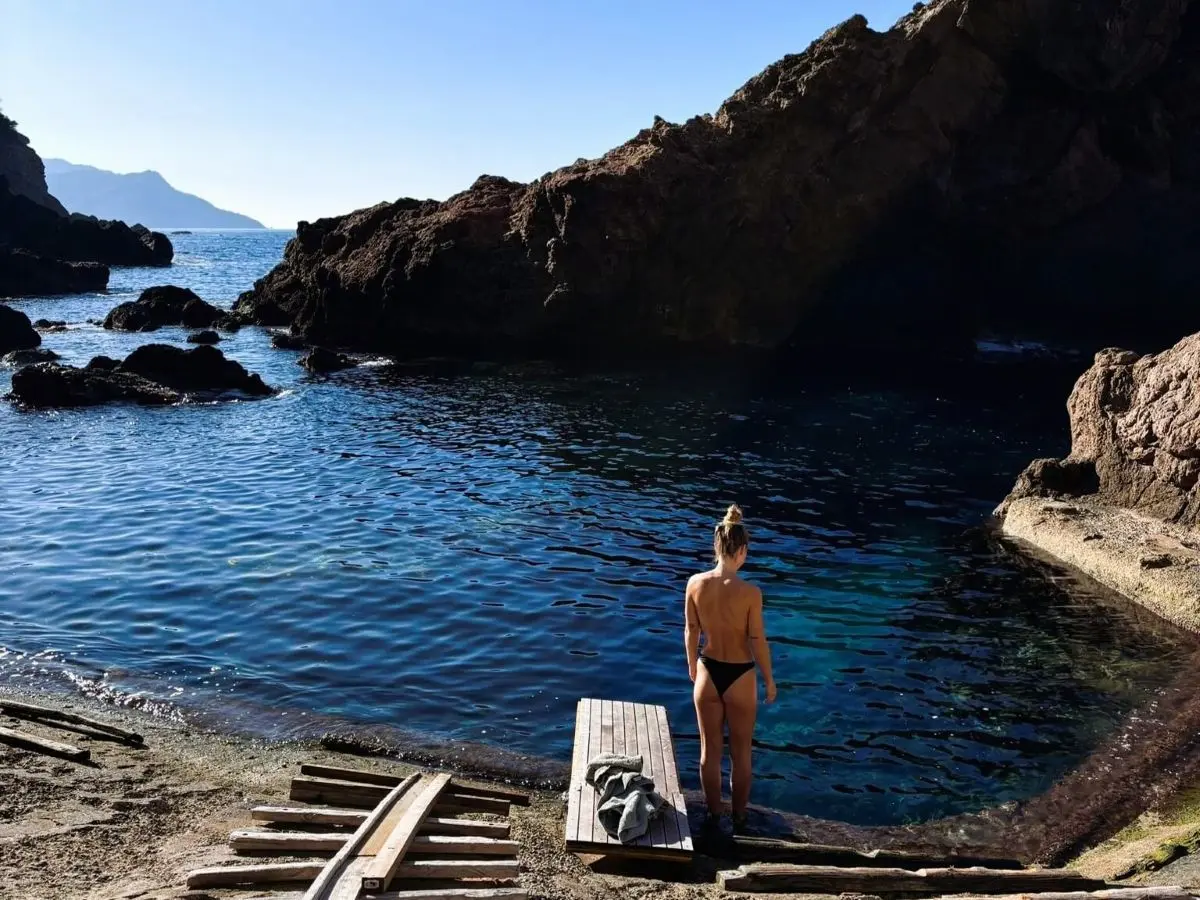
- The Swim Logistics: Caló de S’Estaca is a rocky cove, not a sandy beach. There are no changing rooms, no toilets, and no bins. Whatever you carry in, you carry out—including your trash. If you see jellyfish, keep your distance. A sting in a remote cove is a quick way to ruin the vibe.
- The “Family” Question: Is it family-friendly? Only if your kids are part mountain goat. I wouldn’t bring small children or dogs that pull on a leash. The cliff sections are exposed, and the physical toll of the ascent is real.
My Experience: Pines, Spices, and Jellyfish
Starting at Ermita de la Trinitat feels like stepping back into the 17th century. It’s silent, pine-scented, and still carries that spiritual retreat vibe. The moment you step out of the car, the slow energy of the place just hits you.
Adding Some Spice
Once you cross the MA-10, things get interesting. We stopped at Mirador des Pi—a stone platform with a lone, wind-beaten tree and some semi-scary cliff edges. There are no rails here. It’s just you, the sea, and your balance.
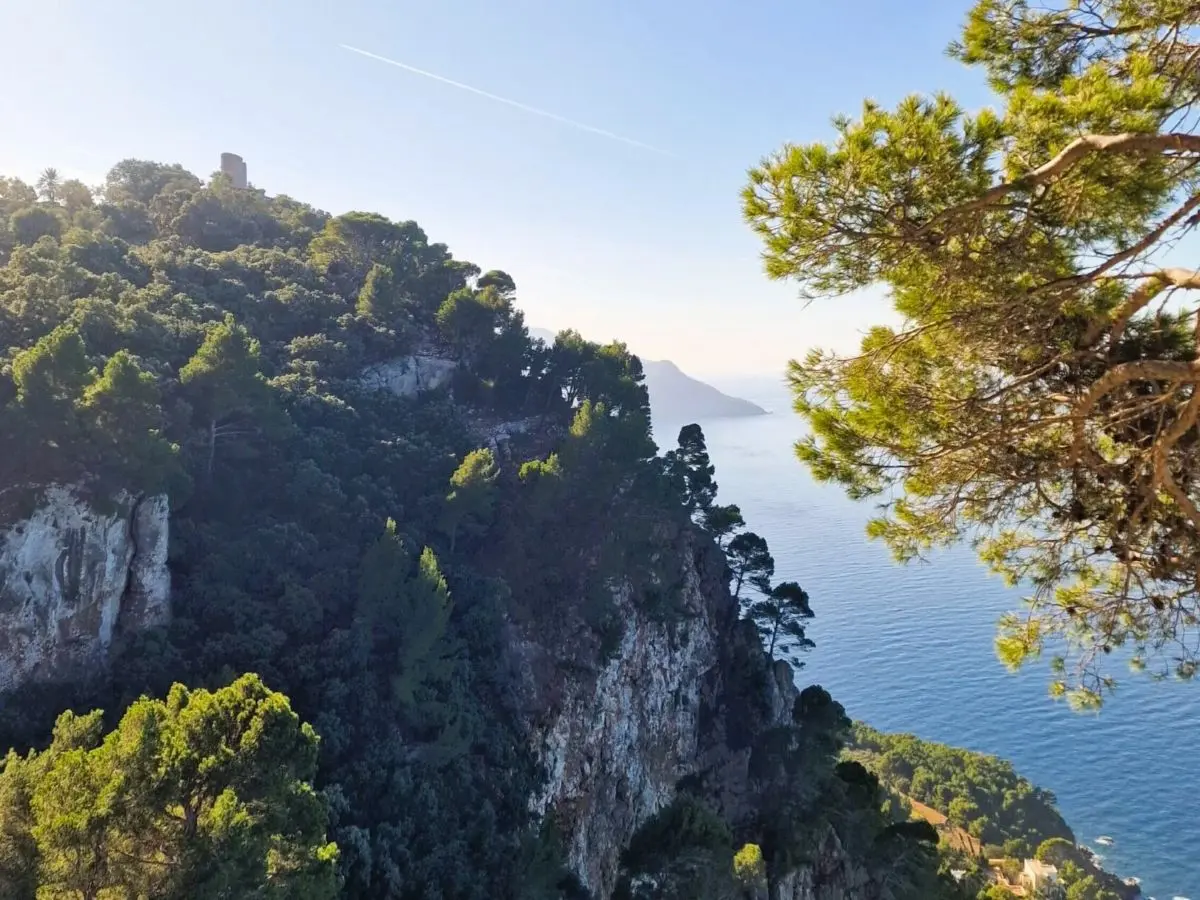
The trail snakes past ancient dry-stone walls and under massive cliffs that make you feel small in the best way. We hit Mirador des Figueral and Mirador des Creuer, spots used for centuries to watch for storms and pirate ships. The views are, quite frankly, unreal.
Down to the Cove
The descent to the water is a knee-burner. You can take the paved road, but the real trail cuts through the forest. When we went, a massive tree had collapsed across the path—a blunt reminder that nature owns this place, not us.
Swim, Sit, Soak it in
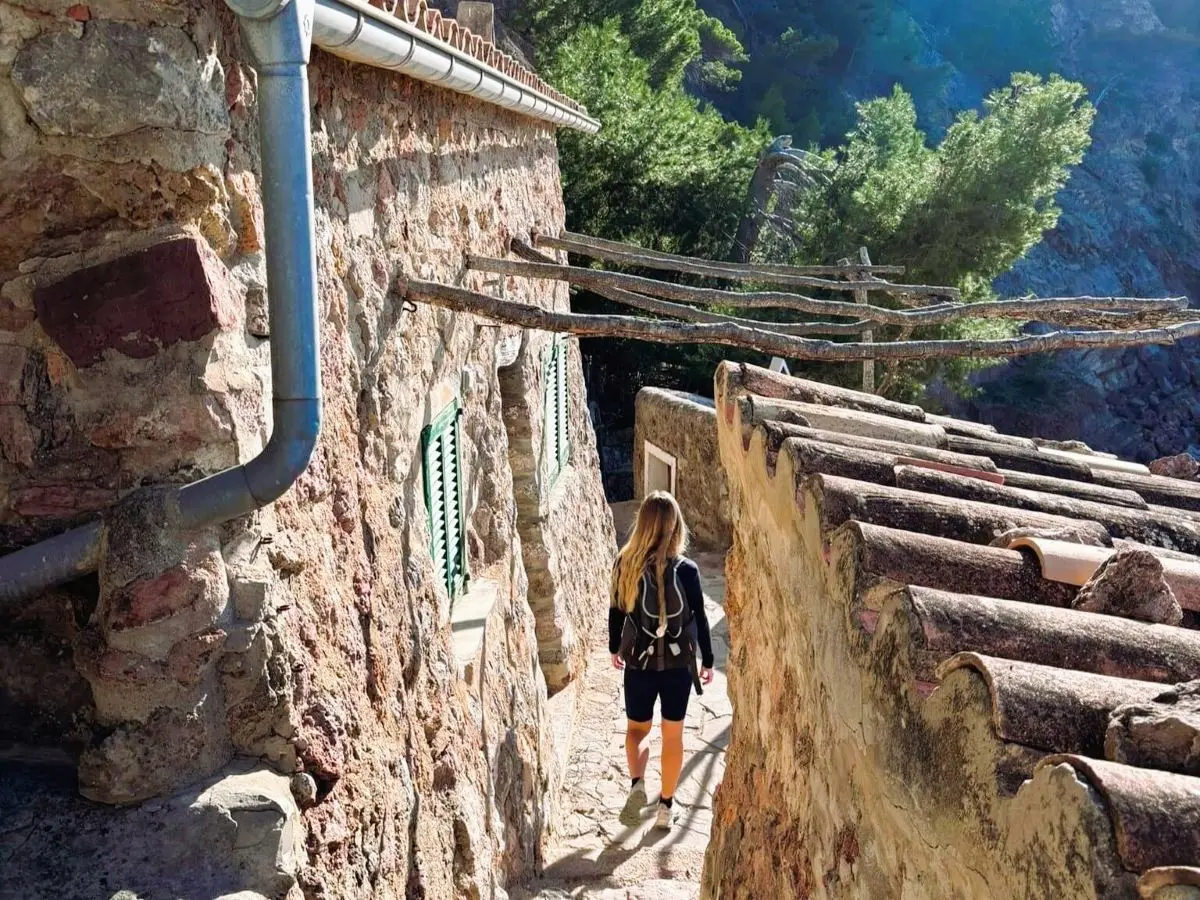
At the cove, I stripped down and jumped in. The water was shocking, cold, and incredible. A few jellyfish floated around like translucent ghosts, but they didn’t stop the fun. We had lunch by the water in the hamlet of S’Estaca. It’s a tiny cluster of 19th-century fishermen’s huts that feels frozen in time—a whisper of old Mallorca before the luxury yachts moved in.
The Climb and the Citrus
The climb back up is a slog, but the scent of wild lemon and orange trees helps cut through the heat. We took one last look from Mirador de S’Erassa, where I’m pretty sure I spotted Michael Douglas’ sprawling estate tucked into the cliffs. Casual.
By the time we reached the monastery again, I had tired legs, a happy heart, and dust on everything. Just how I like it.
Where to Stay: Finding Shelter in the Tramuntana
If you’re doing this hike, don’t bother staying in Palma. You want to wake up in the mountains, where the air is cool and the streets are still quiet before the tour buses arrive. Here is where I’d put my bags:
- Hotel Valldemossa – This is the heavy hitter. It’s built into two restored 19th-century stone houses with views that make you feel like you’ve inherited a kingdom. It’s luxury, but it’s the quiet, old-world kind.
- Es Petit Hotel de Valldemossa – A more intimate, family-run spot. It’s simple, honest, and the terrace is the perfect place to sit with a drink and nurse your aching knees after the climb back from S’Estaca.
- La Residencia, A Belmond Hotel (Deià) – If you really want to lean into the Archduke/Michael Douglas lifestyle, this is it. It’s just 15 minutes up the road in Deià. It’s expensive, iconic, and worth every cent if you want to see how the other half lives in the Tramuntana.
- Hostal Villa Verde (Deià) – For something more grounded. It’s a rustic, no-frills guesthouse that captures the real spirit of the mountains without the five-star price tag.
Mallorca: The Experiences You Actually Need
If you’re going to spend money on tours, don’t waste it on the glass-bottomed tourist traps. These are the handful of experiences that actually capture the soul of the island. I use GetYourGuide because they have the best local operators and a “no-stress” cancellation policy.
🍳 Gastronomy & Market Culture
- Traditional Cooking Workshop & Market Visit: Bourdain always said the best way to know a place is through its markets. Go to the source, buy the ingredients, and learn how to cook like a Mallorcan.
- Mediterranean Cooking Class with Drinks: A more laid-back approach. Learn the staples of the island diet while leaning into the wine.
⛵ Boats, Sunsets & Private Charters
- Sunset Boat Tour with DJ: If you want the “Palma vibe,” this is it. It’s loud, it’s social, and seeing the Cathedral at sunset is worth the price of admission.
- Half-Day Magic Catamaran Cruise: A classic cruise to Palma Bay. It’s the standard for a reason: good water, good light, no stress.
- Private Boat Trip with Water Toys: If you have a group and want to avoid the crowds entirely, pay for the privacy. It’s your boat, your rules, and plenty of gear to play with in the coves.
🤿 Coastal Adventure & Caves
- Kayaking, Sea Caves & Cliff Jumping: This is for when you want to feel the salt on your skin and a bit of adrenaline in your chest. You see the coastline from the eyes of a local.
- Caves of Drach: Music & Boat Trip: It’s one of the few “tourist” things actually worth doing. The underground lake and the live classical music are hauntingly beautiful.
- Caves of Hams: Guided Visit: The “fishhook” caves. Smaller and more focused than Drach, but equally strange and worth a look.
🚜 Rugged Interior & Valley Views
- Off-Road ATV Quad Bike Tour: Mallorca isn’t just beaches. This is how you see the rugged, dusty interior where the tour buses can’t reach.
- Horse Riding in Randa Valley: A slow, quiet way to move through the landscape. No engines, no crowds—just the valley and the silence.
Caló de S’Estaca FAQ
How long does the hike actually take?
Expect to spend 3.5 to 4.5 hours on the trail. It’s roughly 10 km, but you aren’t racing. You’ll want time to stop at the miradors and actually enjoy the water at the bottom without rushing back up.
Is it safe to hike in the summer?
Yes, but don’t be a hero. Avoid the midday sun (12:00 PM – 4:00 PM) when the limestone radiates heat like an oven. Start at sunrise or late afternoon. Most of the trail is shaded by pines, but the climb back up is still a sweat-fest.
Can I bring my kids or dog?
I wouldn’t. The first section near Mirador des Pi has zero railings and some “spicy” drops. If your kids aren’t used to mountain terrain or your dog pulls on the leash, it’s a recipe for stress. Save this one for the adults.
Is there anywhere to buy water or food?
No. This isn’t a beach club. There are no shops, no cafes, and no vending machines once you leave Valldemossa. If you don’t bring it with you, you’re going without. Bring at least 1.5 liters of water per person.
Where do I park?
The most reliable spot is near Ermita de la Trinitat. It’s free, but the road up is narrow and can be a bit of a nerve-wracker if you meet oncoming traffic. Alternatively, park in Valldemossa and take a quick taxi to the trailhead to avoid the parking headache.
The Verdict
Mallorca has a way of hiding its best parts behind a bit of struggle. You can spend your days in the manicured plazas of Valldemossa eating ensaimadas, or you can take the sweaty route down to the water and see the island for what it really is: rugged, indifferent, and hauntingly beautiful.
By the time you hike back up to the Ermita, smelling of salt and wild citrus, the crowds in town will feel like a distant memory. Your legs will ache, your shoes will be covered by limestone dust, and you’ll probably have a few new freckles.
That’s the trade-off. And in my experience, it’s a bargain.
See you on the trail.
Leave a Reply