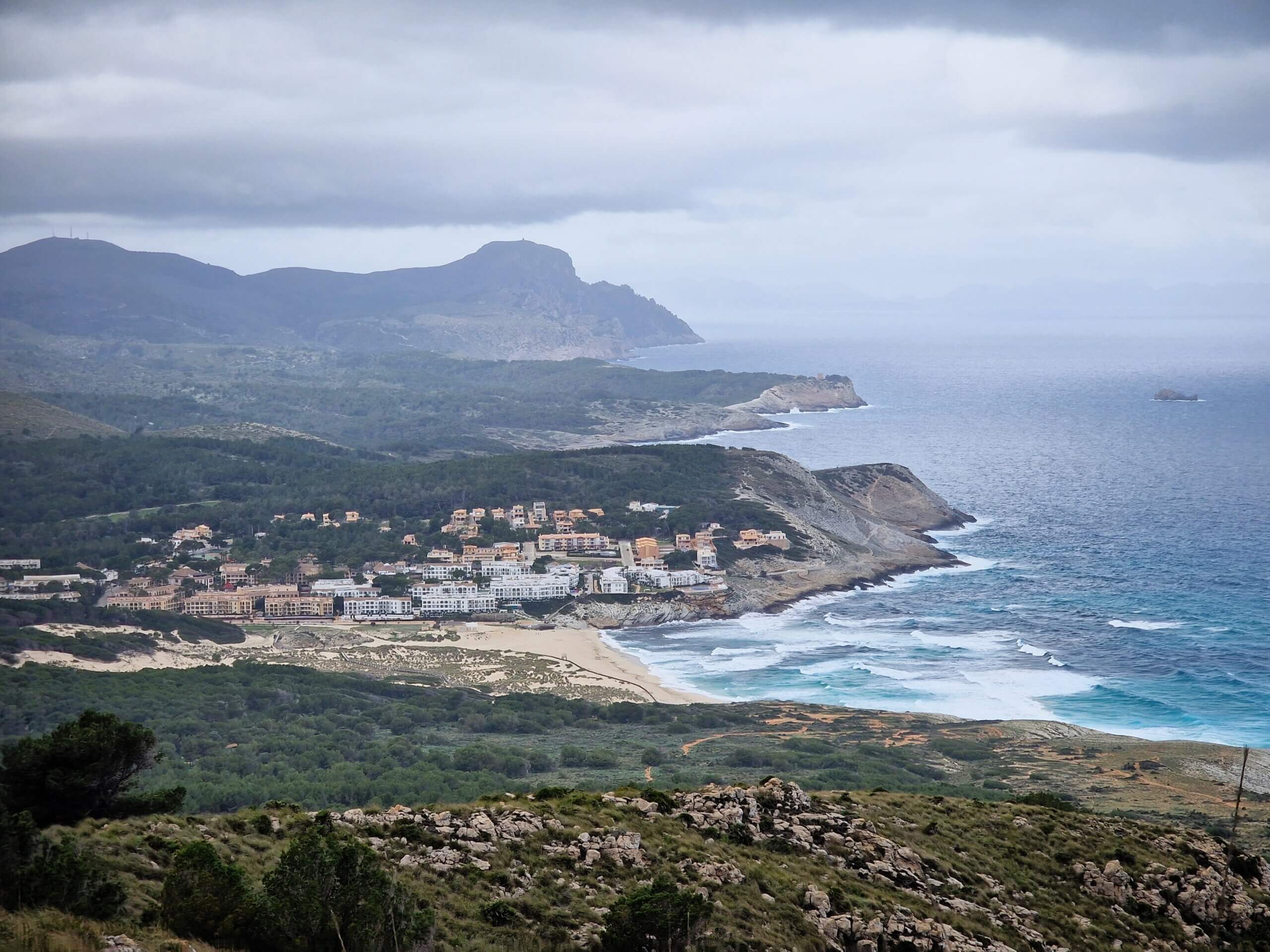
Discover an easy 5 km hike in northeast Mallorca near Capdepera. Stunning coastal views, pine forests, and hilltop ruins await.
Mallorca is full of hidden gems, and the northeast is one of its best-kept secrets. This easy hike from Cala Agulla to Talaia de Son Jaumell offers stunning sea views and peaceful pine forests on a moderate ~5 km trail.
Perfect for a half-day adventure, it’s easy to combine with other nearby highlights like a swim at Cala Mesquida, exploring the medieval town of Capdepera, or enjoying a relaxed lunch in Artà. Whether you’re after nature, history, or a bit of both, this area is a great base for a memorable day in Mallorca’s quieter northeast.
Table of Contents
You can use the links below to jump to a certain section of the blog post.
Cala Agulla — Talaia de Son Jaumell Hike Details
Trail Overview
- Location: Starts from Cala Agulla, near Capdepera, northeast Mallorca
- Distance: ~5 km round trip
- Duration: ~1.5 to 2.5 hours
- Elevation gain: ~270 meters
- Difficulty: Moderate – mostly easy, with a steady uphill section
- Trail type: Out-and-back
- Terrain: Forest path, rocky hillside, exposed ridge
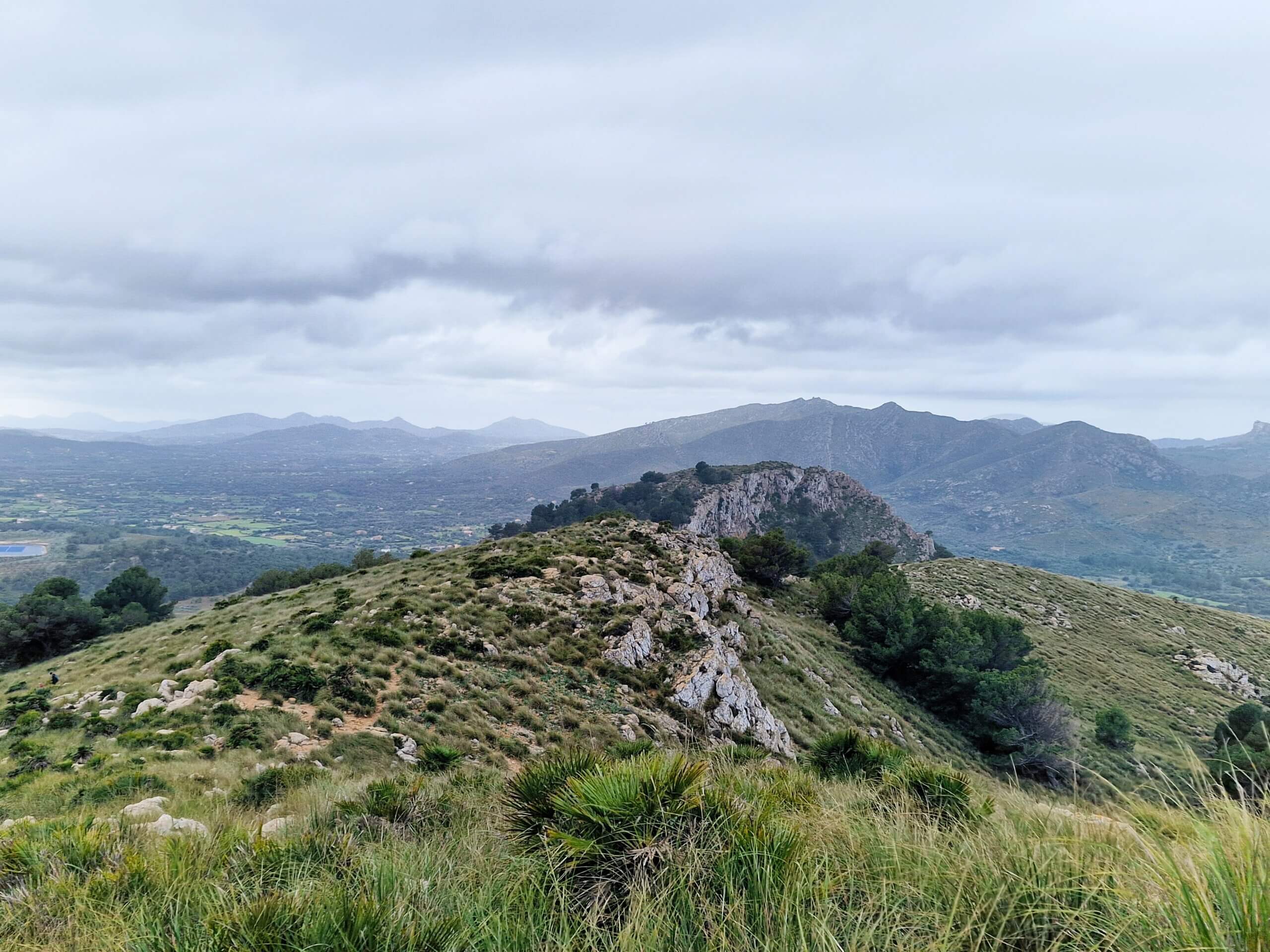
- Viewpoints: Panoramic views over Cala Mesquida, Capdepera, and Menorca on clear days
- Best time to go: Early morning or late afternoon (avoid midday heat)
- Highlights: Mediterranean pine forest, mountain goats, sea views, historic watchtower ruins
- Water sources: None – bring plenty of water
- Signage: Yes, colored dots sprayed along the trail
Cala Agulla — Talaia de Son Jaumell Hiking Trail Map
The History of Talaia de Son Jaumell
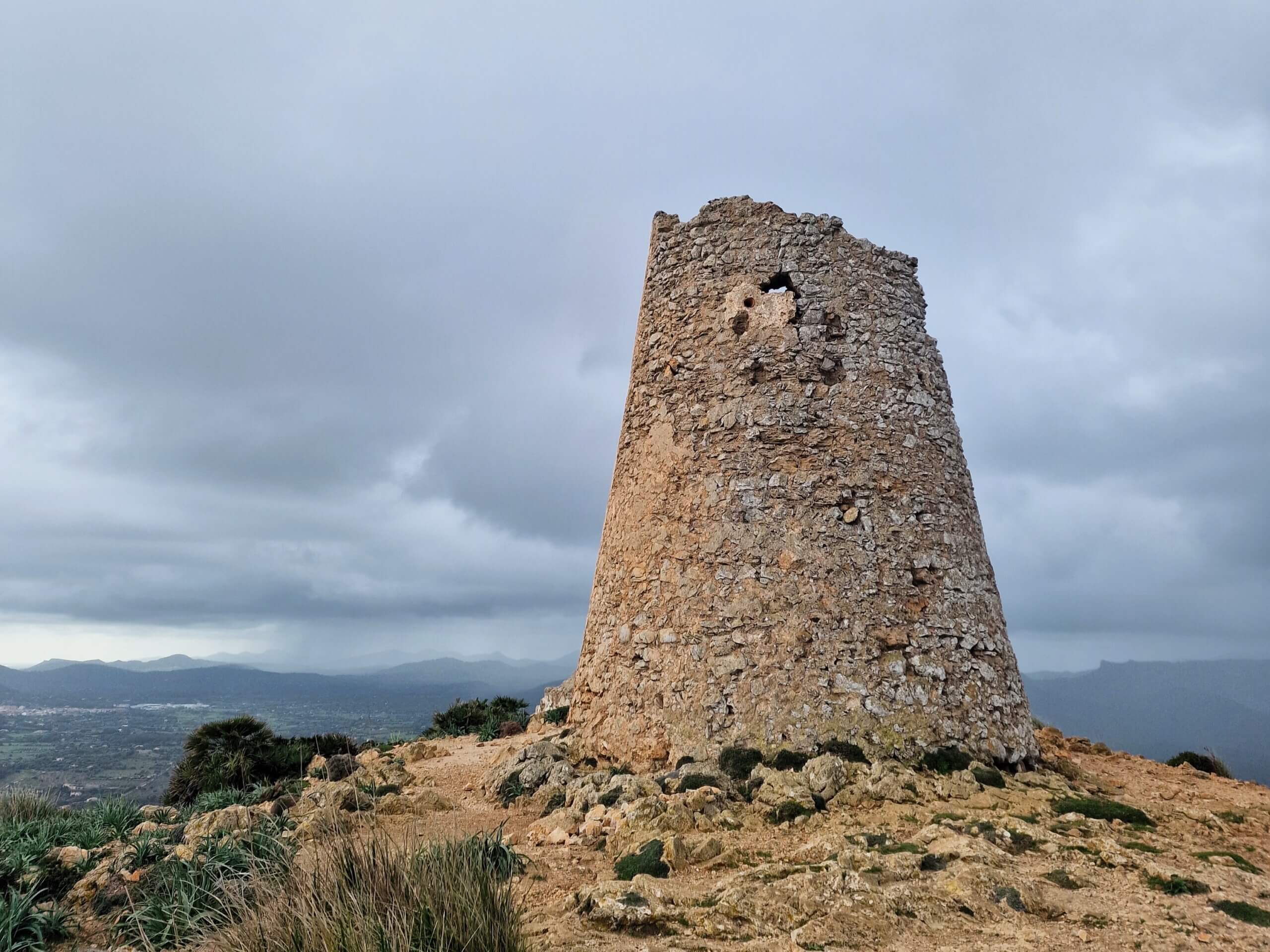
When you finally reach the summit, you’ll find a pile of old stones and weathered walls — what’s left of the Talaia de Son Jaumell. It might not look like much now, but a few hundred years ago, this was one of Mallorca’s many watchpoints, quietly keeping an eye on the horizon.
Back in the 1500s, pirate raids were a real threat along the coast. So the island built a network of towers like this one, perched on high ground with clear views of the sea. The men who sat up here were on high alert. If they spotted sails on the horizon, they’d light fires or send smoke signals to warn the villages below.
It’s easy to imagine them up here, scanning the water in the heat, the wind pulling at their cloaks, the only sound the gulls and the sea. And today, standing in their place, the view is just as sweeping — stretching across Cala Mesquida, back toward Capdepera, and out toward Menorca on a clear day.
My Experience
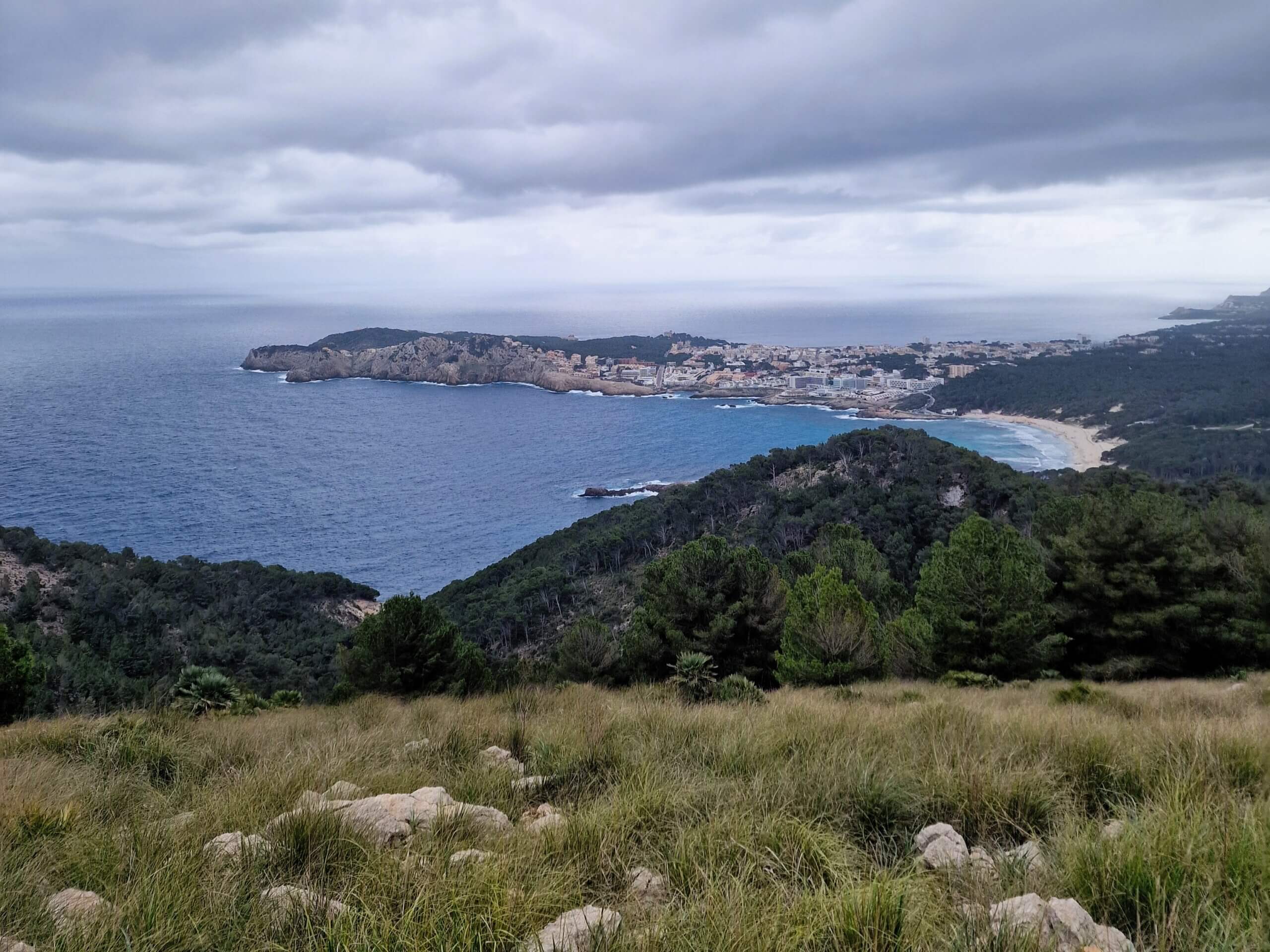
We set off under a heavy sky — that kind of quiet grey that makes everything feel a bit more dramatic. The clouds were thick, almost theatrical, and hung low over the hills like they were trying to decide if they were going to rain or just look moody all day.
The trail itself was easy to follow most of the way. First through beachy landscapes on dirt paths, winding gently away from Cala Agulla. Then the terrain shifted — into pine forest, the ground rockier, the air a little cooler.
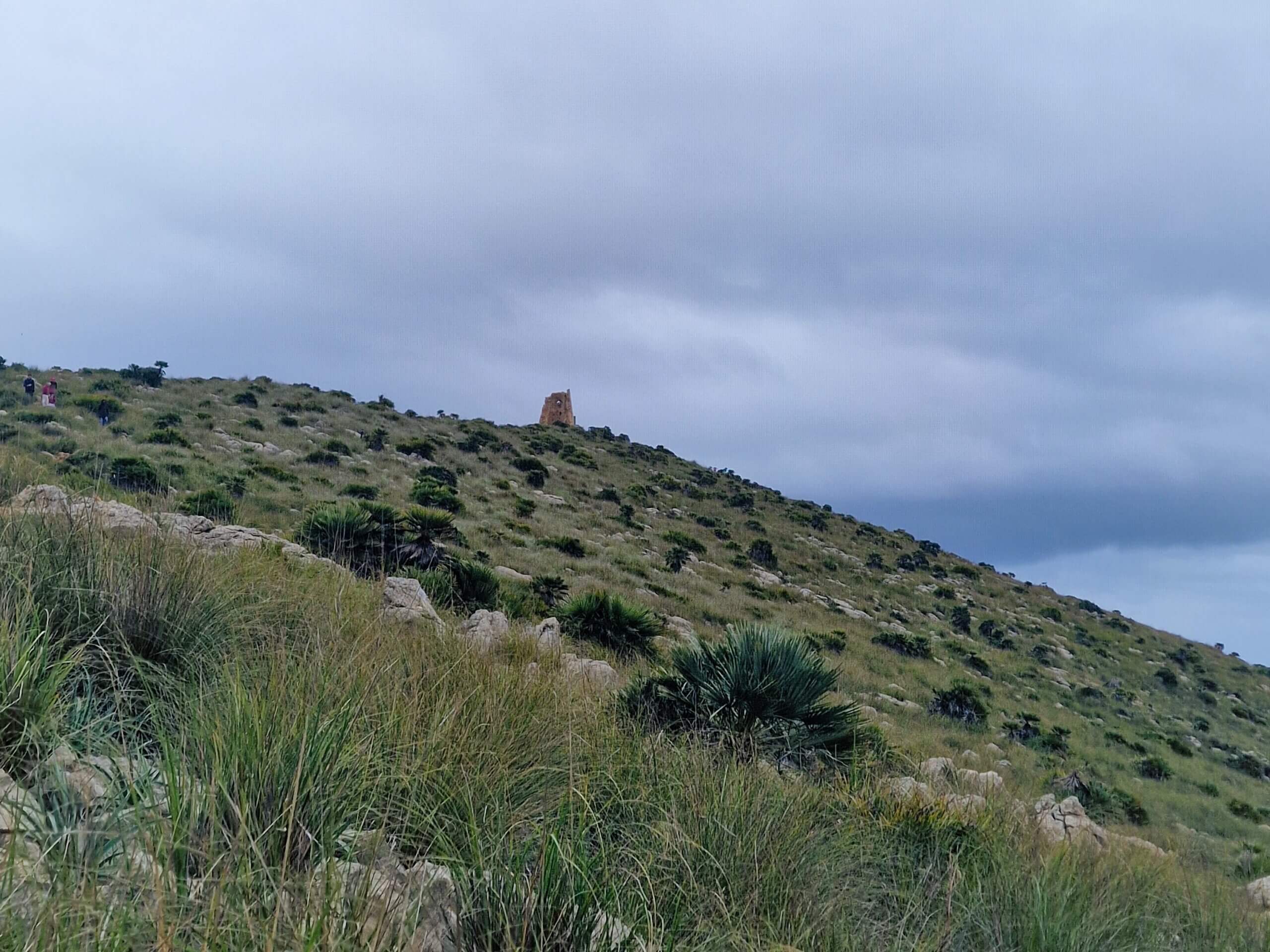
We passed two groups of older German tourists on their descent — all of them cheerful, all of them speaking to us in German, as if it were the most natural thing in the world. Even though we were in Spain. We smiled, nodded, shrugged. Whatever they were saying, they seemed pleased to be saying it.
Once they disappeared back into the pines, we had the place almost to ourselves.
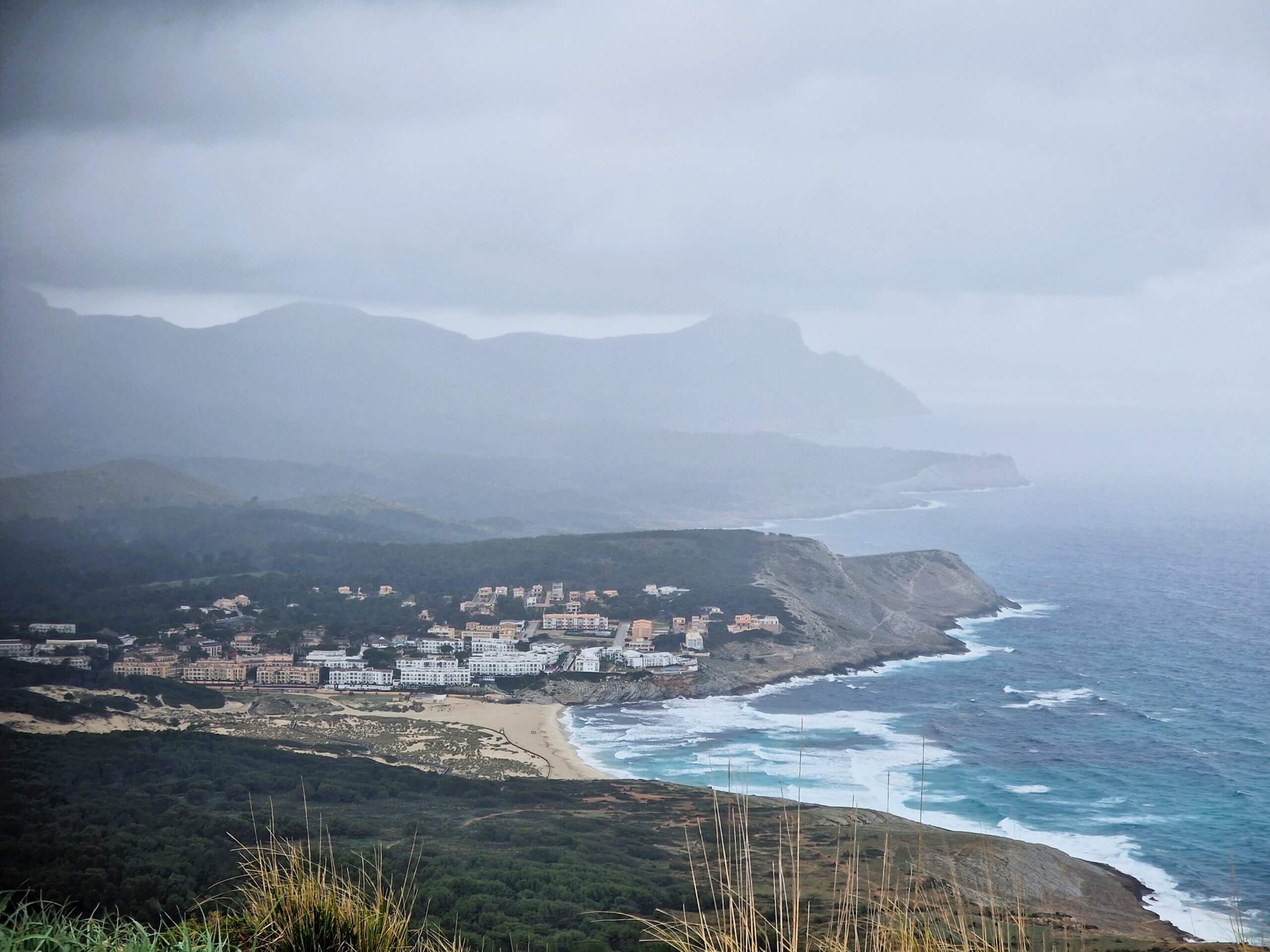
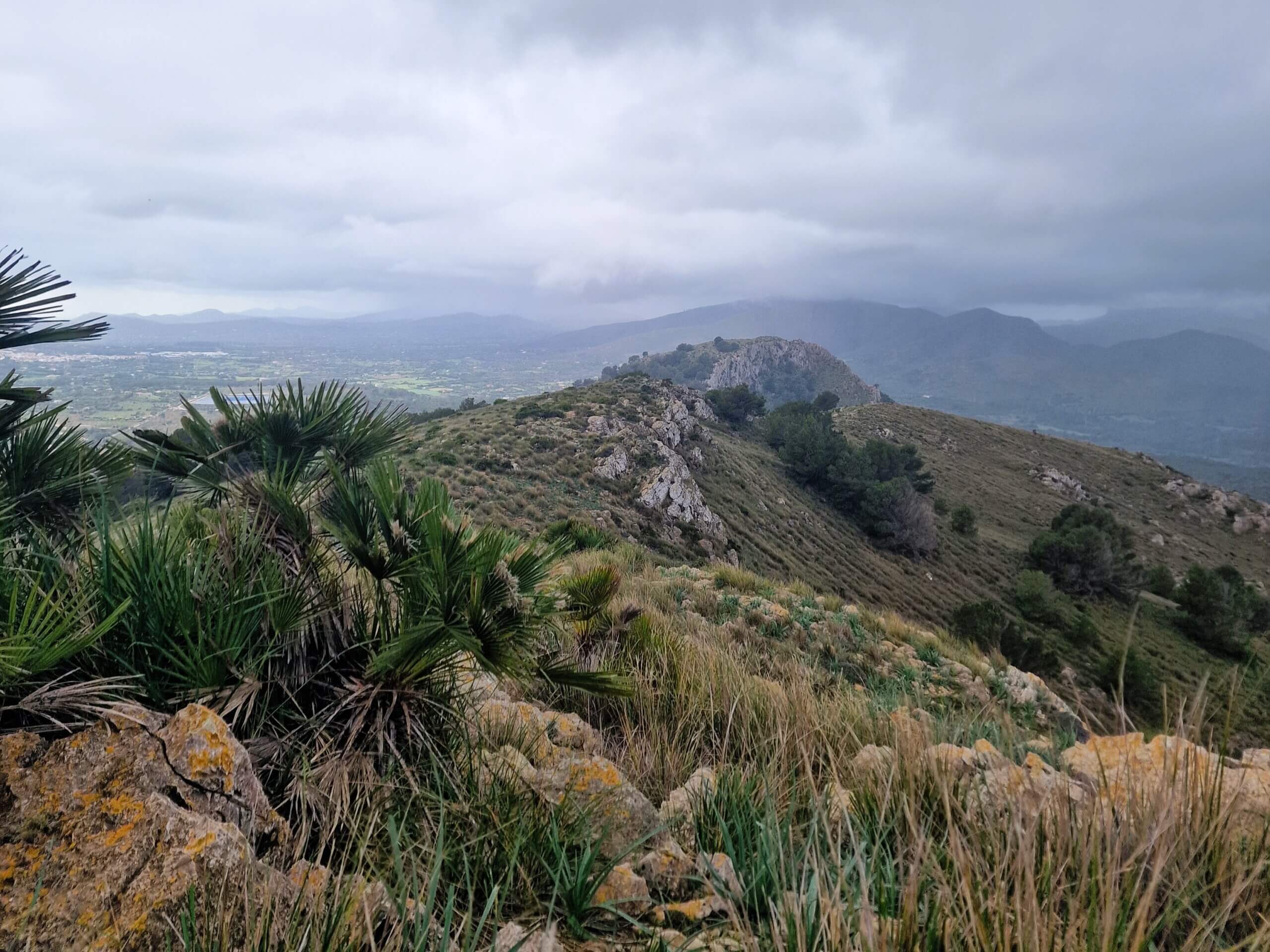
And then the forest began to thin out, and suddenly the whole landscape just opened up. It was that kind of reveal that makes you stop walking without really meaning to. On one side, Cala Agulla, soft and pale against the dark sea. On the other, Cala Mesquida, wild and jagged, with waves crashing up against the cliffs. The hills rolled out in green and dusty gold, low, and wide and full of space.
I remember feeling kind of taken aback by it all — the openness, the wild quiet, the way the land just stretched out like it didn’t belong to anyone. It wasn’t a hard hike by any means, but it was enough to feel like you’d done something. Moved through something. Seen something worth seeing.
A good kind of day.
If You Go…
If you find yourself in northeast Mallorca with a free morning or afternoon, this hike is absolutely worth your time. It doesn’t ask too much of you — no scrambling, no racing the sun — but it gives you wide skies, sweeping views, and just enough effort to feel like you earned your sandwich at the top.
Bring water, wear decent shoes, and don’t worry too much if the sky looks a little dramatic. The landscape wears it well.
And maybe brush up on your German — just in case.
Other Amazing Hikes in Mallorca
If Cala Vella whets your appetite for more scenic walks, here are three standout trails that showcase Mallorca’s diverse landscapes — from rugged coastlines to serene forests. Each offers its own flavor of adventure, perfect for when you’re craving something different.
🌅 La Trapa Coastal Hike (Near Sant Elm)
A moderate 9 km loop trail that takes you along dramatic cliffs with sweeping views of the Mediterranean and the island of Sa Dragonera. The path leads to the ruins of the La Trapa monastery, offering a blend of natural beauty and historical intrigue. Expect rocky sections and some steep climbs, but the vistas are well worth the effort.
🌈 Puig d’en Farineta Loop (Near Andratx)
This short but rewarding 3.5 km hike starts near the village of S’Arracó and ascends to the summit of Puig d’en Farineta. The trail offers panoramic views over Sant Elm and the surrounding coastline. It’s a peaceful route through pine forests, ideal for a quick escape into nature without the crowds.
☀️ Caló de S’Estaca Coastal Loop (Near Valldemossa)
A picturesque 10 km loop that begins near the Ermita de la Trinitat monastery and descends through forested paths to the secluded cove of Caló de S’Estaca. The trail features stunning coastal views, opportunities for a refreshing swim, and a tranquil atmosphere away from the typical tourist spots.
What Else to Do in Northeast Mallorca
If you’re already out this way, don’t rush back. Northeast Mallorca has a slower rhythm than the busier parts of the island — and that’s kind of the point. Here are a few places worth lingering for:
Wander the walled town of Capdepera
Just a short drive inland, Capdepera is small, stony, and full of charm. Climb up to the medieval castle for panoramic views, and imagine life when pirates really were a thing. Bonus: there’s usually a breeze up there.
Swim at Cala Mesquida
If you’ve done the hike to Son Jaumell, you’ll have seen this wild bay from above. It’s just as beautiful up close. Long stretch of beach, dramatic dunes, and waves that make swimming feel like play.
Visit the lighthouse at Faro de Capdepera
Perched on the eastern tip of the island, the lighthouse is worth a visit for the windswept views alone. You can park nearby and walk out to the edge, where the land just kind of falls away into the sea.
Lunch in Artà
A little further west, Artà is a great place to grab a long lunch. It’s got a bit more life, some lovely cafés and restaurants, and a mix of locals and slow-travel types. Don’t miss the walk up to the hilltop sanctuary while you’re digesting.
Explore the Coves d’Artà
If you like your nature with a bit of mystery and echo, head underground. These caves are massive and surprisingly beautiful — think cathedral ceilings, strange rock formations, and just enough lighting to make it feel like a secret world.
FAQ: Visting Mallorca
When is the best time to visit Mallorca?
The best time to visit Mallorca is April to June or September to October, when the weather is warm but not too hot, and the crowds are smaller than in peak summer. If you’re into hiking, spring and autumn offer ideal temperatures and lush landscapes.
How do I get to Mallorca?
Mallorca is easily accessible by plane. Palma de Mallorca Airport (PMI) is well-connected with most major European cities. There are also ferries from mainland Spain, including Barcelona, Valencia, and Denia.
Do I need a car to get around Mallorca?
Having a car makes it much easier to explore the island, especially if you want to visit remote beaches, mountain villages, or hiking trails. That said, public transport is decent between major towns, and you can reach many hiking trails by bus.
What language do people speak in Mallorca?
The two official languages are Spanish (Castellano) and Catalan (specifically the Mallorquín dialect). In tourist areas, most people speak English and German as well, especially in restaurants, hotels, and shops.
Is Mallorca safe for solo travelers?
Yes! Mallorca is considered very safe for solo travelers, including solo female travelers. Use common sense like anywhere else (don’t leave valuables on beaches, avoid unlit streets at night), but overall, it’s a low-crime, welcoming destination.
What should I pack for a hiking trip to Mallorca?
Pack for both sun and terrain:
- Breathable hiking clothes
- A light jacket or fleece (especially in shoulder seasons)
- Good hiking shoes or trail runners
- Sunscreen, hat, and reusable water bottle
- Swimsuit and towel — many trails end at beaches or coves!
Can I hike in Mallorca during the summer?
Yes, but start early in the day to avoid the heat, and choose shaded or coastal trails. Always bring plenty of water and avoid hiking during midday hours (12–4 PM) in July and August, when temperatures can reach over 35°C.
What kind of hikes are available in Mallorca?
Mallorca offers everything from:
- Easy coastal walks (like Cala Vella or Caló de S’Estaca)
- Steep mountain climbs (like Puig de Massanella or Tomir)
- Loop hikes through villages and forested valleys
Whether you’re a casual walker or a seasoned trekker, there’s a trail for you.
Are the hiking trails well-marked?
It depends on the trail. Many popular routes are well-marked with signs or painted waypoints, but others — especially in remote areas — require navigation skills or a GPS app like AllTrails or Wikiloc.
Is wild camping allowed in Mallorca?
No, wild camping is not permitted in Mallorca. There are a few official mountain refuges and campsites, but most hikes are best done as day hikes.
Leave a Reply