Planning to hike the Copland Track to Welcome Flat Hut in 2026? From hot pools & hut bookings to surviving Rough Creek sandflies, here is everything you need to know.
When I first heard about a hidden valley on New Zealand’s West Coast where you could soak in hot pools after a day of hiking, I was eager to go. But as a still-lacking-backcountry-skills-solo-hiker, the river crossings and active landslides on the Copland Track scared me.
I’m happy to report that the reality is an absolute dream—if you do your research. From the first river crossing at Rough Creek to the final push to Welcome Flat Hut, I’ve documented my entire experience to help you plan the perfect hike.
Here is your ultimate 2026 guide to one of the most rewarding adventures in the South Island.
Planning your trip? My New Zealand Favorites:
🚗 Transport: Compare car and campervan deals on Expedia – A rental car is essential for the West Coast; while the bus exists, it’s just too infrequent to rely on.
🏨 Hotels: Find the best lodges and hostels on Booking.com — I recommend staying in Franz Josef or Fox Glacier for at least two nights.
🚁 The Heli-Hike: You can’t visit the West Coast without going Heli-Hiking! I recommend Franz Josef Glacier Guides, they are the OGs of the ice and the company I personally used.
🎟️ Tours & Activities: Book Milford Sound cruises, Queenstown bungy jumps, and glow worm tours on Viator — It’s the easiest way to keep all your NZ bookings in one app.
✈️ Flights: Check Air New Zealand for domestic hops — If you’re flying from Auckland to Christchurch or Queenstown, they are the most reliable option.
🛡️ Insurance: Don’t hike without cover. I use Ekta Travel Insurance – It’s affordable, easy to set up, and essential for unpredictable NZ adventures.
📱 Connectivity: Stay connected with a Saily eSIM – The West Coast has massive “dead zones.” Get a Saily eSIM so you have data the second you hit a town to check those weather updates!
Table of Contents
- Copland Track – The Fast Facts
- Safety First: Rough Creek & Landslides
- Welcome Flat Hut: What to Expect in 2026
- Getting to the Copland Track Trailhead
- Hiking Solo: Why You’re Never Really Alone
- Where to Stay: Franz Josef & Fox Glacier
- West Coast Bucketlist: My Top Tour Picks
- Ultimate Copland Track Packing List
- My Experience: The Randomness of Travel
- FAQ
A note from Sara:
There are affiliate links in this post, and I may earn a small commission if you choose to make a purchase – at no extra cost to you. It’s a great way to support my work if you found this guide helpful – thank you so much!
Copland Track – The Fast Facts
- Total Distance: 35 km (21.7 miles) return
- Hiking Time: 6–8 hours each way (depending on pace and trail conditions)
- Elevation Gain: 485 meters (a gradual but steady alpine incline)
- Trail Category: Advanced (due to unbridged river crossings and active landslides)
- Starting Point: Copland Car Park, Karangarua (West Coast)
- 2026 Cost: $30 NZD for the Hut / $15 NZD for Camping (Book in advance!)
- Best Feature: Natural geothermal hot pools with 360-degree views of the Sierra Range
The Terrain
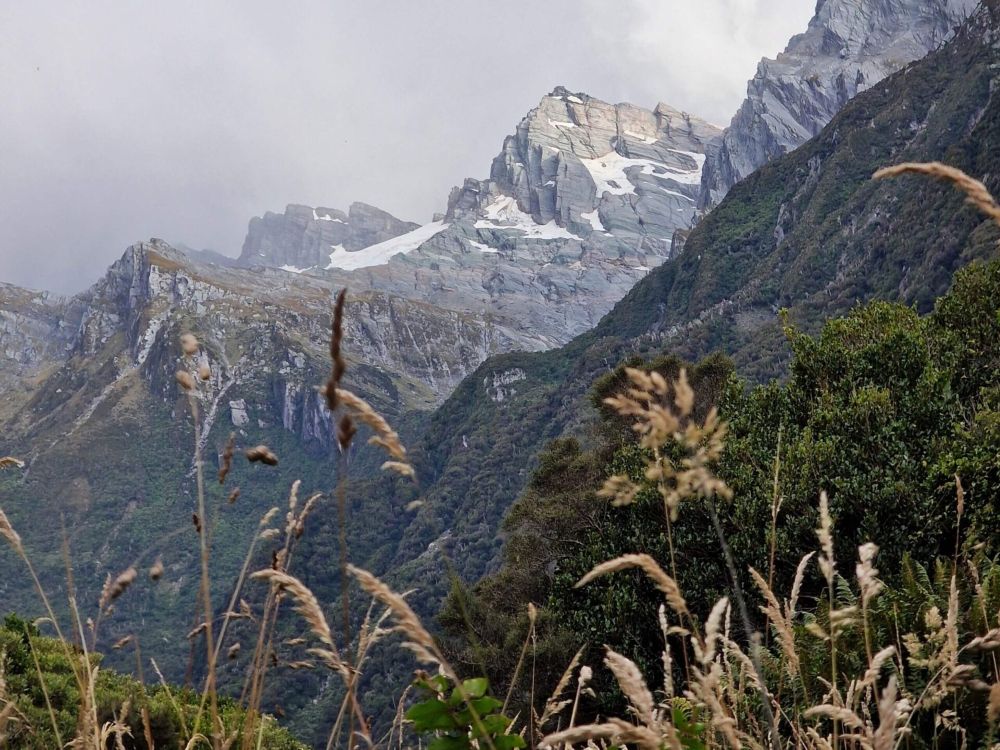
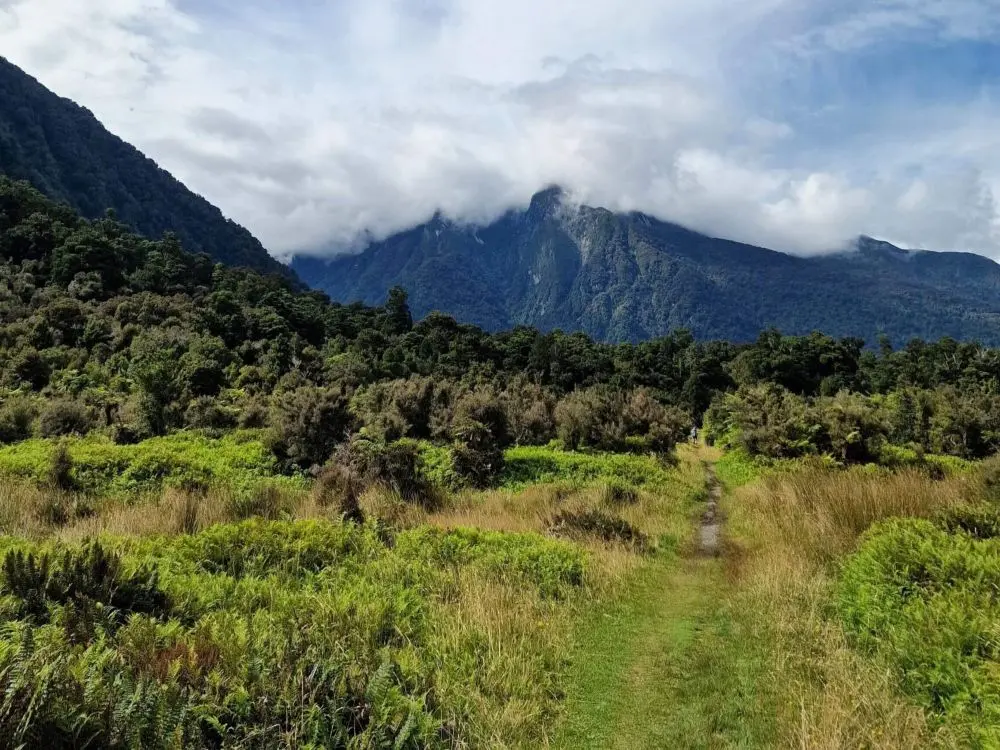
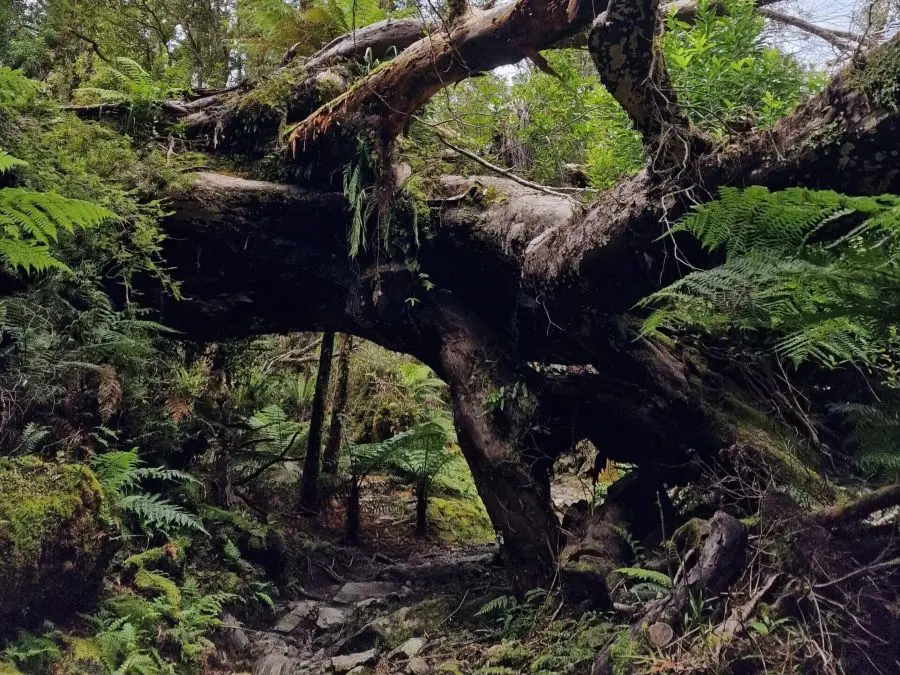
The Copland Track is a mix of lush temperate rainforest, expansive river flats, and rugged alpine scenery. While the elevation gain isn’t massive, the terrain is classic West Coast: often muddy, rocky, and crossed by swing bridges that offer some of the best views in the South Island.
Is it for you?
If you are comfortable walking for 7 hours with a pack and don’t mind getting your feet wet at the start, this is one of my favorite hikes in New Zealand. It is much less crowded than the “Great Walks,” giving you a real sense of wilderness—especially once you reach the hot pools at Welcome Flat.
Safety First: Rough Creek & Landslides
The Copland Track is a masterpiece of New Zealand wilderness, but it requires respect. On the West Coast, the weather is the boss. Because I am a former city-girl-turned-mountain-lover I spent a lot of time researching these hazards. Here is the real talk on how to handle them.
The “Make or Break” River Crossing: Rough Creek
Rough Creek is the very first challenge you’ll face, just 5 minutes from the car park. There is no bridge here, and if you can’t cross safely, the hike ends before it begins.
- Check the Color: If the water is brown, milky, or looks like “thick soup,” do not cross. This means the river is in flood.
- Listen for Boulders: If you hear the “clacking” sound of rocks moving underwater, the current is too strong.
- The “Knee” Rule: If the water is above your knees, even if it looks calm, the pressure can sweep you off your feet.
- Unbuckle Your Pack: Always unfasten your chest and waist straps before stepping in. If you fall, you need to be able to “ditch” your pack so it doesn’t act like an anchor.
- For more information on river safety, visit New Zealand Mountain Safety Council.
Active Landslide Zones
There are two major landslide areas on the way to Welcome Flat Hut, clearly marked with signs. These are active zones where the mountain is literally moving.
- No-Stopping Zones: These are not the spots for photo breaks. Move through them steadily and keep your eyes and ears open for falling debris.
- Avoid in Heavy Rain: Landslides are most likely to trigger during or immediately after a West Coast downpour. If the rain is torrential, reconsider the hike.
Safe Soaking: The Hot Pools
While the natural hot pools are the ultimate reward, you need to follow one simple rule to stay safe from Amoebic Meningitis (a rare but serious risk in natural springs):
- Keep your head above water: Never submerge your face or head in the pools. As long as you stay upright and don’t let water up your nose, you are perfectly safe.
- Pro-Tip: Before you leave your hostel in Franz Josef, check the DOC Track Status and the rainfall forecast. If the West Coast is expecting 100mm+ of rain, the track will likely be closed or the rivers will be impassable.
The West Coast “Vampires”: Sandfly Defense
If you haven’t hiked on the West Coast before, you might underestimate the sandflies. Here are my notes on the little bastards:
- The Bloodbath: As I learned the hard way at Rough Creek, sandflies love exposed skin. If you stop to change shoes or take a break, they will find you within seconds.
- The “Wind” Strategy: Sandflies are weak fliers. If you need a break, try to find a spot on a swing bridge or an open river flat where there’s a breeze. They hate the wind!
- Chemical Warfare: For the Copland Track, the “natural” lemon-eucalyptus sprays usually won’t cut it. You want something with DEET (like Bushman Plus). Apply it to your ankles, wrists, and neck before you start the hike.
- The Aftermath: If you do get bitten (and you likely will), try not to scratch. The West Coast humidity makes it very easy for bites to get infected. I always carry a small tube of antihistamine cream in my first aid kit just in case.
Welcome Flat Hut: What to Expect in 2026
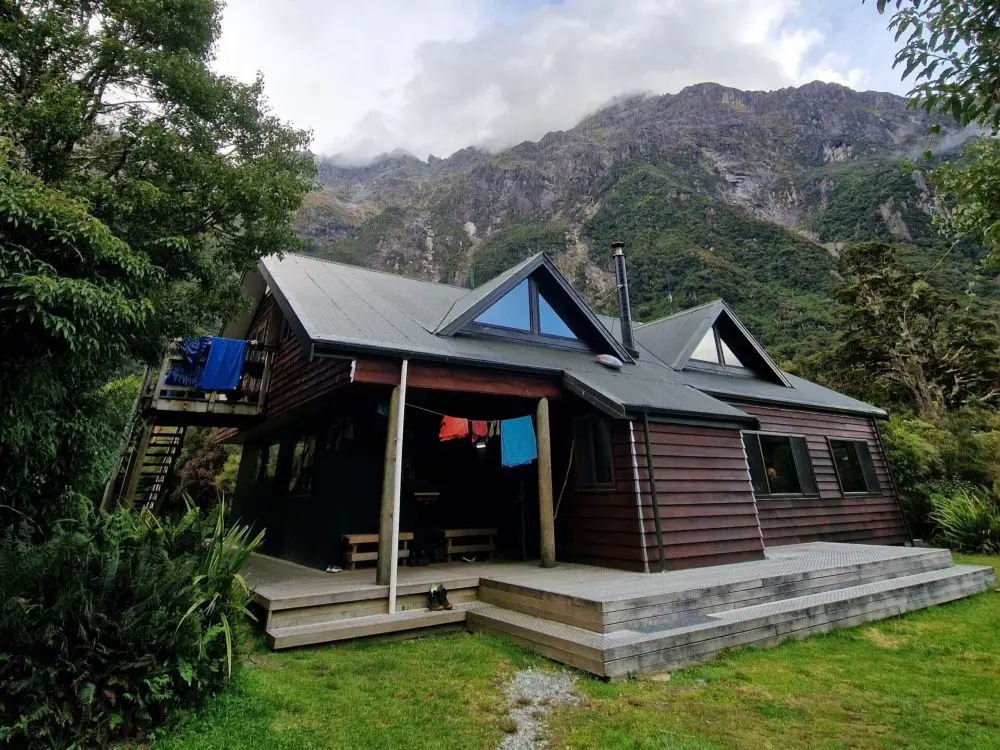
Welcome Flat isn’t your average backcountry hut. Because of the hot pools, it’s one of the most popular spots in the South Island. It’s managed by the Department of Conservation (DOC), and while it’s not “luxury,” it’s a very comfortable base for your West Coast adventure.
The Layout
- Bunk Rooms: The hut has 31 bunks spread across four rooms. It’s a “first-come, first-served” situation for picking your mattress once you arrive, so try to get there early if you want a specific spot.
- The Kitchen: There is a large communal area with benches and sinks. Note: There are no gas cookers provided. You must bring your own portable stove if you want a hot meal.
- Toilets: There are non-flush (long-drop) toilets located just outside the hut. They are well-maintained but, you know… they’re still long-drops!
The Essentials
- Water: There is a tap outside with water that is generally safe to drink, but DOC recommends boiling it for 3 minutes or using purification tablets just to be safe.
- Heating: There is a wood burner in the common area to take the edge off those damp West Coast nights.
- Rubbish: This is a “Pack it in, Pack it out” facility. There are no trash cans. Whatever you bring in (including food scraps and empty cans), you must carry back to the car park.
The “Sierra Room” Upgrade
If you’re traveling with friends or just want a break from the 31-bunk “symphony” of snoring, you can book the Sierra Room. It’s a private room within the hut that sleeps four and has its own gas cooking facilities and a shower. It costs significantly more ($132+ NZD), but for a special occasion, it’s a total treat.
How to Book
You cannot pay for the hut at the trailhead. You must create an account on the DOC Booking Heritage site and pay for your spot before you start the hike. Print your booking confirmation or have it ready on your phone to show the resident Ranger.
Getting to the Copland Track Trailhead
The trailhead is located at the Copland Car Park, about 26km south of Fox Glacier. It is literally a gravel turn-off on State Highway 6. You have three main ways to get there in 2026:
1. Driving (The Easiest Way)
If you have a rental or your own car, this is the most flexible option.
- The Drive: It’s a 30-minute drive from Fox Glacier or about 50 minutes from Franz Josef.
- The Parking Hack: Don’t just stop at the first car park on the highway. If you have a vehicle with decent clearance, open the farm gate (close it behind you!) and drive another 100 meters down the track to the second car park. It saves you a few minutes of walking and keeps your car slightly further from the main road.
- Security: This is a remote area. Never leave valuables in your car, as trailhead break-ins can happen even in paradise.
2. The Intercity Bus (The Budget Way)
Yes, the bus actually stops here! But you have to book it correctly.
- The Stop: In the Intercity booking system, search for “Copland Track (Karangarua).” * The Timing: The bus usually passes through once a day. Make sure to tell the driver you’re heading to the track so they know exactly where to drop you.
- FlexiPass: If you’re traveling around the South Island without a car, using an Intercity FlexiPass is the cheapest way to manage these remote stops.
3. Hitchhiking (The “Solo Traveler” Way)
This is how I did it, and it’s surprisingly common on the West Coast.
- Patience is Key: You might get a ride in 10 minutes (like I did!), or it might take an hour. Start early so you aren’t racing the sun to get to the hut.
- Where to stand: If you’re in Franz Josef, walk to the southern edge of town, just past the Fire Station. There’s a good shoulder there for cars to pull over.
- The Vibe: New Zealand is one of the safest places to hitchhike, but always use your gut. Most people picking you up will be fellow hikers or locals who know exactly where the trailhead is.
Hiking Solo: Why You’re Never Really Alone
As a “still-lacking-backcountry-skills-solo-hiker,” the idea of tackling the Copland Track alone was intimidating. My main anxiety? The river crossings. I wasn’t keen on being mid-stream in a West Coast river with no one around if things went sideways.
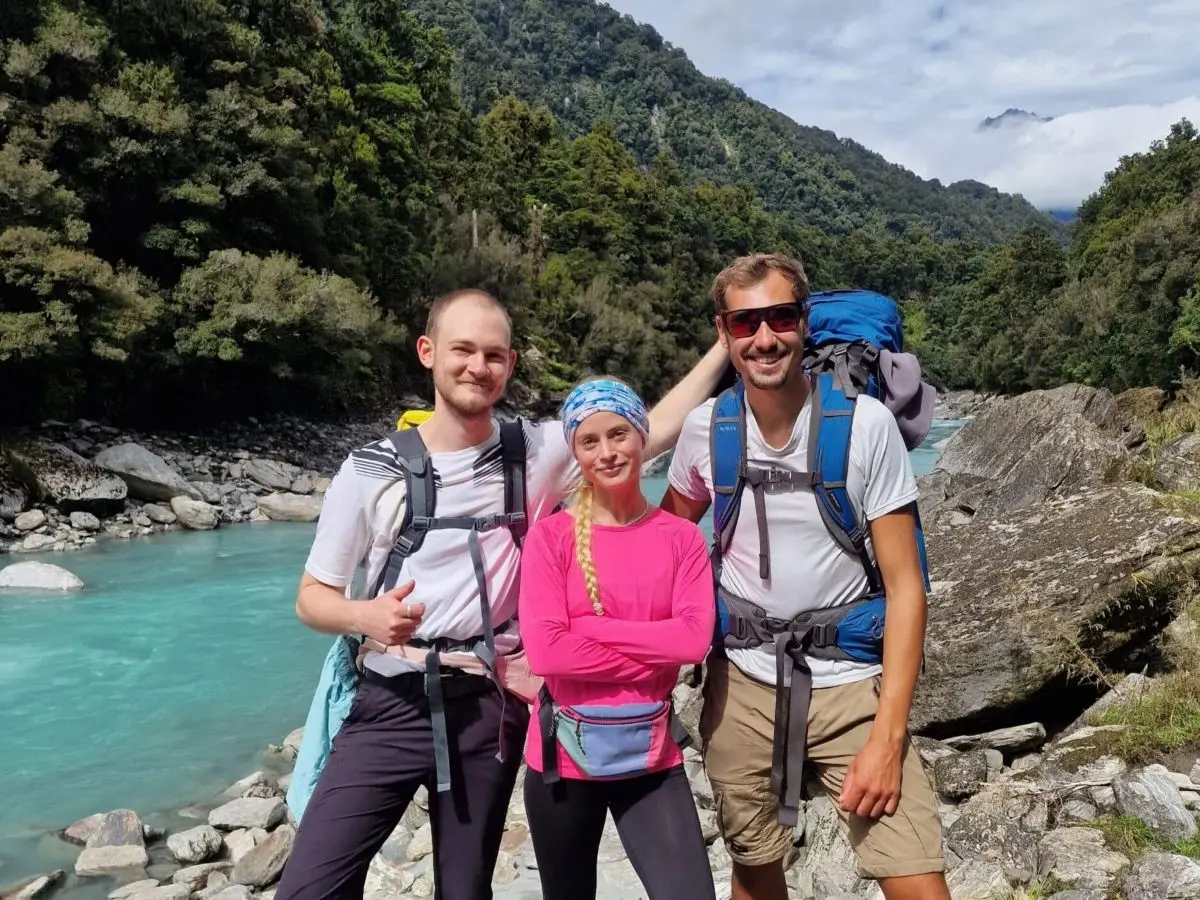
But here is the beautiful truth about solo travel: You are only as alone as you choose to be. During my journey, the “trail magic” of meeting people happened naturally:
- The Bus: I met Jack, a German traveler, who was in the moment I mentioned the hot pools.
- The Lift: While hitchhiking in Franz Josef, I was picked up by Mathieu, a French hiker who joined our crew.
- The Trail: We ran into Aron, an American traveler, and by the time we reached the hut, we were a team of four.
How to Find Your Hiking Crew
If you’re nervous about going solo, don’t let it stop you. Use these “magnet” strategies to find your pack:
- Hostel Culture: Breakfast at places like Chateau Backpackers is the ultimate networking event. Just ask, “Is anyone heading south to the Copland Track?”
- Facebook Groups: Join ‘New Zealand Hiking Community’ or ‘Backpacking New Zealand’. Post your dates a few days early; there is almost always someone looking for a buddy.
- The “Trail Talk” Strategy: Strike up conversations at bus stops or grocery stores in Franz Josef. Hikers are easy to spot (look for the boots and the nervous excitement!).
- Couchsurfing & Meetups: Use the “Hangouts” feature on the Couchsurfing app to see who is nearby and up for an adventure.
The Bottom Line: If you find a crew, great. But if you don’t? Go anyway. By the time I finished the hike, I realized that while the company was amazing, I was more capable than I thought. The track is well-marked, and you’ll likely meet people at the hut regardless.
Where to Stay: Franz Josef & Fox Glacier
The Copland Track trailhead is remote, so you’ll want to base yourself in either Franz Josef (50 mins away) or Fox Glacier (25 mins away). Here are the top-rated spots for every budget, whether you’re looking for free soup and social vibes or a bit of post-hike luxury.
Franz Josef Accommodations
Franz Josef is the larger of the two towns and is perfect if you want more dining options and a lively atmosphere.
- Chateau Backpackers & Motels: The legendary hiker’s choice (I stayed here). They offer free breakfast, a hot tub, and the famous free evening soup. It’s the best place to meet potential hiking buddies.
- Rainforest Retreat: Nestled in the bush, this place offers everything from treehouses to budget dorms. Their onsite bar is great for a celebratory post-hike drink.
- Glow Worm Accommodation: A cozy, smaller hostel with a massive kitchen and a spa pool. Great for solo travelers looking for a more relaxed environment.
- Haka House Franz Josef: Modern, clean, and very eco-conscious. It has excellent communal spaces and is right in the heart of town.
Fox Glacier Accommodations
Stay here if you want to be as close to the trailhead as possible for an early start.
- Ivory Towers Backpackers: A Fox Glacier institution. Like the Chateau, they often have a hot tub and a sauna—perfect for resting those legs.
- Rainforest Motel: If you’re traveling as a couple or group and want your own space, these studios are comfortable and offer great mountain views.
- Fox Glacier Lodge: If you’re looking for a step up from the hostel vibe but still want that mountain lodge feel, this is perfect. They offer cozy, rustic rooms and self-contained apartments with stunning views of the Southern Alps. It’s right on the edge of the national park, making it very peaceful.
- Bella Vista Fox Glacier: A reliable and very clean motel option. It’s great for hikers who want a guaranteed hot shower and a comfortable bed without the “social” noise of a backpackers. It’s centrally located and very easy to drive to the trailhead from here.
Other Areas to Consider: Haast
If you are traveling north from Wanaka or Queenstown to do the Copland Track, you should consider staying in Haast.
Haast is about 1 hour and 15 minutes south of the Copland Track trailhead. It’s a rugged, wild part of the West Coast that most people just drive through, but staying here allows you to experience the “Gates of Haast” and the dramatic coastal scenery before your hike.
- Haast River Motels & Holiday Park: A great mid-range option with cabins and motel units right by the river.
- Wilderness Lodge Lake Moeraki: For those with a higher budget, this is an incredible eco-lodge located between Haast and the Copland Track. It’s famous for its guided nature walks and proximity to penguin nesting sites.
West Coast Bucketlist: My Top Tour Picks
The Copland Track is the crown jewel, but the West Coast (Te Tai Poutini) is packed with “otherworldly” landscapes. If you have a few extra days in your 2026 itinerary, don’t miss these iconic spots and tours.
Glacier Country Adventures (Fox & Franz Josef)
Since you’re already at the trailhead, these are the “must-do” experiences in the immediate area:
- Franz Josef Heli-Hike (Top Choice): The ultimate glacier experience. If the Copland Track showed you the mountains from below, this shows you the blue ice from above. Read my complete guide to heli-hiking here.
- Fox Glacier Helicopter Pilot’s Choice Flight: A shorter, more budget-friendly flight that still offers incredible views of the Southern Alps and the glacier’s blue ice.
- Skydive Franz Josef & Fox Glacier: For the true adrenaline junkies. You’ll get a 360-degree view of the coast, the glaciers, and the mountains before freefalling from up to 20,000 feet.
- Lake Matheson Mirror View Walk: Just 5 minutes from Fox Glacier. It’s an easy 1.5-hour loop famous for the “perfect” reflection of Mt. Cook and Mt. Tasman.
- Okarito Lagoon Kayaking: About 25 minutes north of Franz Josef. It’s New Zealand’s largest unmodified wetland—peaceful, stunning, and full of rare birdlife like the Kotuku (White Heron).
Hokitika: The Coolest Little Town
Located 1.5 hours north of the glaciers, Hokitika is the perfect place to celebrate finishing your hike.
- Hokitika Gorge: You’ve seen blue water on the Copland Track, but the electric turquoise of the Hokitika Gorge is on another level. It’s a short, easy walk to the swing bridge.
- West Coast TreeTop Walk: Walk among the giants of the rainforest on a steel platform 20 meters above the ground. Great for a recovery day when your legs are tired but you still want to be in nature.
Punakaiki: The Pancake Rocks
Further north (about 3 hours from the glaciers), Punakaiki feels like another planet.
- Pancake Rocks & Blowholes: Sculpted limestone formations that look like stacks of pancakes. At high tide, the ocean surges through vertical blowholes—it’s loud, wet, and spectacular.
- Underworld Adventures (Caving): If you aren’t tired of water yet, try cave rafting through glow-worm caves in nearby Charleston.
Ultimate Copland Track Packing List
The West Coast is notoriously wet and unpredictable. Even if the forecast looks clear, you need to be prepared for the “Big Three”: Rain, Sandflies, and River Crossings.
The Essentials
- 35–45 Liter Backpack: Ensure it has a waterproof rain cover.
- Sleeping Bag: Aim for a “Comfort” rating of at least $5^\circ$C. The hut can get chilly even in summer.
- Headlamp: Essential for navigating the hut at night or visiting the hot pools after dark.
- Personal Locator Beacon (PLB): Highly recommended for solo hikers. You can rent these at the DOC center in Franz Josef.
Clothing: The Layering System
Avoid cotton—it stays wet and cold. Opt for merino wool or synthetic fabrics.
- Hiking Boots: Sturdy, waterproof boots with good grip for muddy sections.
- Camp Shoes (Crocs/Sandals): Your feet will thank you at the hut. Also useful for the hot pools.
- Rain Jacket & Rain Pants: High-quality waterproofs are non-negotiable here.
- Thermal Base Layers: One set for hiking, one dry set strictly for the hut.
- Fleece or Down Jacket: For the evening chill at Welcome Flat.
- Swimwear: For the hot pools!
The “No-Stove” Food Strategy
Since there are no gas cookers at the hut and you might not want to carry a stove, here is my high-energy, no-fuss menu:
- Breakfast: Muesli bars or pre-made wraps with peanut butter.
- Lunch: Heavy-duty sandwiches (salami and hard cheese last well).
- Dinner: Tuna pouches (lighter than cans), crackers, and sturdy veggies like carrots.
- Snacks: Trail mix (scroggin), chocolate, and apples for a crunch.
- Water: 1.5L capacity + Water Purification Tablets. The hut water is usually fine, but it’s better to be safe.
Toiletries & First Aid
- Sunscreen & Lip Balm: The NZ sun is brutal.
- Sandfly Repellent: Bushman Plus or Goodbye Sandfly.
- Antihistamine Cream: For when the sandflies eventually get you.
- Blister Kit: Compeed or Leukopore tape—essential for an 18km day.
- Small Microfiber Towel: Quick-drying for the hot pools.
Pro-Tip: Pack everything inside your bag in dry bags or heavy-duty rubbish bags. If you fall in a river or it pours for 7 hours, you must have a dry sleeping bag and dry clothes waiting for you.
My Experience: The Randomness of Travel
Waking up to a clear sky at my Franz Josef hostel, just 50 kilometers north of the trailhead, set the stage for the mission. Breakfast at Chateau Backpackers was a carb-loaded affair—waffles aplenty and a hearty bowl of porridge.
After stashing my oversized backpack in one of the Chateau’s security lockers (a life-saver!), I hit the road. I didn’t wait long with my thumb outstretched before a friendly French couple whisked me along. I was hitching a ride to Fox Glacier to meet Jack, a traveler I’d met on a bus days prior who was instantly “in” once I mentioned the hot pools.
The “Sandfly Feast” at Rough Creek
At the trailhead, we met Mathieu, another French traveler I’d met earlier. Together, we faced our first hurdle: Rough Creek.
Unwilling to hike 18km with soggy boots, I kicked off my shoes and rolled up my leggings. I was prepared for the water, but I hadn’t anticipated the sandfly onslaught. Over a hundred swarmed my exposed legs, feasting and drawing blood.
The crossing itself was manageable—water only reached mid-calf—but the speed at which the West Coast bugs find you is a shock to the system. Once across, we officially entered the forest.
Sweat, Swing-Bridges, and “Short Person Legs”
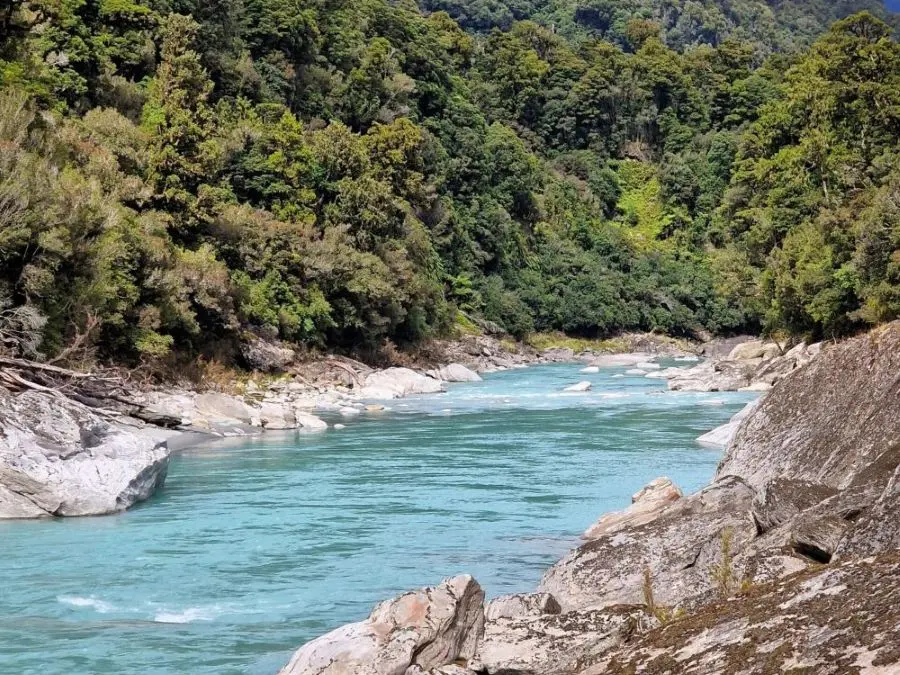
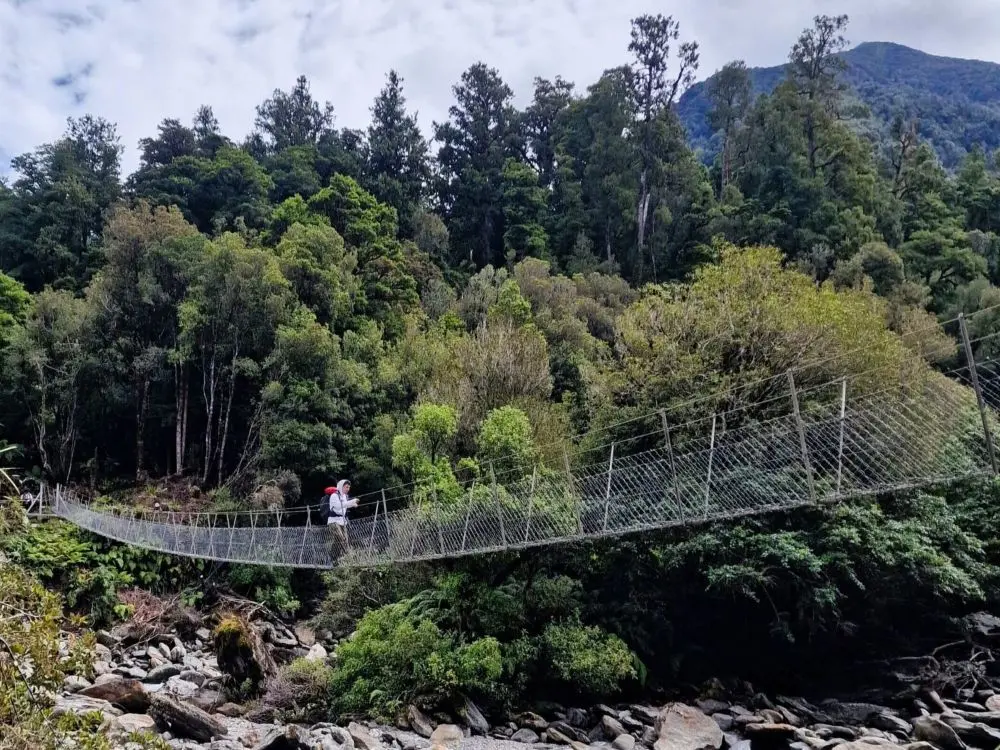
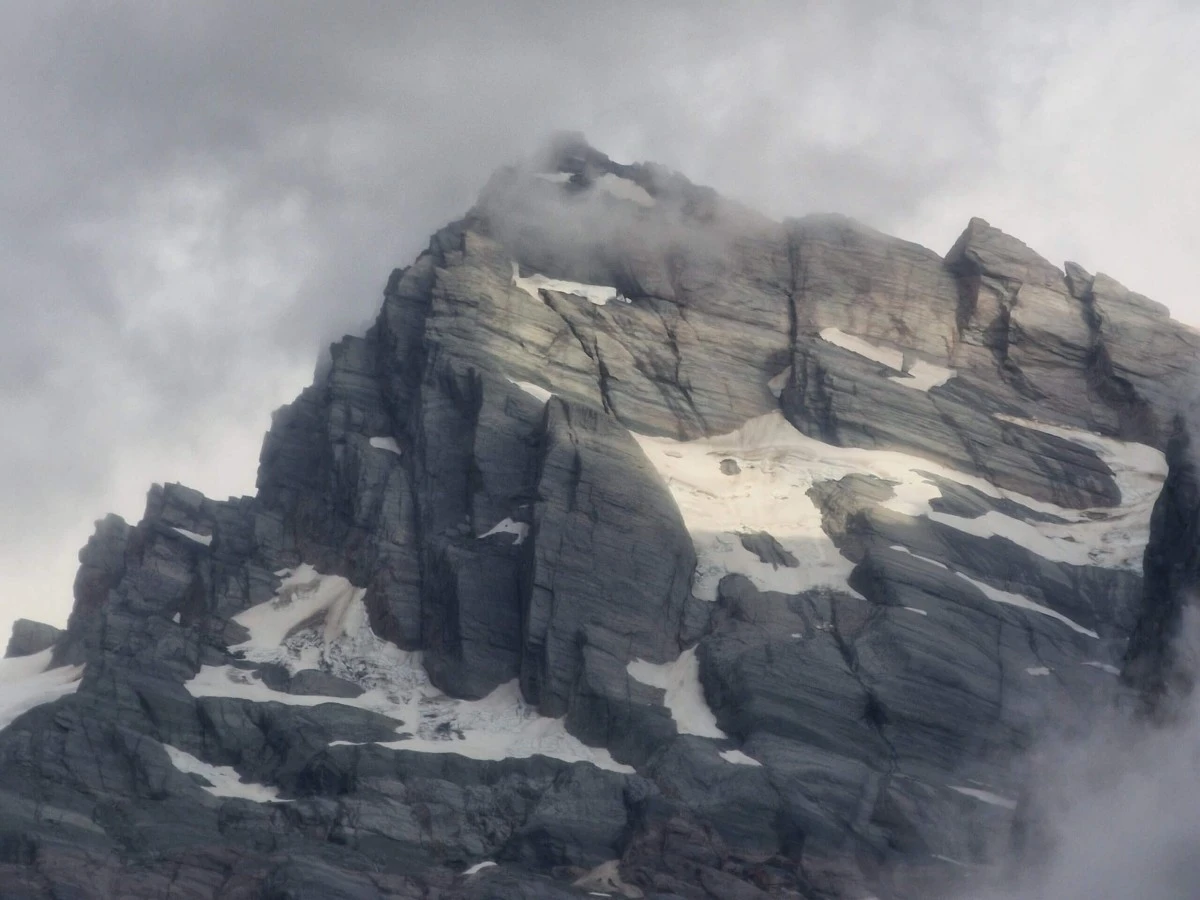
The trail starts gently, but soon the terrain begins to rise, and the “West Coast humidity” kicks in. We crossed several iconic NZ swing bridges—on one side, a crystal-clear blue river; on the other, a lush, enveloping rainforest.
The boys had a great pace, and I did my best to keep up with my “short person legs” and a heavy pack. We were fueled by one thought: soaking in those natural hot pools against the backdrop of the Sierra Range.
Welcome Flat Hut: Magic & Rainbows
We reached Welcome Flat Hut around 4 PM. Surrounded by the towering mountains, I immediately regretted not booking two nights.
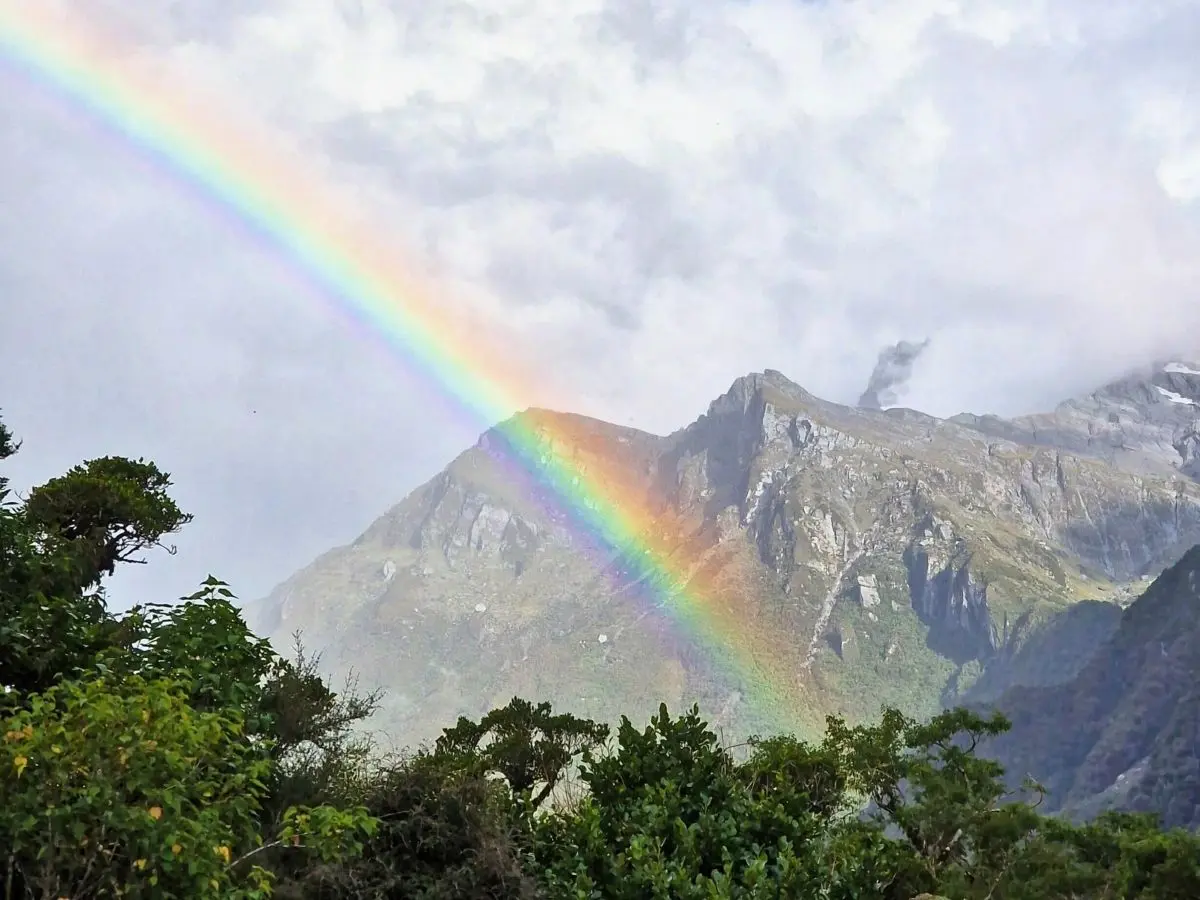
The hut is simple but stunning. One side opens to the steaming hot pools, the other to a rushing river. As I walked the premises, a rainbow appeared over the peaks—one of those “insignificance amidst the mountains” moments that takes your breath away.
Soaking Under the Sierra Range
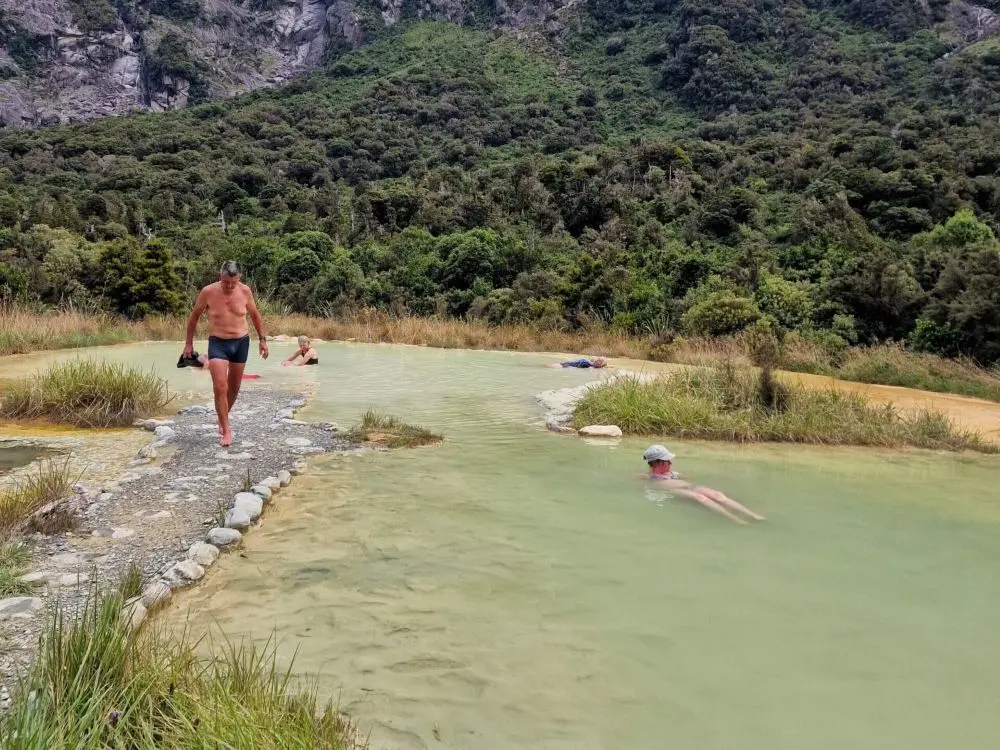
The pools are just a short stroll from the hut. There are three pools with varying temperatures; even the “coolest” one was plenty hot!
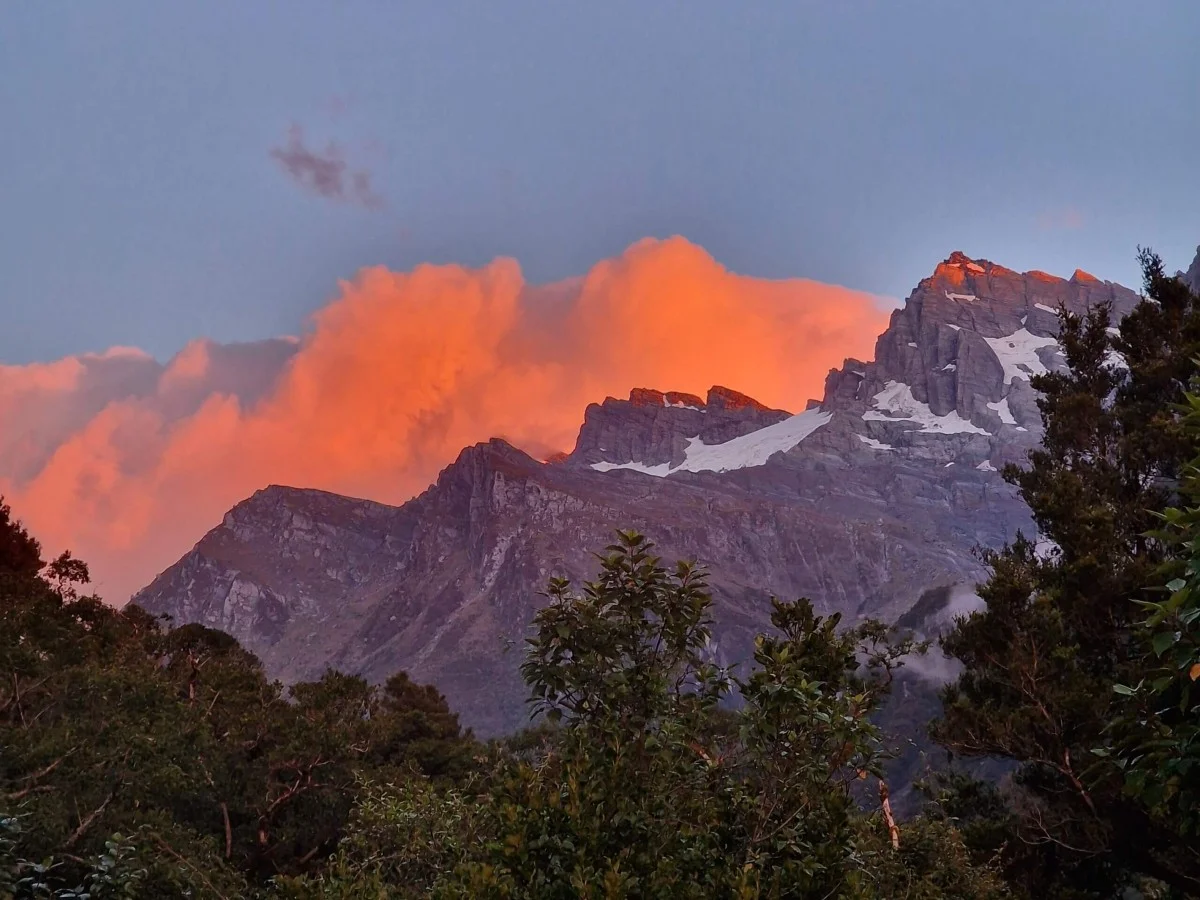
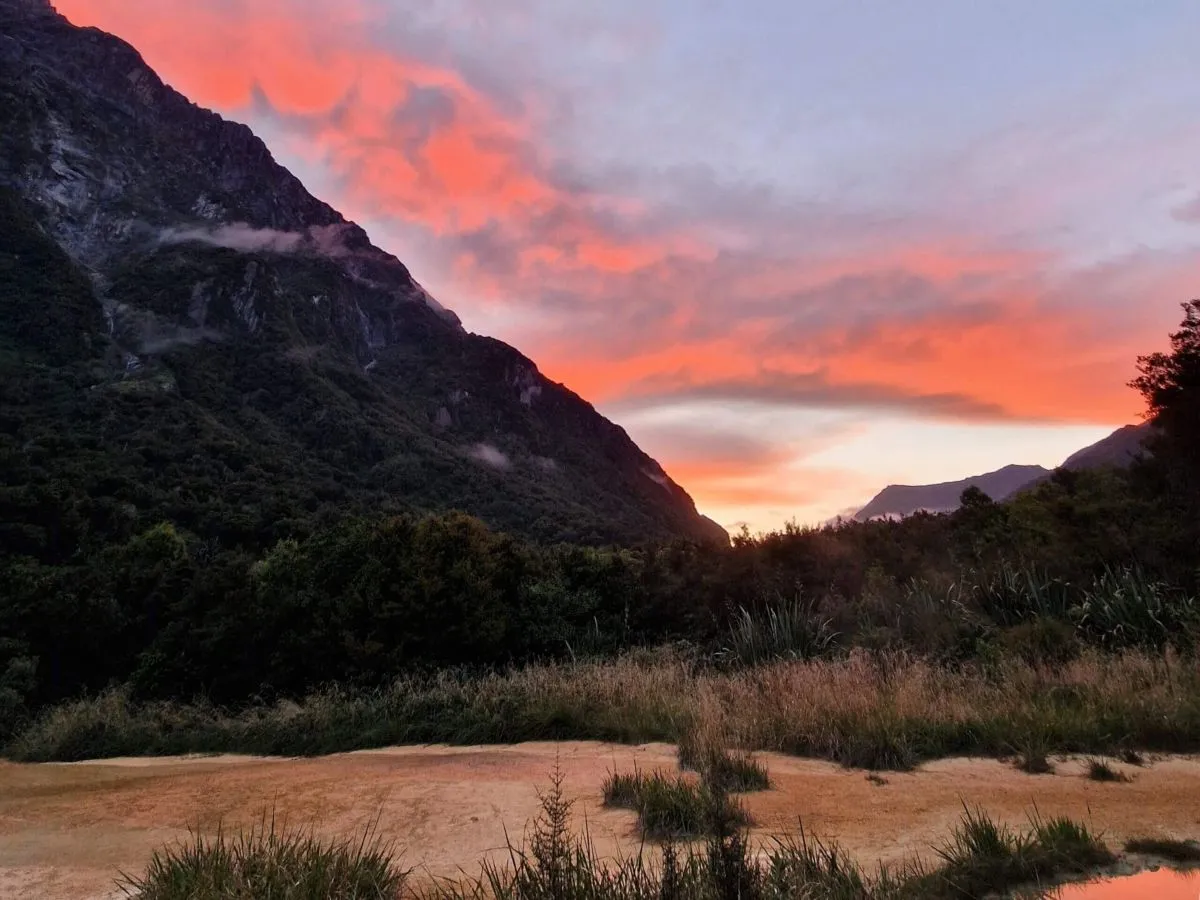
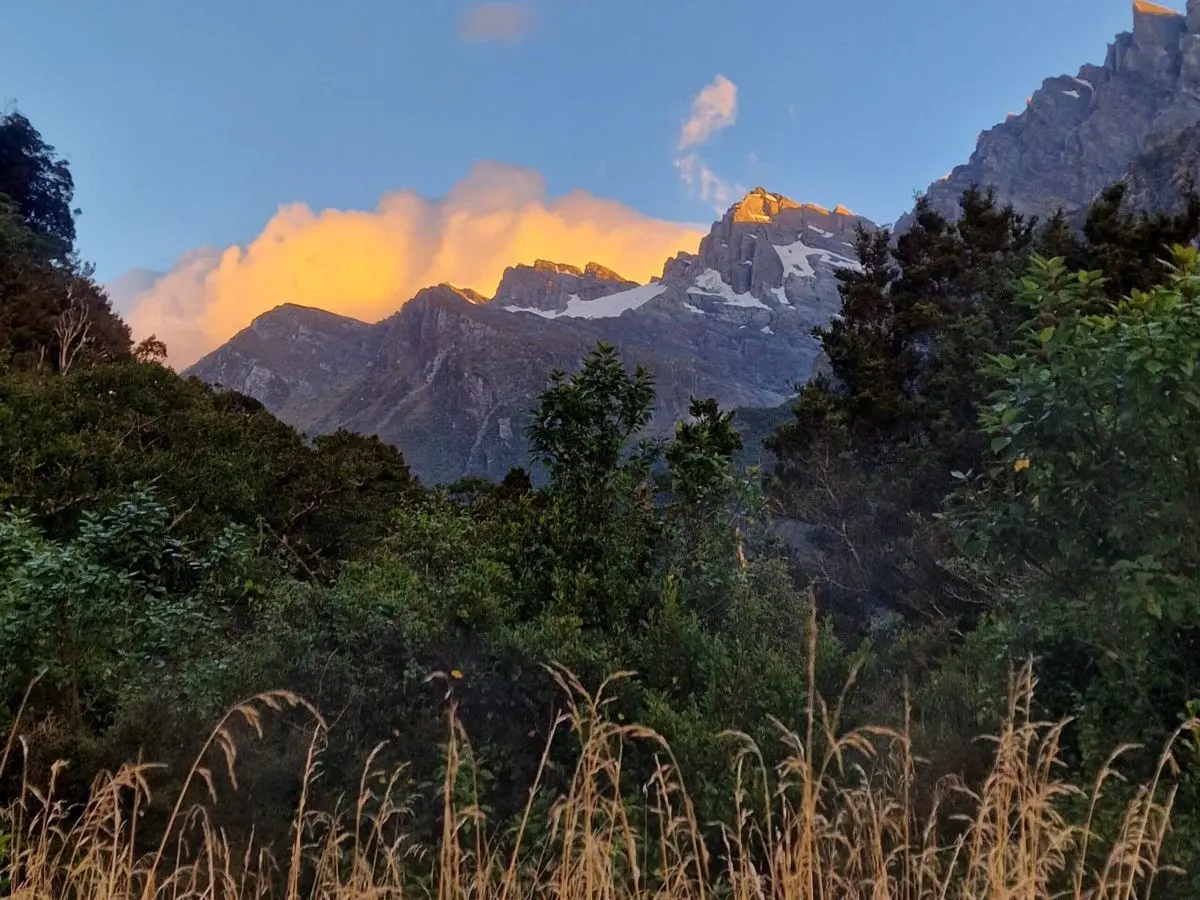
As day turned to night, we were treated to a Top 3 Sunset. Pink pastel clouds wrapped around the snowy Sierra peaks while the heat from the pools mingled with the cool alpine air. It felt like a fairy tale.
The Long Walk Back
The 18km return journey felt longer. Our packs were slightly lighter, but our legs were heavier. We navigated the trail steadily, finally reaching the car park where I celebrated with… a soggy carrot from my bag.
The Solo Traveler’s Truth
This is the one thing I’ll never get used to: the intense connections you forge with strangers. You share dreams, fears, and a 35km hike, and then you part ways. Jack, Mathieu, Aron—they became integral threads in my New Zealand tapestry. We parted with a group photo and a memory that will last a lifetime.
Copland Track to Welcome Flat Hut: Frequently Asked Questions
Do I need to book the Welcome Flat Hut in advance?
Yes, absolutely. Because of the hot pools, this is one of the most popular huts in New Zealand. You must book through the DOC (Department of Conservation) online system. In 2026, spots during the summer (December–March) often sell out months in advance.
Is the Copland Track dangerous?
The track is classified as “Advanced.” While the path itself is well-maintained, the danger lies in the unbridged river crossings (specifically Rough Creek) and active landslide zones. Always check the weather forecast and the DOC track status before you leave. If there has been heavy rain, do not attempt the crossings.
How hot are the Welcome Flat hot pools?
There are usually three main pools ranging from about 35 to 42 degrees celcius. The temperatures can fluctuate depending on recent rainfall and geothermal activity.
Can I drink the water at the Welcome Flat Hut?
DOC recommends boiling the water for 3 minutes or using a filter/purification tablets. While many hikers drink it straight from the tap, the risk of Giardia is present in all New Zealand backcountry water.
What is the best time of year to hike the Copland Track?
Spring (October/November) and Autumn (March/April) are often the best times. You avoid the peak summer crowds, and the cooler air makes the hot pools even more rewarding. However, the West Coast is famous for rain year-round, so be prepared for anything.
Are there really that many sandflies at Welcome Flat Hut Hot Pools?
Yes. “A feast for sandflies” wasn’t an exaggeration! They are most active near water and at dusk. Bring a DEET-based repellent and keep your skin covered as much as possible when you aren’t in the water.
Is there cell phone reception on the trail?
No. Once you leave the car park, you will lose signal almost immediately. There is no Wi-Fi or reception at the Welcome Flat Hut. For safety, I highly recommend carrying a Personal Locator Beacon (PLB).
Final Thoughts: Was it Worth It?
If you had asked me while a hundred sandflies were tattooing my legs at Rough Creek, I might have hesitated. But sitting in those steaming pools, watching a rainbow arch over the Sierra Range with a group of strangers who had become friends? I would do it again in a heartbeat.
So, pack the extra DEET, book that hut bunk, and just go. The West Coast is waiting.
Leave a Reply