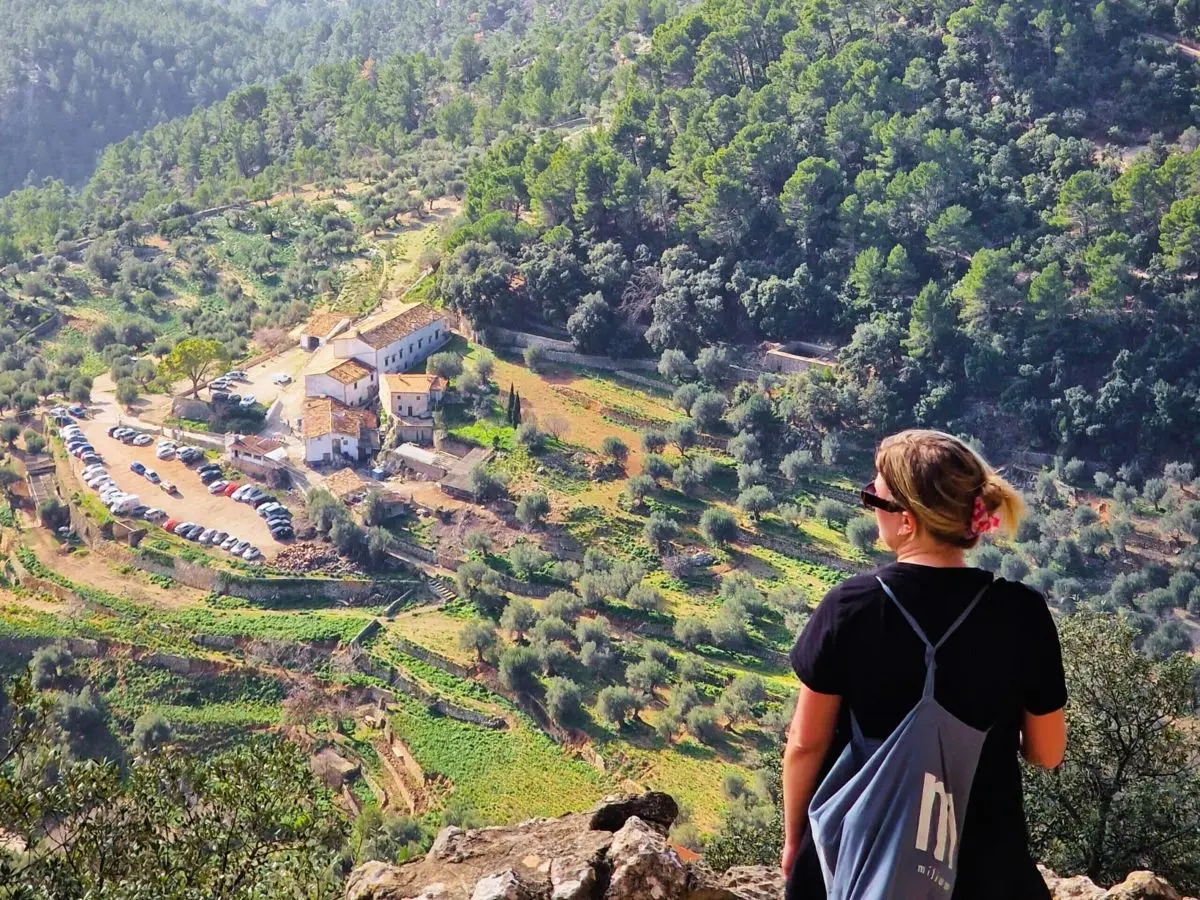
Hike the legendary Alaró Castle trail in Mallorca. Discover 13th-century ruins, 360° mountain views, and the famous slow-roasted lamb at Es Verger.
Sometimes we hike for the zen, and sometimes we hike because we want to eat an ungodly amount of roast lamb without the guilt.
The trail to the Alaró Castle (Castell d’Alaró) is the ultimate “work hard, play hard” route. It’s a classic Mallorcan day out that trades dusty gravel roads and steep, cobbled zig-zags for 360-degree views and a seat at Es Verger—a restaurant so rustic it makes a barn look fancy, and so good that even Rick Stein called it the best lamb he’d ever tasted.
Alaró Castle is a must-hike when you visit Mallorca, and in this guide I cover everything you need to know that will ultimately lead to you eating the most delicious lamb ever!
Planning your trip? My Mallorca Favorites:
🚗 Transport: Public transport is a nightmare in the mountains. Compare car and campervan deals on DiscoverCars—or check out Imoova for $1/day relocation deals in Europe.
🏨 Hotels: Find the best Mallorca hotels on Booking.com—or if you’re on a budget, check out the island’s hostels at Hostelworld.
🎟️ Tours & Activities: Book boat trips, wine tastings, and canyoning tours on GetYourGuide—It’s the easiest way to keep all your island bookings in one app.
🤿 The Must-Do’s: Don’t leave the island without doing a Sunset Cruise, Tapas Tour and Dolphin Watching! These are the things that actually justify the flight.
✈️ Flights: Check Trip.com for the best routes into Palma (PMI). If you’re flying from Europe, Vueling or Iberia are usually the most reliable.
🛡️ Insurance: Mallorca’s limestone is slippery and the sun is brutal. I use VisitorsCoverage—it’s affordable, easy to set up, and essential for mountain adventures.
📱 Connectivity: Stay connected with a Saily eSIM – It’s the easiest way to have data the minute you land, and you don’t want to rely on spotty WiFi to upload those dreamy pics.
Table of Contents
A note from Sara:
There are affiliate links in this post, and I may earn a small commission if you choose to make a purchase – at no extra cost to you. It’s a great way to support my work if you found this guide helpful – thank you so much!
Alaró Castle Trail Overview
- Location: Alaró, Serra de Tramuntana
- Type: Loop
- Distance: ~12 km
- Duration: 4–5 hours (inclusive of a very necessary long lunch)
- Difficulty: Easy to Moderate
- Elevation Gain: ~550 m
- Highlights: 13th-century castle ruins, 360° island views, and the famous Lamb Restaurant—Es Verger.
- Best Time: March to June & September to November
- Trail Map: You can find a map on Alltrails.
Getting to the Trailhead
- By Car: 30 minutes from Palma. Park in the village of Alaró. There’s a public lot near the church, but get there early.
- The “Cheater” Route: You can drive all the way to Es Verger, but the road is a white-knuckle experience—single lane, steep drops, and deep potholes. Only do it if you have a high-clearance car and nerves of steel.
- By Train: Take the T1/T2 from Palma to Consell-Alaró, then grab the shuttle bus (Line 311) into the village.
The Main Event: A Pilgrimage to Es Verger
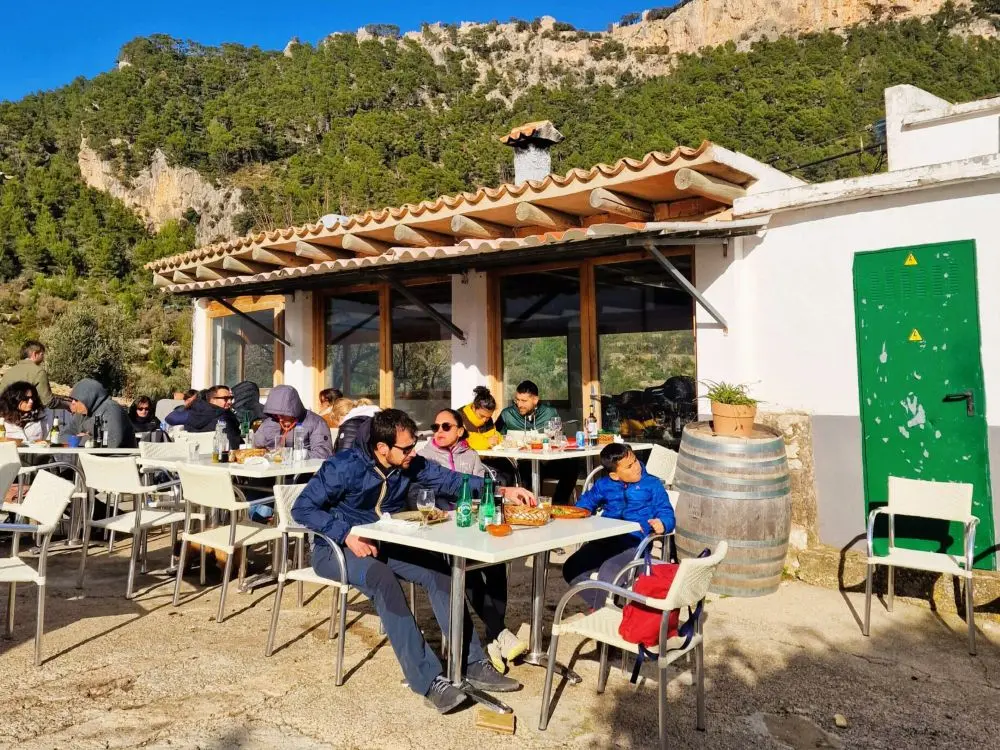
If you ask a local where to find the heart of Mallorca, they won’t point you to a beach club in Magaluf. They’ll point you toward a mountain. Specifically, toward a white-washed, drafty barn called Es Verger.
This place is legendary for one reason: the Paletilla de Cordero (slow-roasted shoulder of lamb). It was made famous globally when Rick Stein called it “the best lamb I’ve ever tasted,” but the locals have known the truth for decades. This isn’t fine dining; it’s a religious experience served on a ceramic plate.
The Secret in the Oven
Inside, the vibe is gloriously un-curated. You’ll see old birdcages, rusted farming tools on the walls, and maybe a grandma in the corner shelling peas. The centerpiece is the massive wood-fired oven that has been seasoned by decades of smoke.
The secret to the lamb? It’s slow-cooked for hours in a pool of beer and fat until the skin turns into a salty, crispy armor and the meat collapses at the mere suggestion of a fork.
How to Do It Like a Pro:
- The “Earn It” Rule: You can drive up that terrifying, potholed road, but the lamb tastes 50% better if you’ve walked the 90 minutes from the village. There is no seasoning quite like physical exhaustion.
- The Timing: Get there by 12:30 PM. The lamb is famous, and when it’s gone, it’s gone. If you show up at 2:30 PM on a Sunday, you’ll be eating bread and aioli while staring at empty plates.
- The Order: Don’t overthink it. Order the lamb. It comes with simple roast potatoes that have been soaking up the pan juices, and a basic salad to cut through the richness.
- The Drink: Order a caña (small beer) or a jug of the house red. It’s not fancy, but it’s exactly what the moment requires.
Practical Bits for 2026
- Price: Expect to pay around €25 for the lamb.
- Cash is King: While they’ve started taking cards more often, the mountain Wi-Fi is notoriously temperamental. Bring cash just in case.
- Closed Mondays: They need a day to recover from the weekend rush. Plan accordingly.
Where to Stay: Alaró & Beyond
1. The Village Choice: Petit Hotel Alaró
This is the gold standard for Alaró. It’s a beautifully restored 19th-century finca right in the center of town. It has that “wealthy friend’s mountain home” vibe—high ceilings, exposed beams, and a pool that feels like a hidden oasis. The owners are passionate hikers and cyclists themselves, so they’ll give you the real-time trail conditions that Google won’t.
2. The Sustainable Retreat: Alaró Natura Rural Suites
If you want something modern but eco-conscious, this is it. It’s a saltwater-pool-and-yoga kind of place. They are big on reforestation; they even have small trees in the rooms you can “adopt” during your stay. It’s quiet, soundproofed, and perfectly located for a post-hike recharge.
3. The Authentic Budget: Hostal Ca’n Tiu
Don’t let the word “Hostal” fool you—this is a cozy, clean, and incredibly friendly guesthouse. It’s right next to the main square, making it the perfect base if you want to be within stumbling distance of a late-night vermouth after your lamb feast.
4. The “Hidden” Agroturismo: Son Penyaflor
Located just outside the village, on the actual road leading up to the castle, this is for those who want to wake up in the scenery. It’s a working farm (olives, almonds, lemons) turned luxury rural stay. You’ll be surrounded by sheep bells and mountain mist—pure Tramuntana magic.
Expanding the Search: Why Not Orient?
If Alaró feels too “busy” (though it rarely does), look at the tiny village of Orient, just on the other side of the mountain. It’s one of the smallest and most picturesque hamlets on the island.
- L’Hermitage Hotel & Spa: A converted 16th-century monastery. If you want to feel like a monk with a very high-end spa, stay here.
- Finca Hotel Son Palou: A rustic-luxe stay with some of the best valley views in Mallorca. It’s the kind of place where you do absolutely nothing but stare at the mountains and breathe.
Mallorca: The Experiences You Actually Need
After you’ve conquered the castle and finished your lamb, you might be wondering what else is worth your time on the island. Don’t waste your money on the glass-bottomed tourist traps in the south. These are the handful of experiences that actually capture the soul of Mallorca.
I use GetYourGuide because they vet their local operators well and the “no-stress” cancellation policy is a lifesaver if your legs are too sore to move the next day.
Gastronomy & Market Culture
- Traditional Cooking Workshop & Market Visit: Bourdain always said the best way to know a place is through its markets. Go to the source, buy the ingredients, and learn how to cook like a Mallorcan.
- Mediterranean Cooking Class with Drinks: A more laid-back approach. Learn the staples of the island diet while leaning into the wine.
Boats, Sunsets & Private Charters
- Sunset Boat Tour with DJ: If you want the “Palma vibe,” this is it. It’s loud, it’s social, and seeing the Cathedral at sunset is worth the price of admission.
- Half-Day Magic Catamaran Cruise: A classic cruise to Palma Bay. It’s the standard for a reason: good water, good light, no stress.
- Private Boat Trip with Water Toys: If you have a group and want to avoid the crowds entirely, pay for the privacy. It’s your boat, your rules, and plenty of gear to play with in the coves.
Coastal Adventure & Caves
- Kayaking, Sea Caves & Cliff Jumping: This is for when you want to feel the salt on your skin and a bit of adrenaline in your chest. You see the coastline from the eyes of a local.
- Caves of Drach: Music & Boat Trip: It’s one of the few “tourist” things actually worth doing. The underground lake and the live classical music are hauntingly beautiful.
- Caves of Hams: Guided Visit: The “fishhook” caves. Smaller and more focused than Drach, but equally strange and worth a look.
Rugged Interior & Valley Views
- Off-Road ATV Quad Bike Tour: Mallorca isn’t just beaches. This is how you see the rugged, dusty interior where the tour buses can’t reach.
- Horse Riding in Randa Valley: A slow, quiet way to move through the landscape. No engines, no crowds—just the valley and the silence.
My Experience: The Long Walk to the Best Lamb in the World
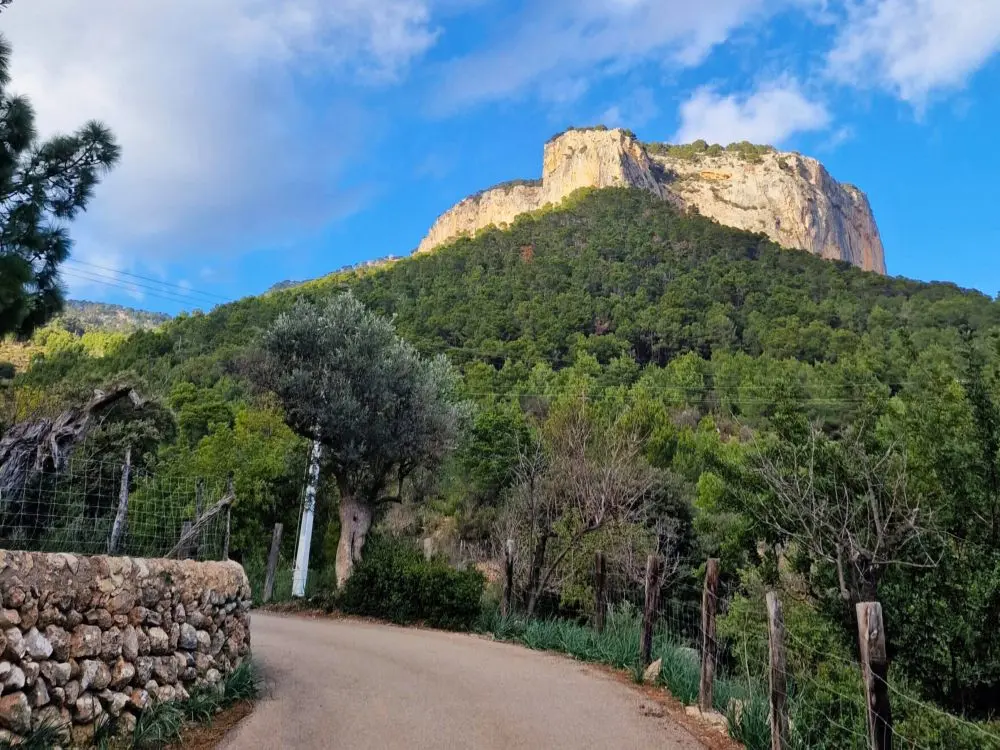
Let me be straight with you: the hike to Castell d’Alaró isn’t the most “off-the-grid” trail I’ve done on Mallorca. About two-thirds of it is a gravel access road—the kind where a car occasionally creeps by and you have to pretend it isn’t ruining your “mountain explorer” vibe.
But here’s the thing: once you hit that final rocky stretch and the Tramuntana opens up? You’ll forget the gravel. And once you sit down at Es Verger? You’ll realize the hike was just a 12km appetizer for the main event.
The Climb: Into the Quiet
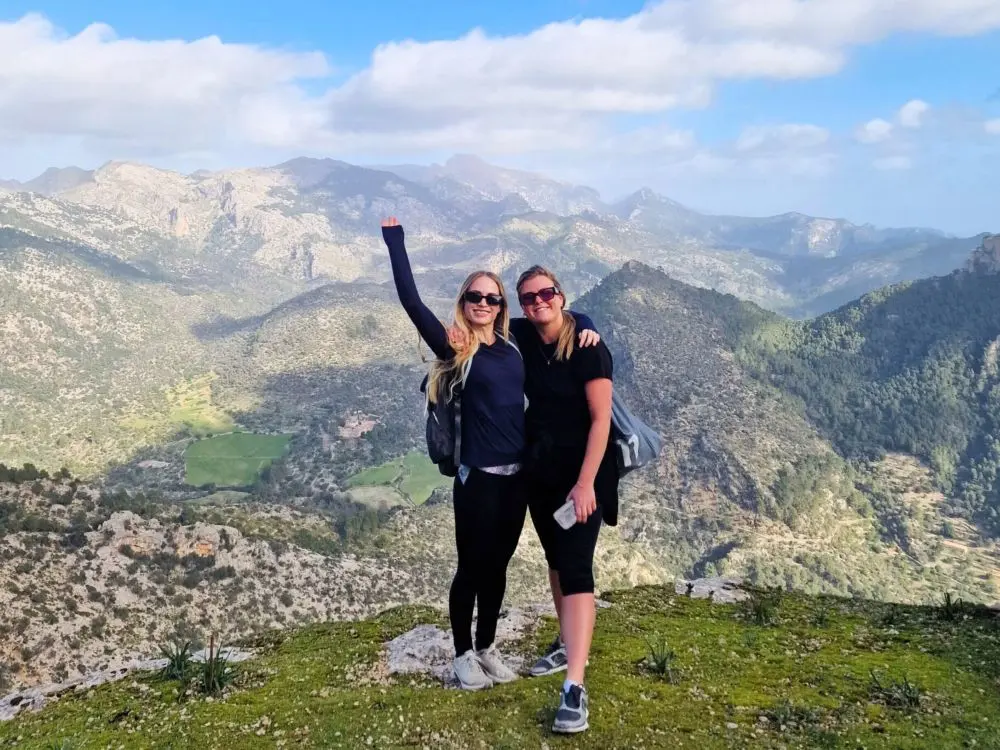
My crew and I set off from the base near Alaró village. The air was soft, and the path wound through old olive terraces that eventually thinned into bare rock and a heavy, windswept silence. It’s the kind of silence that feels ancient—like the mountain has been watching hikers stumble up its sides for centuries and is largely unimpressed by your expensive new boots.
I didn’t drop a thousand “wows” on the lower switchbacks, but once we left the gravel and hit the rugged, uneven donkey path toward the gates, I was back in my element. You start to see more hikers here—trail runners, families, and a few people clearly fueled by the singular thought of roast meat.
The Castle: High Altitude Magic
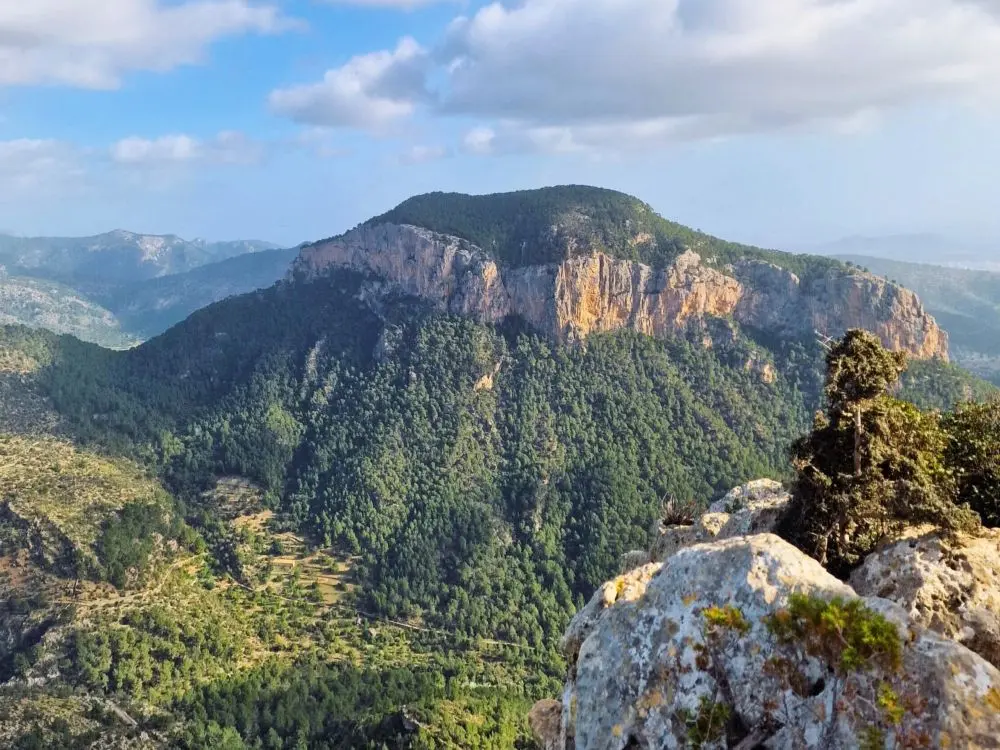
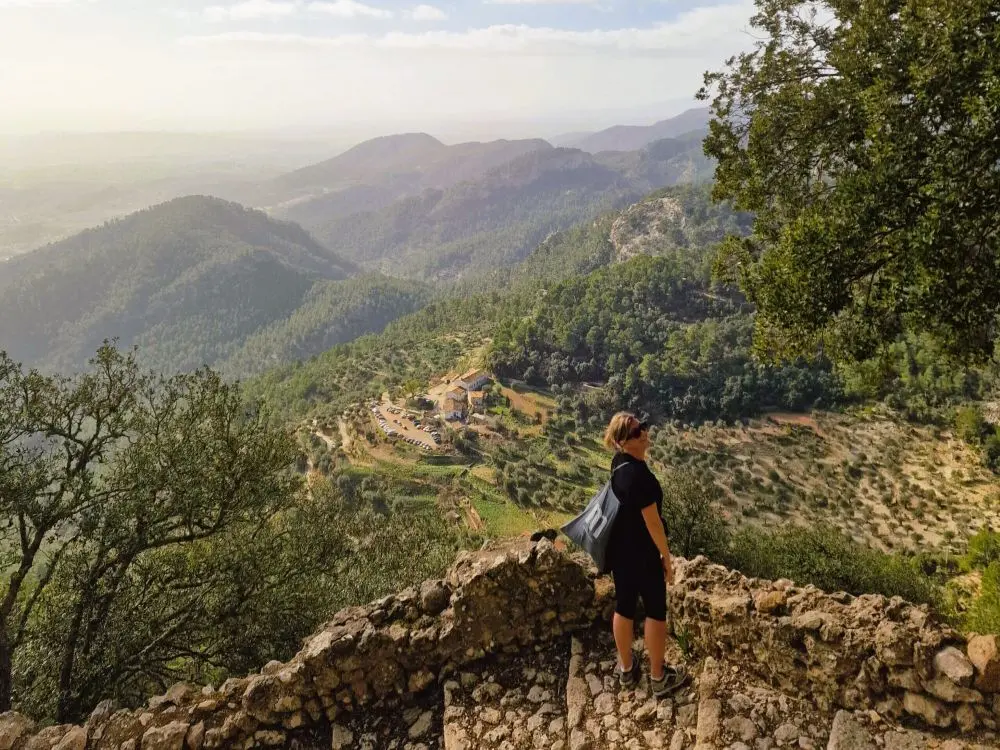
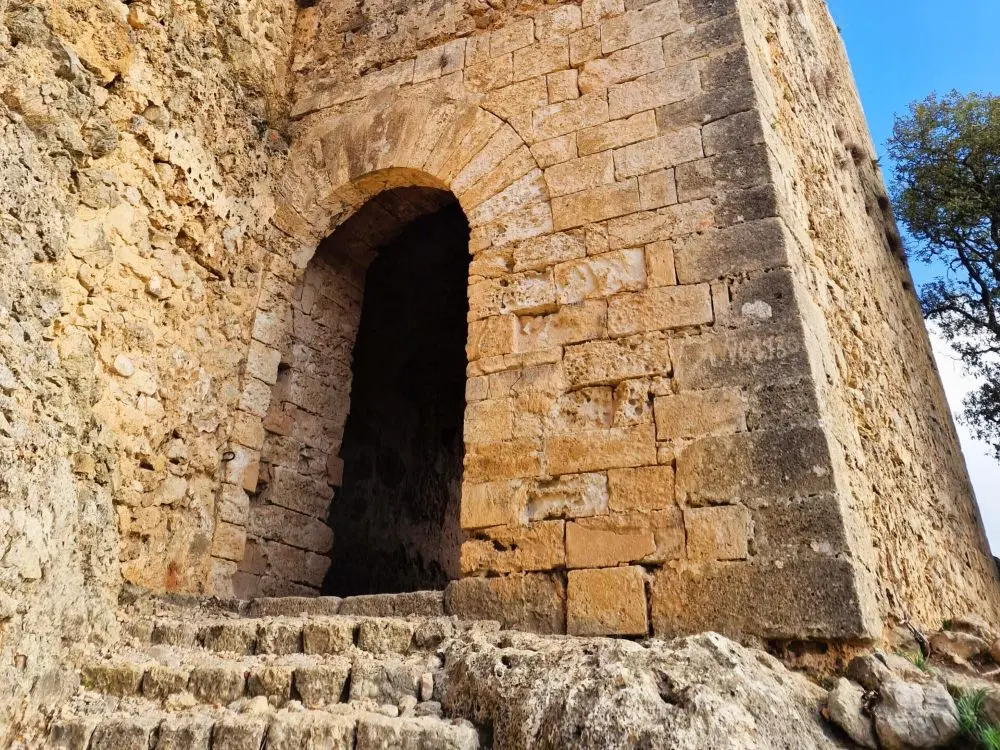
We took a detour through the crumbling ruins at the top, but I’m a sucker for a ridgeline, so I headed straight for the cliff’s edge. Standing there, watching the whole valley laid out like a crumpled green map while the wind howls through the stones, is pure mountain magic.
Just below the summit, you’ll find the Refugi de Puig d’Alaró. I met the resident donkeys up there—the true mascots of the mountain. They spend their days hauling supplies to the refuge and looking at tourists with a weary, “seen it all before” judgment. I gave them a respectful nod; they didn’t blink.
The Lamb: A Religious Experience
As the wind picked up and we started the descent, the scent reached us before the building did. Tucked just beneath the cliffs is Es Verger. Stepping inside feels like entering a bustling 19th-century farmhouse. There’s the heat from the massive wood-fired oven, the clatter of plates, and the low hum of hikers swapping stories over jugs of house red.
We all went for the lamb shoulder—the Paletilla de Cordero. It’s around €25, and it’s massive. I’m not even a “lamb person,” but this was different. It’s slow-roasted in beer and its own juices until the skin is like crackling and the meat collapses at the mere suggestion of a fork. It’s the kind of meal that makes you close your eyes and forgive your aching legs.
On the way back down to the car, I passed a few sheep lounging near the trail. I couldn’t help but wonder if one of their cousins had just become my lunch. Savage? Maybe. But out here, between the stone and the sky, it just felt like the circle of life.
We finished the day exactly how you should: full, tired, and deeply happy.
FAQ: Alaró Castle & Es Verger
Do I really need to book a table at Es Verger?
The short answer: No, because they don’t actually take reservations. It’s a first-come, first-served operation. If you want that legendary lamb without a two-hour wait, get there by 12:30 PM. On weekends, the lamb often sells out by 2:00 PM, so don’t linger too long at the summit!
Is the road to Es Verger really that bad?
It’s “spicy.” It’s narrow, steep, and full of potholes that could swallow a Fiat 500. If you’re a confident driver and used to mountain hairpins, you’ll be fine. If you’re a nervous driver in a pristine rental car, just park in the village and walk. Your heart rate (and your insurance excess) will thank you.
Can I hike this with kids or dogs?
Absolutely. It’s one of the best family hikes on the island because the path is wide and easy to follow. Dogs will love the trail, but keep them on a lead near the castle ruins—there are some steep drops and resident donkeys who don’t appreciate being chased.
Is it cash only?
The restaurant, Es Verger, is strictly cash only. The mountain Wi-Fi is too spotty for card machines to work reliably. There is an ATM in the Alaró town square—grab your Euros there before you start the climb.
What should I wear?
You don’t need pro-mountaineering gear, but leave the flip-flops at home. The final stretch to the castle is over old, polished stones that get incredibly slippery, especially if it’s rained recently. Sturdy sneakers or trail runners are perfect.
Are there toilets on the trail?
There are facilities at Es Verger and a basic toilet at the Refugi (the hostel) at the very top. Between those two points, you’re on your own with the sheep.
The Final Word: Is It Worth It?
If you only do one inland hike in Mallorca, make it this one. It’s the perfect loop of history, effort, and reward. By the time you’re walking back down into Alaró, smelling of woodsmoke and wild rosemary, you’ll understand why this island is so much more than just its coastline.
Ready to start packing?
Leave a Reply